

Australian Thyroid Foundation
Services offered
Cancer information
COPY NEEDED
Your treatment will depend on the type and stage of the cancer, and your age and general health. Most people will have a combination of surgery, thyroid hormone replacement therapy and, sometimes, RAI treatment. Less often, people may also have targeted therapy, radiation therapy or chemotherapy.
Some people may not need treatment right away. This is called active surveillance, and means having regular ultrasounds and check-ups.
Surgery is the most common treatment for thyroid cancer. You will be given a general anaesthetic, and the surgeon will make a cut (usually 3–5 cm) across your neck. How much tissue and how many lymph nodes are removed will depend on how far the cancer has spread. See Types of thyroid surgery below.
You usually stay in hospital for 1–2 nights, but it may be a little longer. The wound will have stitches, adhesive strips or small clips and you’ll be told how to avoid an infection.
Tissue removed during surgery is tested to find the type of cancer, whether it has spread to nearby lymph nodes and if you need other treatment. More surgery is sometimes needed to remove other tissue, any remaining thyroid or the thymus gland.
If the whole thyroid is removed, you will need thyroid hormone replacement therapy. Some people who have part of their thyroid removed will also need thyroid hormone replacement therapy. Depending on the type and stage of thyroid cancer, you may need RAI treatment or, in rare cases, other treatments.
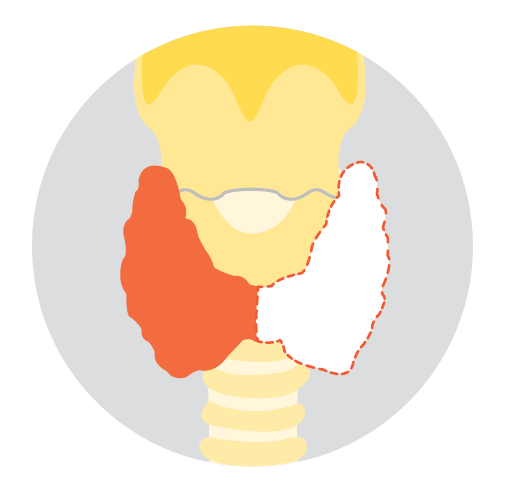
Only the affected lobe or section of the thyroid is removed. Used for small cancers, smaller papillary cancers, and if the lobe without the cancer looks normal. Also called a surgical biopsy if done because a fine needle biopsy doesn’t give a clear result. If a surgical biopsy shows cancer, you may need more surgery to remove all or part of your thyroid.
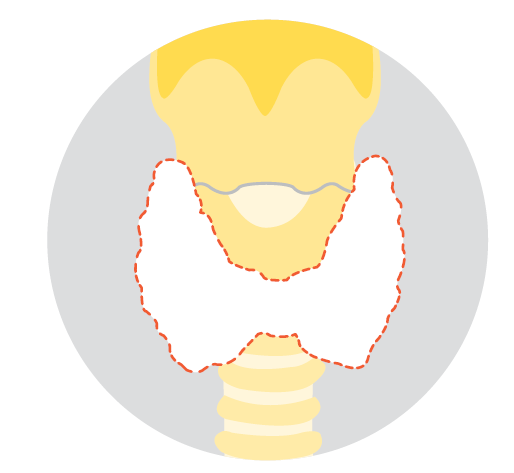
Many people with thyroid cancer need a total thyroidectomy. The whole thyroid, both lobes and the isthmus are removed. Sometimes a small amount of thyroid tissue may be left in a near-total thyroidectomy.
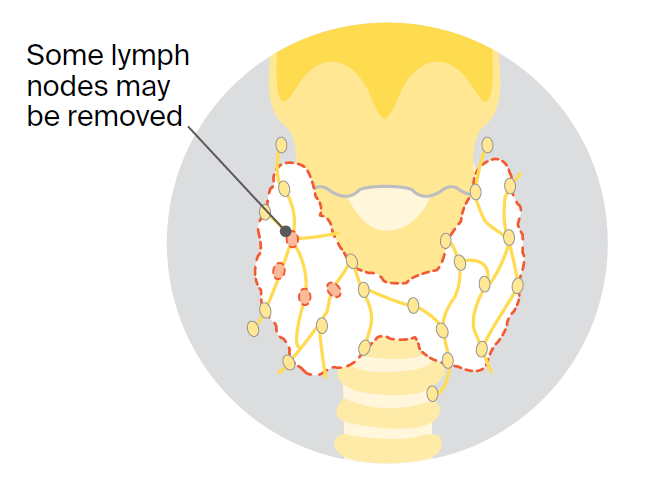
With either type of surgery, nearby lymph nodes may also be removed. This may be to check if cancer has spread, or if scans suggest cancer has spread to the lymph nodes. Sometimes the nodes behind the thyroid are removed to reduce the risk of cancer coming back.

Most people feel better and return to usual activities within 1–2 weeks, but recovery may take longer. Sometimes surgery affects the nerves to the voice box, making your voice tired, hoarse or weak. This usually improves with time, but for a small number of people some changes may be permanent.
Pain medicine usually helps if you are sore from surgery. How you are positioned during surgery may give you a stiff neck or back for a while. Massage and physiotherapy may help. For a couple of weeks, avoid heavy lifting, intense exercise like running, and turning your head quickly. It will hurt to swallow for a few days, so eat soft foods. Your throat may feel stiff for a few months but this usually improves gradually.
If surgery affects the parathyroid glands, your blood calcium levels will be checked. Low calcium (hypocalcaemia) may cause headaches, tingling in your hands, feet and lips, and muscle cramps. You may need vitamin D or calcium supplements until your parathyroid glands recover (or permanently).Take calcium supplements at least 2 hours after thyroid hormone replacement tablets.
You will have a horizontal scar on your neck above the collarbone. This is usually about 3–5 cm long and in a natural skin crease. At first, this scar will look red, but should fade with time. Your doctor may suggest using special tape to help the scar to heal. Keep the area moisturised and avoid sun to help the scar fade faster. Your pharmacist, doctor or nurse may suggest a suitable cream.
I had no real side effects other than a scar, which has faded. I recovered quickly and was back at work after a couple of weeks. After the surgery, I was put on T4 (thyroxine) to get my hormones stable.
When the whole thyroid is removed, your body can’t make enough T4 (thyroxine) hormone. You’ll need to take tablets for the rest of your life to keep a healthy metabolism (see The thyroid hormones) and reduce the risk of cancer returning. This is because T4 stops your pituitary gland releasing too much TSH, which can help thyroid cancer grow.
If there’s a high risk of cancer returning, you will take a high dose of T4 – called TSH suppression. To find the right dose, you’ll have blood tests every 6–8 weeks to begin with. A small number of people experience side effects at first, including anxiety, problems sleeping, racing heart and sweating.
Also called radioactive iodine ablation or thyroid ablation, this treatment destroys any remaining cancer cells and thyroid tissue left after surgery. It uses radioactive iodine (RAI) or I-131 that you take as a tablet in hospital. RAI kills thyroid cells and thyroid cancer cells while having little effect on other body cells. You have RAI treatment weeks or months after surgery, when any swelling has gone down.
Limit foods high in iodine – From 2 weeks before RAI treatment, avoid seafood, iodised salt, sushi, some dairy foods and certain food colourings.
Tell your doctor about recent imaging scans – Any CT or other scans using iodine dye (contrast) in the past 2 months can affect RAI treatment.
Raise TSH levels – For RAI treatment to work, you need to have a high level of TSH in your body.
To raise TSH levels, you will usually have injections of a synthetic type of TSH hormone (called rhTSH). You are given an rhTSH injection each day for the 2 days before your RAI treatment.
In rare cases, instead of injections, you may raise your TSH levels by stopping your thyroid hormone replacement medicine for 3–4 weeks. You will need blood tests, to check that TSH levels are high enough, before you have RAI treatment. Talk to your doctor about ways to manage any hypothyroidism symptoms that develop in this period.
Your doctor will explain when to start taking your thyroid hormone replacement after RAI treatment.
RAI may have a short-term effect on eggs and sperm, so wait 6 months before trying for a baby. You need normal thyroid hormone levels before getting pregnant. Ask your doctor about fertility and RAI.
RAI may have a short-term effect on eggs and sperm, so wait 6 months before trying for a baby. You need normal thyroid hormone levels before getting pregnant. Ask your doctor about fertility and RAI.
You go to hospital the day you start treatment. After swallowing the RAI tablet, your body fluids will be radioactive for a few days, so you will need to stay in hospital for 1-3 days. Ask your team questions before you go to hospital, so you know what to expect.
Once the radiation has dropped to a safe level, you can go home. If you had the synthetic TSH injections, this usually takes a day.
A few days after treatment, you will usually have a full body scan to check for any remaining thyroid cells. It’s normal for the scan to find some thyroid cells in the neck as small amounts of healthy thyroid tissue remain after surgery. RAI takes several months to destroy this tissue. The scan may also show if cancer has spread to lymph nodes or other areas.
Side effects – These are usually temporary and drinking lots of water helps the radiation pass out of your body faster, reducing your bladder’s exposure to radiation. Some side effects, such as tiredness, are often from thyroid hormone withdrawal, and improve when your levels return to normal.
The salivary glands may absorb some iodine, leaving a dry mouth or taste and smell changes for a few weeks. You may have dry or watery eyes.
While in hospital you will be in a room by yourself. You may not be allowed visitors, or only short visitswhere people stay 2–3 metres away from you. Pack an electronic device, book or game so you’re not bored. When you go home, you will need to take some safety measures for the first few days. These include:
While in hospital you will be in a room by yourself. You may not be allowed visitors, or only short visitswhere people stay 2–3 metres away from you. Pack an electronic device, book or game so you’re not bored. When you go home, you will need to take some safety measures for the first few days. These include:
EBRT is only suggested for thyroid cancer that has a high risk of coming back. It may be used if surgery hasn’t removed all the cancer near important structures such as the windpipe. EBRT may be used for medullary or anaplastic thyroid
cancers (which do not respond to RAI). Rarely, it is used as palliative treatment – to relieve symptoms if the cancer has spread.
EBRT directs high-energy radiation beams precisely to the affected area, to kill cancer cells or damage them so they cannot grow, multiply or spread.
Before treatment, the radiation therapist takes CT scans to work out the exact area to be treated and may make small marks on your skin. This ensures the same part of your body is targeted during each treatment session.
You may be fitted for a plastic mesh treatment mask, to keep you in position so radiation is given to the same area each session. You can see and breathe through the mask, but it may feel uncomfortable, so talk to the radiation therapy team if you feel anxious.
You will lie very still on a table as the machine moves around you but does not touch you. The radiation session is painless, and you won’t feel anything.
Most people have treatment weekdays for one to several weeks. However, treatment is different for everyone – so how often, and for how long you have treatment, can vary. Treatment sessions usually take about 10 minutes, but it can take up to 30 minutes to position the machine correctly.
Side effects – Feeling tired, having difficulty swallowing, having a sore throat, a dry mouth, and red, dry, itchy, sore or ulcerated skin are common side effects with EBRT for thyroid cancer.
For some people, side effects don’t happen right away – they may begin after the first few sessions. Most side effects will go away within a few weeks or months after treatment ends. Your treatment team can help you prevent or manage any side effects if they happen.
Most thyroid cancers respond well to common treatments, but a small number may need other options or newer treatments.
This drug treatment attacks specific features of cancer cells, to stop the cancer growing and spreading. It is given as a daily tablet, which you take for several years. Targeted therapy may be suggested if RAI treatment isn’t working. It may also be available on clinical trials for rare or aggressive thyroid cancers.
This may be used in combination with radiation therapy to treat anaplastic thyroid cancer or when advanced thyroid cancer has not responded to RAI treatment or targeted therapy. Chemotherapy is given by injection into a vein (intravenously), with the number of sessions and length of treatment varying from person to person.
This is a drug treatment that uses the body’s own immune system to fight cancer. It’s not commonly used for most thyroid cancers, but may be available through clinical trials for anaplastic thyroid cancer.
This radioactive nuclear medicine may be available through clinical trials for advanced medullary thyroid cancer. A protein (peptide) combined with a small amount of radioactive substance (radionuclide) is given intravenously, through a needle into a vein. It targets cancer cells and delivers a high dose of radiation that kills or damages them. It is also called peptide receptor radionuclide therapy (PRRT).
For information about treatments and their side effects, see Targeted therapy, Chemotherapy, Immunotherapy and Clinical trials and research.
People were a little dismissive because thyroid cancer has a good outlook. They said, ‘If you’re going to get cancer, that’s the best type to get’. But I didn’t find this very helpful. The word ‘cancer’ made me feel gutted and afraid.
After your treatment ends, you will have regular appointments to monitor your health, manage any long-term side effects and check the cancer hasn’t come back or spread. During these check-ups,you may have a physical examination, blood tests, an ultrasound or other scans. You will also be able to discuss how you’re feeling and mention any concerns you may have.
Australian Thyroid Foundation
Services offered
Find the right services for your needs, wherever you are in Australia
Trusted cancer information for all people affected by cancer
We're available 9am - 5pm, Monday to Friday (excluding public holidays)