

Lymphoma Australia
Services offered
Cancer information
Support from cancer nurses
Each year, about 7800 Australians are diagnosed with lymphoma. The two main groups of lymphoma are Hodgkin lymphoma and non-Hodgkin lymphoma, which both affect white blood cells called lymphocytes.
Learn more below about types of lymphoma, how the lymphatic system works, and who treats lymphoma.
Cancer is a disease of the cells. Cells are the body’s basic building blocks – they make up tissues and organs. The body constantly makes new cells to help us grow, replace worn-out tissue and to heal injuries.
Normally, cells multiply and die in an orderly way, so that each new cell replaces one that is lost. Cancer develops when cells become abnormal and keep growing. These abnormal cells may turn into cancer.
When a cancer begins in abnormal blood cells, it is known as a blood cancer.
The 3 main groups of blood cancers are:
Lymphoma is cancer of the body’s lymphatic system. It happens when white blood cells called lymphocytes become abnormal and grow uncontrollably to form a lump (tumour), usually in a lymph node.
If these abnormal lymphocytes continue to build up, they can spread and form a tumour in another part of the lymphatic system or, sometimes, in an organ outside the lymphatic system, such as the liver or lung. This is still lymphoma, not another type of cancer.
Sometimes other types of cancer spread to the lymph nodes. This is not lymphoma. For example, breast cancer that has spread to the lymph nodes is still called breast cancer.
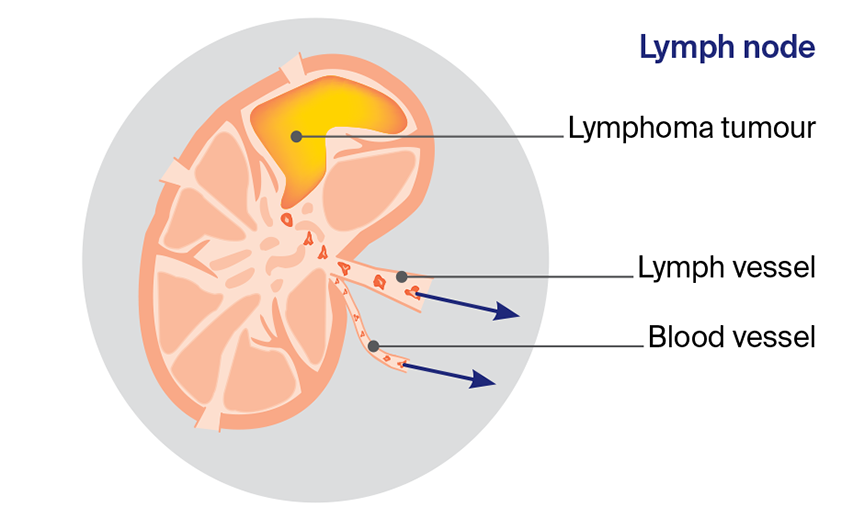
Lymphoma can travel through the lymphatic system (or sometimes through the blood vessels) to other parts of the body.
Lymphoma is a cancer of the lymphatic system. The lymphatic system is part of the immune system, which protects the body against disease and infection. The lymphatic system is made up of a network of vessels, tissues and organs.
Also called lymph glands, these small, bean-shaped structures are made up of lymph tissue. There are about 600 lymph nodes found in groups along the lymph vessels, including in the neck, underarms, chest, abdomen (belly) and groin. Lymph nodes filter lymph fluid before emptying most of the fluid into the bloodstream.
These thin tubes are found throughout the body and in organs such as the spleen, liver, thymus and bone marrow. Lymph vessels carry lymph fluid around the body.
This clear fluid travels to and from the tissues in the body, carrying nutrients throughout the body and taking away bacteria, viruses, abnormal cells and cell debris.
As well as lymph nodes, lymph tissue is found in other parts of the body:
Bone marrow is the soft, spongy material inside bones. It makes stem cells, which are unspecialised cells that usually grow into one of three main types of blood cells: red blood cells, white blood cells and platelets. Each type of blood cell has a specific job to do.
The blood contains different types of cells, which all play different roles in the body.
White blood cells are part of the immune system and help fight infections. There are different types of white blood cells and they have different roles. The lymph nodes, lymph tissue and lymph fluid all contain the white blood cells known as lymphocytes.
Types of lymphocytes include:
Diseases such as lymphoma and treatments such as chemotherapy can lower the number of blood cells in the body and cause:
For more information about lymphoma and other blood cancers, visit Lymphoma Australia or the Leukaemia Foundation.
There are 2 main groups of lymphoma – Hodgkin lymphoma and non-Hodgkin lymphoma. Both are blood cancers that start in the lymphatic system and affect white blood cells called lymphocytes. Lymphocytes are special white blood cells that help your body fight off germs and stay healthy.
Both groups of lymphoma usually start in a lymph node in one or more places in the body. They can then spread through the lymphatic system from one group of lymph nodes to another. They can also spread to other lymph tissue, particularly in the bone marrow and spleen.
Sometimes, lymphoma can start in or spread to tissue in an organ outside the lymphatic system, such as the stomach, bowel, skin, bone, or brain and spinal cord (central nervous system). This is known as extranodal disease, and is more common with non-Hodgkin lymphoma.
A key difference between Hodgkin and non-Hodgkin lymphomas is in the cells: Hodgkin lymphoma involves a special cell called the Reed-Sternberg cell, while non-Hodgkin lymphoma does not.
Hodgkin lymphoma is more common in teens and young adults, while non-Hodgkin lymphoma is more common in older people.
Non-Hodgkin lymphoma is more common in Australia.
Hodgkin lymphoma – About 839 people are diagnosed with Hodgkin lymphoma in Australia each year. Hodgkin lymphoma can occur at any age, but it most commonly develops in younger people (with almost half of cases occurring in those aged 15–39), and in people aged 60 years and over. It is slightly more common in men than women.
Non-Hodgkin lymphoma – Almost 7000 people are diagnosed with non-Hodgkin lymphoma in Australia each year. It is more common in men than women, and most cases occur in people who are aged 60 and over.
Hodgkin lymphoma has 2 main types, while there are more than 60 types of non-Hodgkin lymphoma. Knowing the type helps doctors plan treatment.
Classical Hodgkin lymphoma occurs in about 95% of people with Hodgkin lymphoma. It features large abnormal cells called Reed-Sternberg cells, which have a distinctive appearance when seen under a microscope.
The other main type of Hodgkin lymphoma is called nodular lymphocyte-predominant Hodgkin lymphoma (NLPHL) and is rare. It tends to grow more slowly than classical Hodgkin lymphoma. It features abnormal cells that are sometimes called “popcorn cells” because of how they look.
For non-Hodgkin lymphoma, the type is based on whether the lymphocyte affected is a B-cell, T-cell or, rarely, NK-cell. It is also classified by how fast the lymphoma is growing (the grade). The most common types are listed below.
About 85% of all non-Hodgkin lymphomas are B-cell lymphomas. The most common types of B-cell lymphomas are diffuse large B-cell (about 1 in 3 cases) and follicular lymphoma (about 1 in 5 cases).
About 15% of all non-Hodgkin lymphomas are T-cell lymphomas. Some of the most common subtypes are listed below. It can be challenging to diagnose the specific subtype of T-cell lymphoma, and it may take some time.
I’d noticed a lump in my neck but didn’t think much of it. When I started sweating so much at night that the sheets were drenched, I went to the doctor. After a biopsy I was told I had follicular lymphoma. I had no idea what that was.
Your general practitioner (GP) will arrange the first tests to assess your symptoms. If these tests do not rule out cancer, you will usually be referred to a specialist, such as a haematologist or medical oncologist. The specialist will arrange further tests to work out what type of lymphoma you have.
If Hodgkin or non-Hodgkin lymphoma is diagnosed, the specialist will consider your treatment options. Often these will be discussed with other health professionals at what is known as a multidisciplinary team (MDT) meeting. During and after treatment, you will see a range of health professionals who specialise in different areas of your care.
Lymphoma Australia
Services offered
Leukaemia Foundation
Services offered
Find the right services for your needs, wherever you are in Australia
Trusted cancer information for all people affected by cancer
We're available 9am - 5pm, Monday to Friday (excluding public holidays)