
Overview
The main types of breast reconstruction operations are implant and flap reconstructions – each has different benefits and drawbacks. You may choose to create the look of a nipple as part of reconstruction surgery.
A reconstruction can be done as an immediate or delayed procedure. Recovery after an implant or flap reconstruction can take several months. Short-term side effects may include pain, bruising and swelling.
What's on this page

This section provides information about having a breast reconstruction after breast cancer surgery. For information about breast cancer and what to expect before, during and after surgery, see Breast cancer and Surgery.
It is estimated that almost 1 in 3 women in Australia has a breast reconstruction after a mastectomy.
When can I have a reconstruction?
Breast reconstruction can be done at the same time as a mastectomy (immediate reconstruction) or months or years later (delayed reconstruction). The timing depends on the type of breast cancer you were diagnosed with, whether you need further treatment after surgery (for example, radiation therapy or chemotherapy), the type of reconstruction, your general health, and other concerns such as cost.
Immediate reconstruction
Immediate reconstruction
If you have a breast reconstruction during the mastectomy, it may be possible to save most of the skin but not the nipple (skin-sparing mastectomy). Sometimes it may be possible to leave the nipple in place (nipple-sparing mastectomy). Having a skin- or nipple-sparing mastectomy often means a more natural look and fewer scars.
Delayed reconstruction
Delayed reconstruction
Sometimes you won’t be able to have an immediate reconstruction because of medical and cancer treatment or the surgery schedule at the hospital. You may also need to have the reconstruction in a number of stages to achieve the desired result. Talk to your surgeon about these issues.
Who will do the reconstruction?
Breast reconstruction is done by a breast surgeon or a reconstructive (plastic) surgeon. If a breast surgeon is trained in plastic surgery, they are known as an oncoplastic breast surgeon.
The breast surgeon and the reconstructive (plastic) surgeon may do the breast cancer surgery and reconstruction during the same operation. A breast surgeon can do implant reconstructions and a reconstructive (plastic) surgeon can do both implant and flap reconstructions.
You can ask your surgeon:
- what the surgery will involve and the length of the recovery
- about their experience and expertise
- what risks are associated with the different types of reconstructions
- to show you photographs of their work, including how the reconstruction looks straight after surgery and several months later.
Finding a surgeon
Finding a surgeon
When considering having a reconstruction, ask to be referred to an expert in breast reconstruction. Check that the breast surgeon is a member of Breast Surgeons of Australia and New Zealand (BreastSurgANZ) and that the reconstructive (plastic) surgeon is a member of the Australian Society of Plastic Surgeons.
Which health professionals will I see?
Which health professionals will I see?
In hospital, you will be cared for by a range of health professionals who specialise in different aspects of the reconstruction procedure. Specialists and other health professionals will take a team-based approach to your care as part of a multidisciplinary team (MDT). The health professionals listed below may be in your MDT.
Health professionals you may see
- breast surgeon – performs breast surgery and biopsies; some breast surgeons also perform breast reconstruction
- oncoplastic breast surgeon – performs breast surgery and biopsies; performs some types of breast reconstruction
- reconstructive (plastic) surgeon – uses a variety of plastic surgery techniques to reconstruct the breast’s appearance after surgery
- anaesthetist – assesses your health before surgery; administers anaesthesia and looks after you during the surgery; commonly plans your pain relief after surgery
- breast care nurse – provides breast cancer care; provides information, support and referrals during and after treatment
- radiation oncologist – treats cancer by prescribing and overseeing a course of radiation therapy
- medical oncologist – treats cancer with drug therapies such as chemotherapy, targeted therapy and immunotherapy
- occupational therapist, physiotherapist – assist with physical and practical problems, including restoring movement and mobility after surgery and recommending aids and equipment; provide treatment if lymphoedema occurs
- social worker – links you to support services and helps you with any emotional, practical and financial issues
- counsellor, psychologist, psychiatrist – help you manage your emotional response to diagnosis and treatment
What to do before surgery
Stop smoking or vaping – If you smoke tobacco or vape, aim to quit as soon as possible. Continuing to smoke or vape can damage the blood vessels and increase the risk of complications after surgery. This can delay skin healing and recovery time. For support, talk to your doctor or call the Quitline on 13 7848.
Exercise regularly – This will help you build up your strength to cope with recovery and reduce the risk of complications after surgery. Talk to your doctor, physiotherapist or exercise physiologist about the amount and type of exercise that is right for you.
Talk to someone – It’s natural to feel anxious before surgery. Talk to your treatment team, or call Cancer Connect on 13 11 20 to arrange to speak to a trained Cancer Connect volunteer who has had reconstruction surgery and can offer you support.
Types of breast reconstruction
There are different ways to reconstruct a breast shape:
- using implants
- using a flap of your own skin, fat or muscle (also called autologous)
- using a breast implant and your own tissue.
Most breast reconstructions involve 2 or more operations. Talk to your surgeon about how long you may have to wait between operations. Learn about other questions to ask. Your surgeon will discuss the different techniques and suggest the most suitable type of reconstruction for you. They can also tell you what to expect after surgery.
Your reconstruction options will depend on several factors, including:
- your preference
- your body shape and build, and whether you have a body mass index (BMI) over 30
- your general health
- the surgeon’s experience
- how much breast tissue has already been removed
- any scars or previous operations to the area of your body where tissue will be taken
- the quality of the remaining skin and muscle
- the breast size you would like
- whether one or both breasts are affected
- whether you need radiation therapy or have already had it
- whether you smoke or vape or have recently quit – smoking and vaping affect the type and timing of the reconstruction you can have.
Implant reconstruction
This uses a sac filled with silicone gel or saline to create a breast shape. You may have an implant reconstruction as a one-stage or two-stage operation.Flap reconstruction
This builds the shape of a breast using your own muscle, fat and skin, which is taken from another area of the body. It’s also called autologous reconstruction.Re-creating the nipple
You may want only the shape of the breast reconstructed without a nipple, or you may choose to have the look of a nipple. The appearance of a nipple and areola (the brown or pink rim of tissue around the nipple) can be created in several ways.
Adhesive nipples
Adhesive nipples
These stick to the skin or breast prosthesis and stay in place for several days. They are made from soft silicone and are available in a variety of colours. You can buy them from breast prostheses suppliers.
Nipple made from your own body tissue
Nipple made from your own body tissue
A small operation can reconstruct a nipple and the areola. This operation is generally done a number of months after a reconstruction to give your body time to heal from the original operation and because the reconstructed breast may drop slightly after surgery.
The nipple is made from tissue on your reconstructed breast. It is folded to create a nipple shape. The new nipple won’t have nerves, so it will not feel any sensation or become erect to touch. Sometimes the nipple can flatten out and sometimes it can be permanently erect.
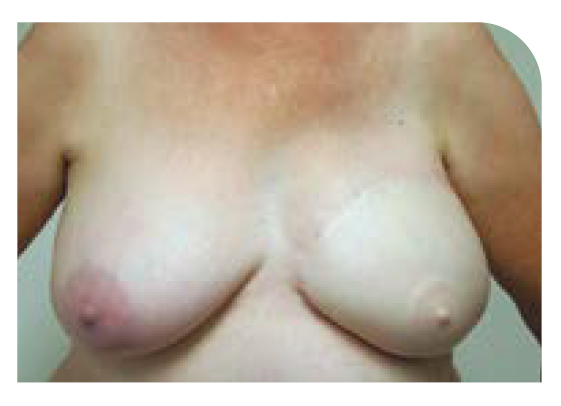
Reconstructed breast and nipple (no tattoo)
After the reconstruction you will have a new nipple.
Nipple tattoo
Nipple tattoo
The new nipple can be tattooed to match the colour of the other nipple. The tattoo can be done by a reconstructive (plastic) surgeon, trained nurse, professional medical tattooist or specially trained cosmetic therapist. Initially, the tattoo will look darker than the remaining nipple, but it will fade with time to match in colour.
A new technique called 3D nipple tattoos uses different shading to create the appearance of a nipple. Your breast care nurse can give you more information about this new procedure.
Surgery to the other breast
Often the difference between the remaining breast and the reconstructed breast is small and not noticeable when wearing a bra. But if the difference in breast size is more obvious, you may decide to have the remaining breast made smaller or larger by surgery to match the reconstructed breast and improve balance and posture.
Bilateral mastectomy
Bilateral mastectomy
You may be advised or choose to have a bilateral mastectomy – also called a double mastectomy. This means both breasts are removed at the same time.
You may have a bilateral mastectomy for several reasons:
- the type of breast cancer you have
- your risks and/or anxiety about developing another breast cancer
- family history or a gene fault that increases your breast cancer risk
- the amount of surgery required to achieve a symmetrical result with the breast reconstruction
- choosing an abdominal flap reconstruction – because surgery on the abdomen can only be done once, the flap procedure can’t be repeated at a later date if cancer develops in the other breast.
You can consider reconstructing both breasts or going flat. Discuss your options with your doctor and get a second opinion if you wish.
Therapeutic mammaplasty
Therapeutic mammaplasty
This procedure combines surgery to treat breast cancer (breast-conserving surgery or wide local excision) with surgery to reduce the size of the breast (breast reduction).
It is often used as an alternative to mastectomy in suitable cases. Sometimes a breast reduction is done on the other breast at the same time, or at a later date.
What to expect after a reconstruction
Everyone reacts to surgery differently. The type of side effects you have will be influenced by the type of surgery you’ve had.
Short-term side effects
Appearance of the breast
Appearance of the breast
It's common to feel nervous when the bandages and dressings are first removed. It will take time for the bruising and swelling to fade, and the appearance of a breast reconstruction using a tissue flap may take longer to settle. If you're disappointed with the appearance of the breast, you may have other operations or procedures to improve the look and shape of the breast. Find out ways to feel better about how your body looks.
Pain relief
Pain relief
After any type of operation, you will be given pain medicines to ease your discomfort. You will also probably have small tubes (drains) inserted into the operation site to remove excess fluid, and may go home with them. If you have had a flap reconstruction, you will be sore in the area where the other tissue and/or muscle were taken, as well as in the breast area.
Healing problems
Healing problems
Sometimes the area will not heal well within the first week or so after surgery. This can be caused by infection, poor blood supply or problems with an implant or flap.
Any infection must be treated to reduce the possibility of further complications. If an implant has been used, it might need to be taken out. It may be possible to have a new implant put in at a later date.
Bleeding
Bleeding
Blood may build up in or under the wound. This is called a haematoma, and it causes swelling and pain. A large haematoma may need to be removed by surgery.
Seroma
Seroma
Scars
Scars
All types of breast reconstruction will leave a scar. Everyone heals differently, and the final appearance of a scar will vary, even if the surgery is the same. Most scars have a thickened, red appearance at first, but they will usually fade after about 3 months.
Sometimes the scar stays thick and becomes itchy and uncomfortable. Before the surgery, let your surgeon know if you have other raised, irregular scars (sometimes called keloid scars), as this may show that you are prone to getting these types of scars. Your surgeon or breast care nurse can advise you about treatments to reduce the discomfort. You may be able to have further surgery to improve the scar’s appearance.
Long-term considerations
Pregnancy
Pregnancy
Breast reconstruction doesn’t affect your ability to become pregnant or carry a baby. There is a small risk of having a hernia during pregnancy if you had an abdominal flap reconstruction. Your doctor will talk to you about any risks you may have and how to manage them.
Breastfeeding
Breastfeeding
It will not be possible to breastfeed with the reconstructed breast. You may be able to breastfeed successfully with the other breast, although this may be difficult if you have had reduction surgery in this breast. You can ask a breast care nurse or lactation consultant any questions you have about breastfeeding after a reconstruction.
Taking care of yourself after a reconstruction
How long your recovery takes will depend on your age, general health and the type of surgery you had. Find out ways to look after yourself, including arm exercises.
Rest
Rest
When you get home from hospital, you will need to take things easy for the first few weeks. Ask family and friends to help you with chores so you can rest.
Lifting
Lifting
Avoid repetitive arm movements (e.g. hanging out washing, vacuuming), heavy lifting (more than 5 kg, so this may include shopping bags) and activities that strain your arm. You can gradually return to your usual activities after 4–8 weeks.
Driving
Driving
You will probably need to avoid driving for 4–6 weeks after surgery. Discuss this timing with your breast surgeon.
Tummy problems
Tummy problems
After abdominal flap surgery, you may have weaker abdominal muscles. Get up from a low chair or sit up in bed carefully. Wearing supportive underwear will help. If the weakness continues after 6 weeks, ask your doctor for a referral to a physiotherapist or an exercise physiologist for an exercise program.
Loose clothing
Loose clothing
Until the area is healed, wear loose-fitting comfortable clothing.
Follow-up appointments
Follow-up appointments
Continue to see the specialist who performed the reconstruction until your body has healed.
Costs and financial assistance
Before you have surgery, find out how much it will cost to have a breast reconstruction. Check with your surgeon, the hospital, Medicare and your private health fund, if you have one, before deciding to go ahead. Ask about likely out-of-pocket costs. These may include pain medicines, post-surgical bras and check-ups with your breast surgeon.
Services to help with the costs of a reconstruction include:
If you live in a regional or rural area
If you live in a regional or rural area
Every state and territory has a government scheme that provides financial help to people who need to travel long distances for specialist medical treatment that is not available in their local area. Many schemes also assist with the cost of accommodation. Ask the hospital social worker about services you are eligible to receive.
If you need legal or financial advice
If you need legal or financial advice
Talk to a qualified professional about your situation. Cancer Council offers free legal and financial services in some states and territories for people who can’t afford to pay – call Cancer Connect on 13 11 20 to ask if you are eligible.
If you have your nipple tattooed
If you have your nipple tattooed
There is a Medicare rebate if the tattooing is done by a health professional with a Medicare provider number. If you have private health insurance, it may cover the cost of the tattooing.
With my private insurance, I was significantly out of pocket. However, the advantage gained with the reconstruction was well worth the cost.”
What to consider – reconstruction costs
Public hospital
Public hospital
- Reconstruction after a mastectomy is a medical procedure, not a cosmetic one, so the costs are covered through Medicare for a public patient in a public hospital.
- There may be some extra charges if an implant is used.
- There may be some extra charges for private patients who have a reconstruction in a public hospital.
- If you choose to have a delayed reconstruction, you will be put on the hospital’s elective surgery waiting list. Ask your surgeon how long you might have to wait.
- You can change your mind and decide not to proceed with the reconstruction even if you are on a waiting list.
Private hospital
Private hospital
- Private patients may be covered by their private health insurance or may have to pay the cost themselves.
- In a private hospital, Medicare will cover some of the surgeon’s and anaesthetist’s fees. Your health fund may cover some or all of the remaining costs, but you may need to pay a gap fee or a hospital admission fee.
- Part of or the entire cost of an inflatable tissue expander and any permanent implant may also be covered by your health insurance provider.
- If you decide to join a health fund before your operation, you will have to wait the qualifying period before you can make a claim. This may be up to 12 months. Check with the different health funds.
For more information, see Cancer and your finances.
Find support services
Find the right services for your needs, wherever you are in Australia
Read cancer information
Trusted cancer information for all people affected by cancer
Need to talk to someone?
We're available 9am - 5pm, Monday to Friday (excluding public holidays)