
Overview
The two main types of non-melanoma skin cancer are basal cell carcinoma (BCC) and squamous cell carcinoma (SCC). They make up about 99% of skin cancers. Skin cancer is the most common cancer diagnosed in Australia.
What's on this page

What is skin cancer?
Skin cancer is the uncontrolled growth of abnormal cells in the skin.
The 3 main types are:
- basal cell carcinoma (BCC) – about 2 out of 3 skin cancers
- squamous cell carcinoma (SCC) – about 1 in 3 skin cancers
- melanoma – about 1 in 100 skin cancers.
BCC and SCC
These are also called non-melanoma skin cancer or keratinocyte cancer. They are far more common than melanoma and make up about 99% of skin cancers. See below for more information about each type.
Melanoma
This starts in the melanocytes and makes up 1–2% of all skin cancers. It is the most serious form of skin cancer because it is more likely to spread to other parts of the body, especially if not found and treated early. This section is only about non-melanoma (keratinocyte) skin cancers.
Rare types of skin cancer
These include Merkel cell carcinoma and angiosarcoma. They are treated differently from BCC and SCC. Call Cancer Connect on 13 11 20 for more information.
The skin
The skin is the largest organ of the body. It acts as a barrier to protect the body from injury, control body temperature and prevent loss of body fluids. The 2 main layers of the skin are the epidermis and dermis.
Epidermis
This is the top, outer layer of the skin. It has 3 main types of cells:
Squamous cells – These flat squamous cells are packed tightly together to make up the top layer of skin. They form the thickest layer of the epidermis.
Basal cells – These block-like basal cells make up the lower layer of the epidermis. The body makes new basal cells all the time. As they age, they move up into the epidermis and flatten out to form squamous cells.
Both basal and squamous cells are keratinocyte cells, which is why non-melanoma skin cancers are sometimes called keratinocyte cancers.
Melanocytes – These cells sit between the basal cells and produce a dark pigment called melanin that gives skin its colour. When skin is exposed to ultraviolet (UV) radiation, melanocytes make melanin to try to protect the skin from getting burnt. Melanocytes are also found in non-cancerous spots on the skin called moles or naevi.
Dermis
This layer of the skin sits below the epidermis. The dermis is made up of fibrous tissue and contains the roots of hairs (follicles), sweat glands, blood vessels, lymph vessels and nerves.
The layers of the skin
Types of non-melanoma (keratinocyte) skin cancer
Basal cell carcinoma (BCC)
How it may look
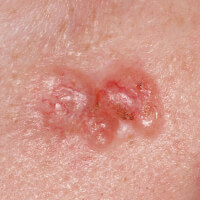
- the most common signs - a pink, pearl-like, flat or raised lump; shiny, pale/bright/dark pink scaly area
- what it may feel like - can be itchy, inflamed, ulcerate, weep, ooze, scab or bleed; may “heal” then inflame/bleed/itch again
- where it is most often found - sun-exposed areas, such as head, face, neck, shoulders, arms and legs, but may be anywhere
- how it usually grows - slowly over months or years; very rarely spreads to other parts of the body; may grow deeper, invade nerves and tissue, making treatment more difficult
- the risk factors - having had a BCC increases the risk of developing another BCC
Squamous cell carcinoma (SCC)
How it may look
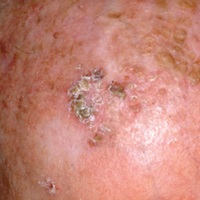
- the most common signs - a thick scaly lesion; a fast-growing pink lump; a red, scaly or crusted spot
- what it may feel like - can become inflamed and often feel tender to the touch; may occasionally bleed
- where it is most often found - sun-exposed areas, such as head, neck, hands, forearms and lower legs, but can start anywhere
- how it usually grows - quickly over weeks or months; called invasive SCC if it invades past skin’s top layer; untreated, may spread to other parts of the body (metastatic SCC)
- the risk factors - SCCs on head, neck, lips, ears and in people with weakened immune systems are more likely to spread
I have lots of age spots and moles. I find it hard, but I try to keep track of what they look like, and any changes. But I make sure to get a skin check by a doctor every year too. Last check they found an SCC, but luckily it was treated early.
What about other skin spots?
Some spots that appear on the skin are not cancerous. We have given examples of the most common ones here, but these skin spots can vary in how they look. If you are concerned about any mark or growth on your skin, see a general practitioner (GP) or a dermatologist to have it checked.
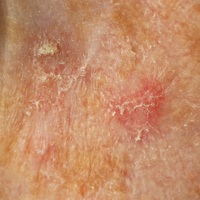
Sunspot (actinic or solar keratosis)
- flat, scaly spot that feels rough; often the colour of your skin or red
- usually appears on skin that is most exposed to the sun, such as the head, neck, hands, forearms and legs
- a sign of too much sun exposure and a marker of sun damage; a risk factor for skin cancer
- may on rare occasions develop into SCC skin cancer
- more common in people over 40, but anyone of any age can develop them
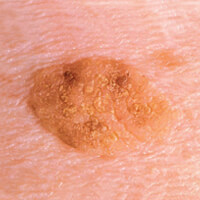
Age spot (seborrhoeic keratosis)
- raised area on the skin that feels may look and feel a bit like a wart
- may be itchy or bleed if scratched
- may range in colour from light to very dark brown
- found anywhere on the body apart from the palms of the hands and soles of the feet
- may look similar to a skin cancer or sunspot
- very common but harmless
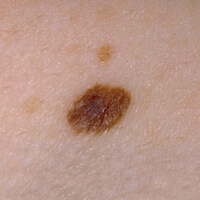
Mole (naevus)
- brown, black or the same colour as your skin; usually round or oval
- a normal skin growth that develops when melanocytes grow in groups
- some people have lots of moles – this can run in families
- too much sun exposure, especially as a child, may increase the number of moles
- very common
- a risk factor for melanoma; people with lot of moles may have a higher risk of developing melanoma
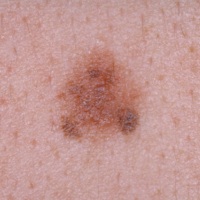
Irregular mole (dysplastic naevus)
- a larger mole with an irregular shape and uneven colour
- just as with moles, people with lots of irregular moles may have a higher risk of developing melanoma
What causes skin cancer?
More than 95% of skin cancers are caused by exposure to UV radiation. When unprotected skin is exposed to UV radiation, how the cells look and behave can change.
Australia has one of the highest UV levels in the world. The UV peaks during summer, but can damage unprotected skin most of the year. Even moderate UV levels can still do damage. UV radiation can’t be seen or felt. It isn’t related to the temperature and can still be high on cloudy days. UV radiation can cause sunburn; premature skin ageing; and damage to skin cells, which can lead to skin cancer.
You can’t always see sun damage that’s happened to the skin – and it can happen long before you get sunburnt or develop a tan. The damage also adds up over time and can’t be reversed.
You can check the UV levels in your local area on the SunSmart Global UV app. Find information on how to properly protect your skin from the sun and prevent skin cancer.
How common is skin cancer?
Australia has one of the highest rates of skin cancer in the world. About 2 out of 3 Australians will be diagnosed with some form of skin cancer before the age of 70.
Non-melanoma (keratinocyte) skin cancer is the most common cancer diagnosed in Australia. Over 1 million treatments are given each year in Australia for non-melanoma skin cancers. BCC can develop in young people, but it is more common in people over 40. SCC occurs mostly in people over 50.
Which health professionals will I see?
You may see one or more of the following doctors:
GP – Many GPs diagnose and treat people with BCC and SCC skin cancers. They may perform surgery, cryotherapy or prescribe topical treatments. Some GPs have extra training related to skin cancer. Before choosing a GP, you can ask what experience or qualifications they have with skin cancer. You may see a GP at a general practice, medical centre or skin cancer clinic. Skin cancer clinics are run by GPs with an interest in skin cancer. A GP may refer you to a dermatologist, surgeon, or radiation or medical oncologist for larger areas or cancers that are hard to remove. If there’s a waiting list and spot of concern, your GP can ask for an earlier appointment.
Dermatologist – A doctor who diagnoses, treats and manages skin conditions and skin cancer. They perform surgery, cryotherapy and prescribe topical treatments.
Radiation or medical oncologist – A radiation oncologist prescribes and oversees a course of radiation therapy, which may be used to treat some skin cancers. A medical oncologist prescribes cancer drug therapies, which may be used for a small number of (usually) advanced skin cancers.
Surgeon – Some skin cancers are treated by surgeons:
- Surgical oncologists specialise in treating cancer with surgery; they manage complex skin cancers, including those that have spread to the lymph nodes.
- Reconstructive (plastic) surgeons are trained in surgical oncology and in complex reconstructive techniques for more difficult to treat areas (e.g. the nose, lips, eyelids and ears).
Find support services
Find the right services for your needs, wherever you are in Australia
Read cancer information
Trusted cancer information for all people affected by cancer
Need to talk to someone?
We're available 9am - 5pm, Monday to Friday (excluding public holidays)