

Liver Foundation
Services offered
Cancer information
Support from cancer nurses
Emotional support
+2
Cancer cells can spread from a cancer in another part of the body to the liver through the bloodstream or lymph vessels. This is called secondary liver cancer.
Cancers that can spread to the liver include bowel, breast, kidney, lung and melanoma.
Secondary livery cancer may only have symptoms as the cancer grows. These include fatigue, pain in the abdomen or right shoulder blade, nausea and unexplained weight loss.
Cancer in the liver can be either a primary or secondary cancer. The two types of cancer are different. This section is only about secondary liver cancer.
Cancer that starts in the liver is called primary liver cancer. The most common type is hepatocellular carcinoma (HCC).
Find out more about primary liver cancer.
Cancer cells from a primary cancer in another part of the body can spread from there to the liver via the bloodstream or lymph vessels. This is called secondary liver cancer, and it is much more common than primary liver cancer in Australia. Secondary cancers keep the name of the original cancer (for example, secondary liver cancer that started in the lung is called metastatic lung cancer). Because the cancer has spread, it is considered advanced cancer.
Bowel cancer is the most common cancer that spreads to the liver. This is because the blood supply from the bowel is connected to the liver through a major vein called the portal vein. Other cancers that can spread to the liver include: breast, kidney, lung, melanoma, oesophageal, ovarian, pancreatic, prostate and stomach.
Sometimes, it’s not possible to find where the cancer started; this is called cancer of unknown primary (CUP).
If you have secondary liver cancer, you may find it useful to read our information on primary cancer types or CUP.
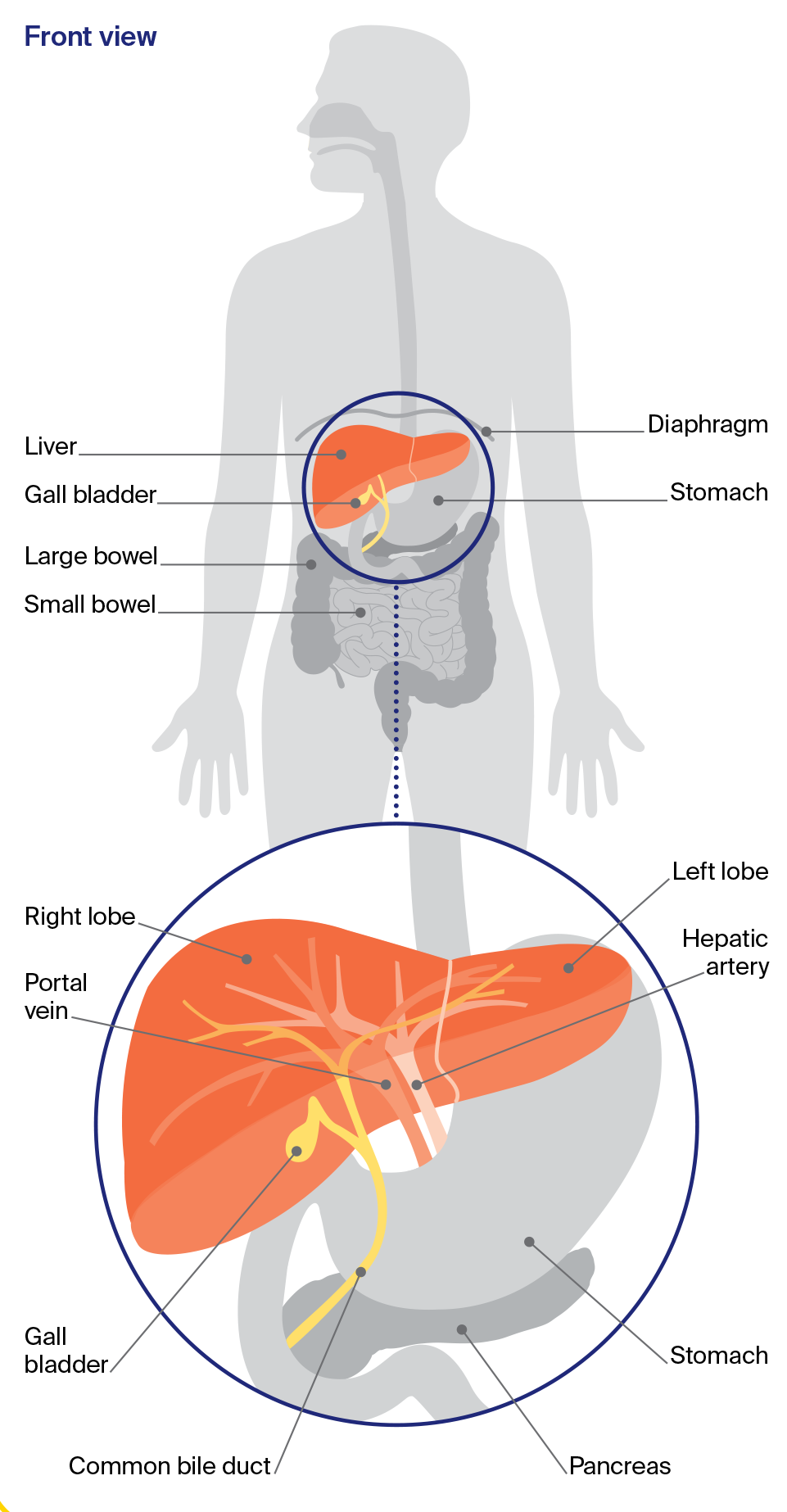
The largest organ inside the body, the liver is about the size of a football. It is part of the digestive system, working with the gall bladder and pancreas to help break down food and turn it into energy.
The liver has many important jobs, including:
The liver is found on the right side of the abdomen (belly) sitting just above the stomach and under the rib cage. The two main sections of the liver are the right and left lobes.
Blood flows into the liver from the hepatic artery and the portal vein. Blood in the hepatic artery comes from the heart and carries oxygen. Blood in the portal vein comes from the digestive organs and carries nutrients and substances (e.g. medicines) to the liver.
Unlike other internal organs, a healthy liver may be able to repair itself if it is injured or part of it is surgically removed during cancer treatment.
If the tumours are small, secondary liver cancer may have no symptoms. As the cancer grows or spreads, a range of symptoms may occur.
These may include:
Liver Foundation
Services offered
Pancare Foundation
Services offered
Find the right services for your needs, wherever you are in Australia
Trusted cancer information for all people affected by cancer
We're available 9am - 5pm, Monday to Friday (excluding public holidays)