

Lung Foundation Australia
Services offered
Cancer information
Support from cancer nurses
Emotional support
+1
The most common type of surgery is a lobectomy, where one of the lobes of the lung is removed. If the cancer is in more than one lobe or near the airways, a whole lung may be removed. It’s possible to still breathe normally with one lung.
Surgery can be keyhole, with video-assisted thoracoscopic surgery (VATS), or open surgery (a thoracotomy).
People with early NSCLC (stage 1 or 2) will generally be offered surgery to remove the tumour.
How much of the lung is removed (see Types of lung surgery) depends on several factors:
Surgery is not suitable for most people with advanced lung cancer.
If there is fluid in the pleural cavity (called pleural effusion) that keeps returning, you may have surgery (pleurodesis) to control this, or need to insert a catheter. See Managing symptoms more information.
If you smoke or vape, you will be advised to stop before you start treatment for lung cancer.
Stopping smoking can improve how treatments work and reduce the impact of side effects such as breathlessness. Research shows that stopping smoking before surgery also reduces the chance of complications and can help you recover faster.
To work out a plan for stopping, talk to your doctor, your nurse specialist, or call Quitline13 7848 (13 QUIT).
Your healthcare team may also suggest that you eat healthy foods and exercise before starting lung cancer treatment.
Preparing for treatment in this way is called prehabilitation. It can help you to cope with cancer treatment, recover more quickly and improve your quality of life.
A dietitian, exercise physiologist or physiotherapist can support you to make lifestyle changes. Ask your doctor for a referral.
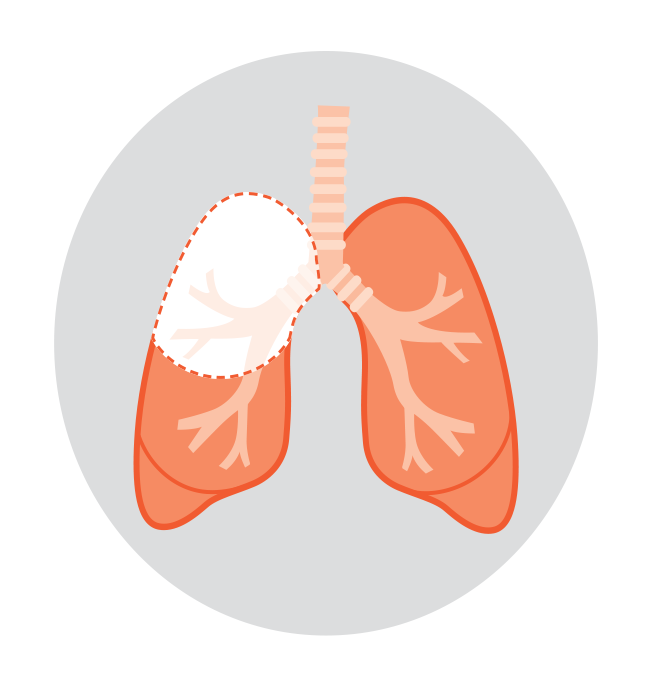
This is the most common type of surgery for lung cancer. In a lobectomy, one of the lobes of the lung (about 30–50% of the lung) is removed.
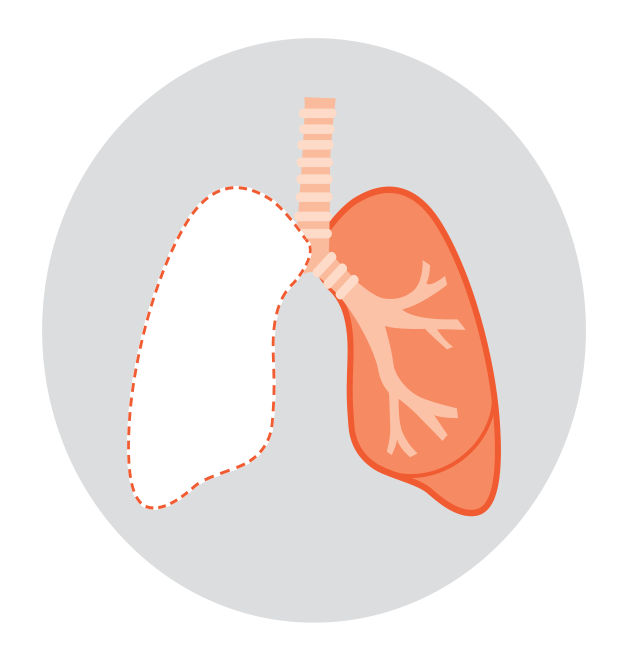
If the cancer is in more than one lobe of a lung, or near where the airways enter the lung, a pneumonectomy may be done. In this operation, a whole lung is removed. It’s possible to still breathe normally with one lung.
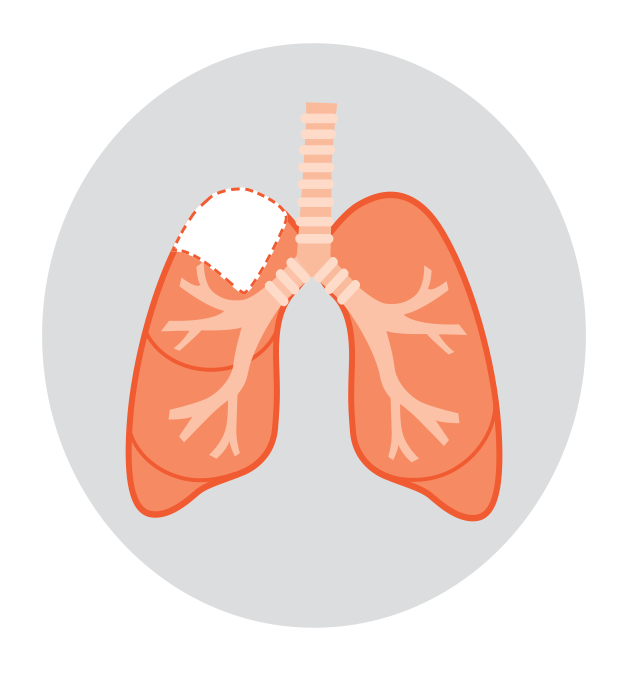
For some early-stage lung cancers that are on the edge of the lung, a segmentectomy may be used. In this operation, a small part of the lobe is removed. In cases where a patient is very unwell, however, a wedge resection may be considered. A wedge resection removes only a tiny piece of the lobe.
During surgery, the lymph nodes near the cancer will also be removed to check whether the cancer has spread. Knowing if the cancer has spread to the lymph nodes helps the doctors decide whether you need further treatment with chemotherapy or radiation therapy.
There are 2 main ways to perform surgery for lung cancer, and both require a general anaesthetic. Each type of surgery has advantages in particular situations – talk to your surgeon about the best option for you.
Lung cancer surgery can often be done using a keyhole approach. This is known as video-assisted thoracoscopic surgery (VATS). The surgeon will make a few small cuts (incisions) in the chest wall. A tiny video camera and operating instruments are passed through the cuts, and the surgeon performs the operation from outside the chest. A keyhole approach usually means a shorter hospital stay, faster recovery and fewer side effects.
If a long cut is made between the ribs in the side of the chest, the operation is called a thoracotomy. This may also be called open surgery. You will need to stay in hospital for 3–7 days.
Sometimes the surgeon may need to change from a VATs approach to a thoracotomy during the surgery.
Many hospitals in Australia have programs to reduce the stress of surgery and improve your recovery. Called enhanced recovery after surgery (ERAS) or fast-track surgical (FTS) programs, they provide information about what to expect each day after surgery. Find information about preparing for treatment.
A pulmonary rehabilitation program can help improve breathlessness and reduce the risk of a chest infection. A physiotherapist will show you how to do exercises. To continue rehabilitation after you leave hospital, talk to your surgeon or visit the Lung Foundation to find a program near you. Find simple strategies to ease breathlessness at home.
You will probably go home after 3–7 days. It may take 4–8 weeks after VATS or 6–12 weeks after thoracotomy to get back to your usual activities. Walking can help clear your lungs and speed up recovery.
Several tubes will be in place after surgery. They will be removed as you recover. A drip in a vein in your arm (intravenous drip) can provide fluid and medicines. Tubes in your chest drain fluid and help your lungs expand; and a tube in your bladder may check how much urine you pass.
You may have some pain after surgery but this can be controlled. Ask for pain relief as needed. Managing the pain will allow you to do breathing exercises and help you to recover. Pain will improve when tubes are removed from the chest.
Lung Foundation Australia
Services offered
National Lung Cancer Screening Program
Australian Government
Services offered
Find the right services for your needs, wherever you are in Australia
Trusted cancer information for all people affected by cancer
We're available 9am - 5pm, Monday to Friday (excluding public holidays)