

Liver Foundation
Services offered
Cancer information
Support from cancer nurses
Emotional support
+2
A range of non-surgical treatments aim to control liver cancer and manage the symptoms. Tumour ablation treats small tumours with heat or an alcohol injection. Special types of radiation therapy known as SBRT and SIRT deliver radiation directly to the tumour, while TACE is a method that delivers chemotherapy directly to the tumour. Immunotherapy and targeted therapy are drug treatments sometimes used for advanced liver cancer.
For tumours smaller than 3 cm, you may be offered tumour ablation. This destroys the tumour without removing it and may be the best option if you cannot have surgery or are waiting for a transplant.
Ablation can be done in different ways depending on the size, location and shape of the tumour. Thermal ablation and alcohol injection are the most common methods used for liver cancer. Cryotherapy, which uses freezing to destroy the tumour, is rarely used.
This ablation method uses heat to destroy a tumour. The heat may come from radio waves (radiofrequency ablation or RFA) or microwaves (microwave ablation or MWA). Using an ultrasound or CT scan as a guide, the doctor inserts a fine needle through the abdomen into the liver tumour. The needle sends out radio waves or microwaves that produce heat and destroy the cancer cells.
Thermal ablation is usually done under general anaesthetic in the x-ray department or the operating theatre. Treatment may take 1-2 hours. Some people may stay overnight in hospital, but many can leave the hospital after treatment. Side effects may include pain, nausea or fever, but these can be managed with medicines.
This ablation method involves injecting pure alcohol (ethanol) into the tumour. This procedure - called percutaneous ethanol injection or PEI - isn't available at all hospitals but may be used if other forms of ablation aren't possible. For this procedure, a needle is passed into the tumour under local anaesthetic, using an ultrasound as a guide. You may need more than one injection over several sessions. Side effects are rare but may include pain or fever. These can be managed with medicines.
Primary liver cancer is sensitive to radiation but so are healthy liver cells. Two specialised techniques can deliver radiation directly to the tumour while limiting the damage to the healthy part of the liver. These are called stereotactic body radiation therapy (SBRT) and selective internal radiation therapy (SIRT). SBRT may be suitable for people with early-stage cancer, while SIRT may be offered in more advanced cases.
Conventional external beam radiation therapy (EBRT) is also occasionally used as a palliative treatment to help manage symptoms. For example, short courses of EBRT can help to control pain caused by liver cancer that has spread to the bones.
This type of therapy may be called stereotactic body radiation therapy (SBRT) or stereotactic ablative body radiation therapy (SABR). It is a type of EBRT. The machine precisely targets beams of radiation from many different angles onto the tumour.
SBRT is prescribed by a radiation oncologist and delivered in a radiation therapy department. This method allows a high dose of radiation to be delivered to the tumour while surrounding healthy tissue is protected from the effects of radiation. SBRT requires fewer treatment sessions than conventional radiation therapy. People may need only 3-8 sessions over one or two weeks.
This treatment may be offered to people with tumours that can't be removed with surgery or treated with tumour ablation or TACE. SBRT may also be used to shrink tumours while people are waiting for a liver transplant.
Stereotactic body radiation therapy (SBRT) precisely targets beams of high-dose radiation from different angles onto the tumour.
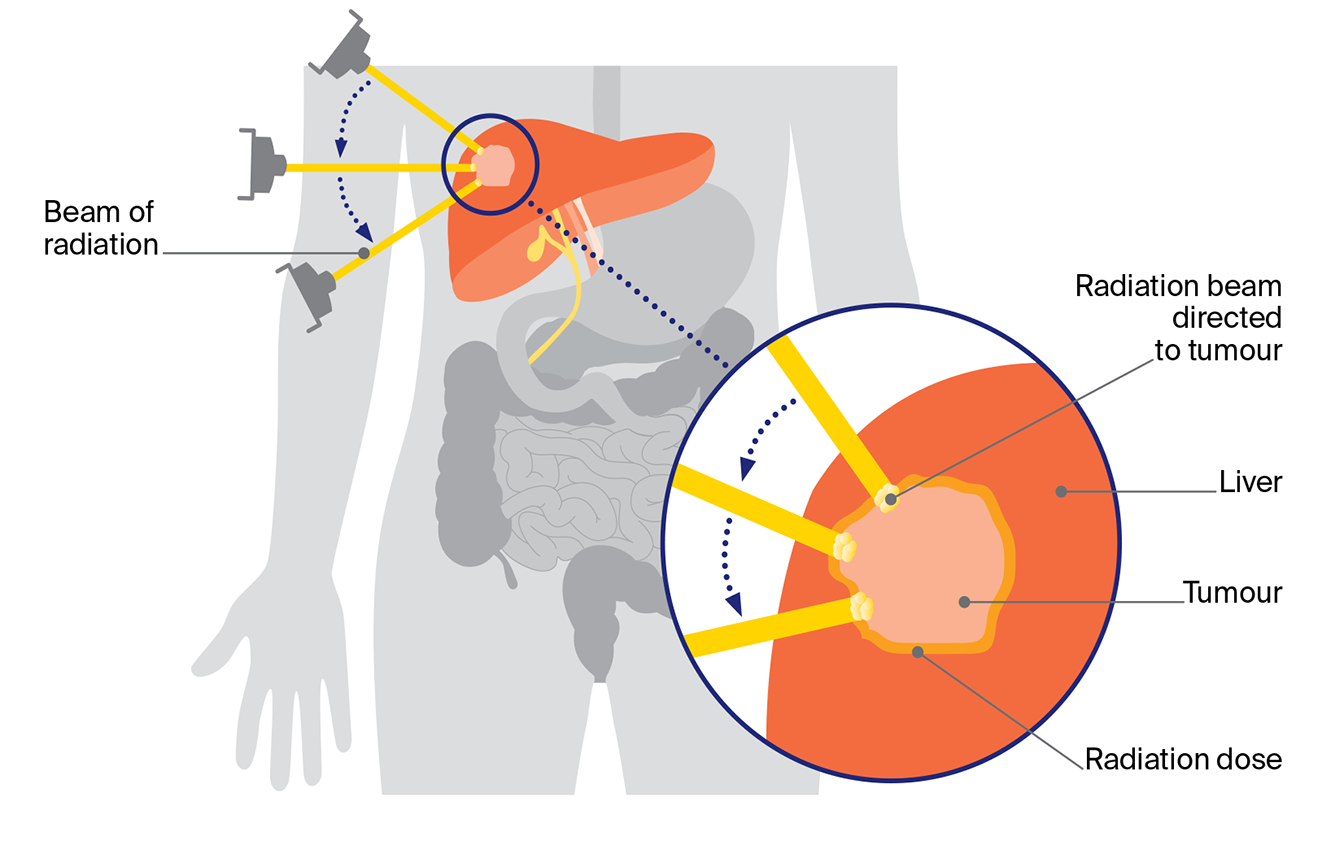
Before SBRT treatment, you will have a CT scan and maybe an MRI scan as well. These scans help make an individual plan for your treatment. You may also need a short procedure to insert small metal markers (called fiducial markers) next to the tumour. These markers allow the radiation oncologist to monitor the exact position of the tumour during the treatment. They are usually made of gold and are about the size of a grain of rice. A needle is used to put in the markers during the CT scan. Not all people will need to have these markers inserted.
During treatment, you will be asked to lie on a treatment table while a machine delivers the targeted beams to the tumour. It is important to lie very still during SBRT treatment. Simple breathing techniques - like holding your breath for 10-15 seconds - can help reduce movement during the procedure. Your treatment team will talk to you about this. SBRT itself is painless, and you can usually go home after the treatment. You will not be radioactive after SBRT.
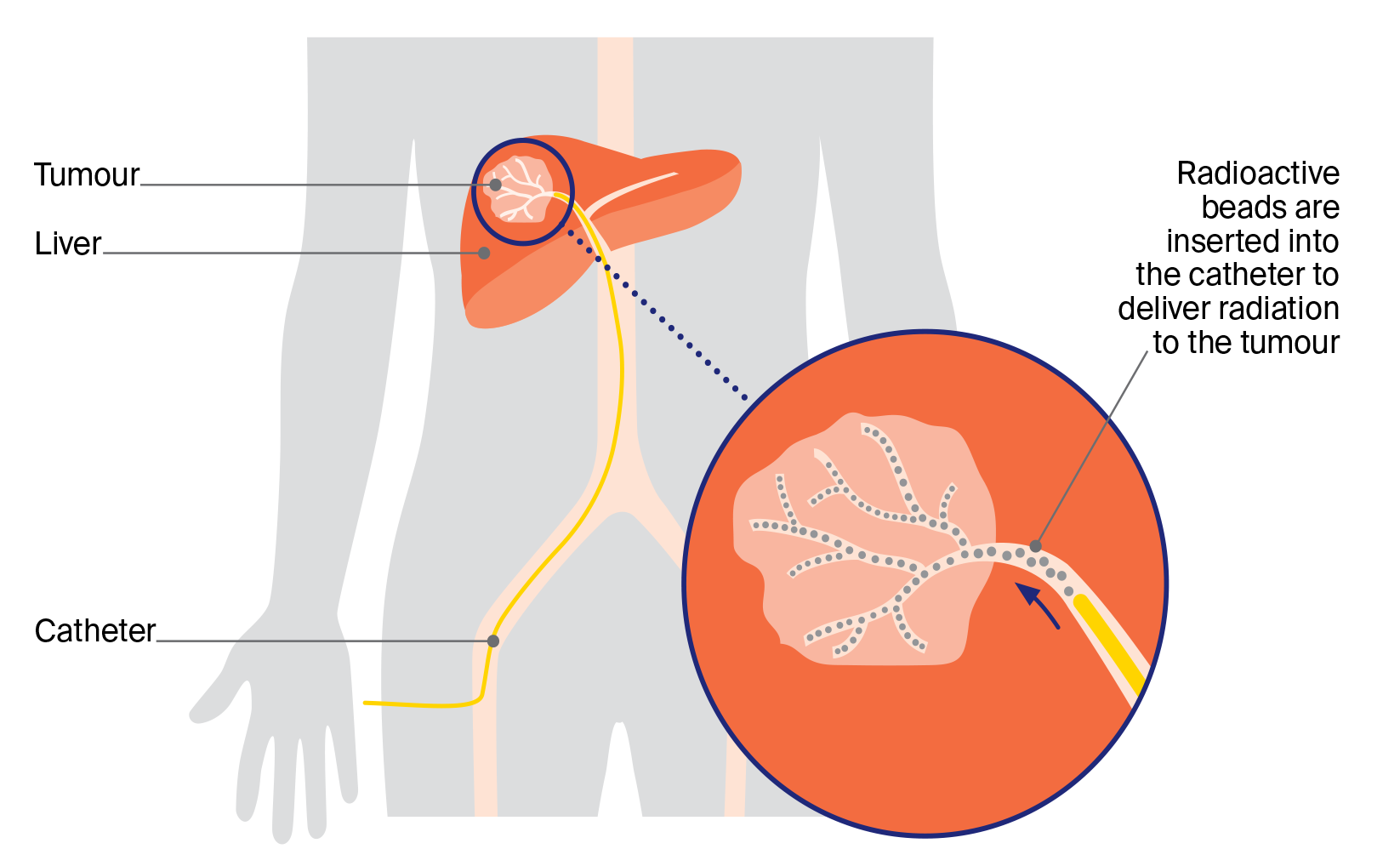
Selective internal radiation therapy (SIRT) is a different type of radiation therapy. Sometimes called radioembolisation, SIRT combines embolisation (which blocks blood supply to the tumour) with internal radiation, where the radiation source is placed inside the liver.
In SIRT, the radiation is delivered through the blood vessels to the tumour using tiny radioactive beads, which are made of resin or glass. The procedure may be offered for primary liver cancer when the tumours can't be removed with surgery or to shrink tumours before a liver resection or a transplant.
Selective internal radiation therapy (SIRT) combines embolisation with internal radiation therapy.
SIRT is performed by an interventional radiologist, supported by a nuclear medicine physician, in a radiology department. One to two weeks before the procedure, you will have a work-up day to ensure the procedure is appropriate for you.
Several tests will be done on this day, including blood tests to check kidney function and blood clotting, and an angiogram (an x-ray of the blood vessels).
Before the angiogram, you will have a local or general anaesthetic. The interventional radiologist will then make a small cut in the groin area and insert a thin plastic tube (called a catheter) into the artery that feeds the liver (hepatic artery). A small amount of dye (contrast) will be passed through the catheter into the bloodstream. On an x-ray, the dye provides a detailed map of the blood supply to the liver, which varies from person to person. The doctor may also block some small blood vessels. This helps to stop the radioactive beads travelling beyond the liver to other parts of the body when you have the SIRT treatment.
Next, a substance called a radiotracer will be injected into the catheter and you will have another scan. This scan shows where the radioactive beads will go on the day of treatment. It will also check if any beads are likely to travel to the lungs. This step helps the doctor work out if it is safe to go ahead with the treatment.
On the day of treatment, you will have another angiogram. The interventional radiologist will make a cut in the groin area and pass a catheter through to the hepatic artery.
The radioactive beads will be inserted through the catheter into the hepatic artery. These beads can then deliver radiation directly to the tumour.
The procedure takes about an hour. You will be monitored after the procedure, and recover in hospital overnight.
You may experience flu-like symptoms, nausea and pain, which can be treated with medicines. You can usually go home within 24 hours.
The radioactive beads will slowly release radiation into the tumour over the next week or so. During this time, you may need to take some safety precautions such as avoiding close physical contact with children or pregnant women. You may also be advised to not share a bed or have sex in the first few days after treatment.
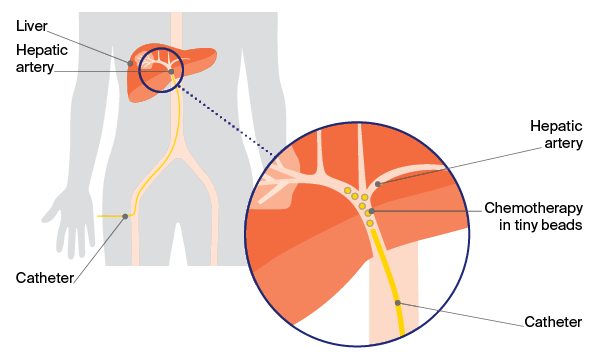
Liver tumours mostly get their blood supply from the hepatic artery. In transarterial chemoembolisation (TACE), chemotherapy is delivered directly to the tumour through this artery (see diagram below).
TACE is usually given to people who can't have surgery or ablation for primary liver cancer. The procedure may be used to shrink the cancer or stop it growing while people are waiting for a liver transplant or a major liver resection.
Transarterial chemoembolisation (TACE) delivers chemotherapy directly to a tumour while blocking its blood supply (embolisation). It is done by an interventional radiologist.
It is common to have a fever the day after the procedure, but this usually passes quickly. You may experience nausea and vomiting, or feel some pain, which can be controlled with medicines. Some people feel tired or have flu-like symptoms for up to a week after the procedure.
Two types of drug therapy are available to treat primary liver cancer: immunotherapy and targeted therapy.
Drug therapies (sometimes called systemic therapies) can spread throughout the whole body to treat cancer cells wherever they may be, which can be helpful for cancer that has spread (metastatic cancer).
Drug treatment for advanced liver cancer is changing quickly and new treatments may become available in the near future. You may also be able to get new drugs through clinical trials. Talk to your doctor about the latest developments and whether there are any suitable clinical trials for you.
This is a type of drug treatment that helps the body’s own immune system to fight cancer cells. Immunotherapy drugs known as checkpoint inhibitors block proteins that stop immune cells from recognising and destroying the cancer cells. Once the proteins are blocked, the immune cells can recognise and attack the cancer. A checkpoint inhibitor called atezolizumab is an immunotherapy drug subsidised on the Pharmaceutical Benefits Scheme (PBS) to treat some types of primary liver cancer.
Atezolizumab, which is given in combination with a targeted therapy drug called bevacizumab, is often the first drug treatment used for primary liver cancer.
Immunotherapy drugs are delivered by drip into a vein (intravenously), which may take 1–3 hours. Treatments are usually given every three weeks; your doctor will discuss with you how often and how many treatments will be needed.
Learn more about immunotherapy.
It helps to focus on what is happening now, what is actually known – not all the possibilities. One step at a time.
Immunotherapy can have different side effects for different people. These mostly happen when the immune system becomes overstimulated and attacks organs such as the skin, bowel, liver or hormone-producing glands.
These immune-related side effects can happen when you are having treatment or in the weeks, months, or even years, afterwards. In rare cases, side effects can be the sign of serious complications, so even mild side effects should be reported to your doctor.
Immune-related side effects may need to be treated with drugs to help control the immune response (called immunosuppressive drugs), and the immunotherapy may need to be stopped.
If you are unable to manage the side effects of immunotherapy, your doctor may recommend switching to targeted therapy.
When you start immunotherapy, you may be given an alert card so you can let all health professionals know that you are having this treatment. This ensures that you are given the best treatment if you develop side effects.
This type of treatment targets specific features of cancer cells to stop the cancer growing and spreading. People who have advanced liver cancer and are unable to take immunotherapy may be offered targeted therapy drugs such as sorafenib or lenvatinib.
These drugs are both subsidised by the PBS for some types of primary liver cancer. They are given as tablets that you swallow. Your doctor will explain when to take them.
The side effects of sorafenib and lenvatinib may include skin rash, diarrhoea, fatigue and high blood pressure. These side effects can usually be managed without having to completely stop treatment.
Your treatment team will monitor you while you are taking targeted therapy drugs. If you find the side effects of targeted therapy difficult to manage, your doctor may recommend switching to another drug.
Generally, targeted therapy is continued for as long as there is benefit. If liver cancer progresses despite treatment with sorafenib or lenvatinib, your doctor may talk to you about trying another targeted therapy drug.
Listen to Cancer Council's podcast episode New Cancer Treatments.
Liver Foundation
Services offered
Pancare Foundation
Services offered
Find the right services for your needs, wherever you are in Australia
Trusted cancer information for all people affected by cancer
We're available 9am - 5pm, Monday to Friday (excluding public holidays)