


Liver Foundation
Services offered
Cancer information
Support from cancer nurses
Emotional support
+2
Each year, more than 3000 people are diagnosed with primary liver cancer in Australia. The most common type of primary liver cancer in adults is hepatocellular carcinoma (HCC). This information on primary liver cancer is only about HCC.
Learn more about types of liver cancer, how the liver works, and who treats liver cancer below.
Primary liver cancer is a malignant (cancerous) tumour that starts in the liver. The most common type of primary liver cancer in adults is hepatocellular carcinoma (HCC). HCC starts in the hepatocytes, the main type of liver cell.
Less common types of primary liver cancer include:
Cancers in the liver can be either a primary or secondary cancer. The two types of cancer are different. Secondary liver cancer is cancer that has started in another part of the body and spread to the liver. It is more common than primary liver cancer in Australia.
If you are unsure if you have primary or secondary liver cancer, check with your doctor.
In Australia, more than 3000 people are diagnosed with primary liver cancer each year, with almost three times more men than women affected. The rate of primary liver cancer has almost doubled since 2002, which is possibly due to increasing rates of obesity, type 2 diabetes, hepatitis B and C infections, drinking too much alcohol, and an ageing population. About 80% of cases occur in people aged 60 and over.
The largest organ inside the body, the liver is about the size of a football. It is part of the digestive system, working with the gallbladder and pancreas to help break down food and turn it into energy.
The liver has many important jobs, including:
The liver is found on the right side of the abdomen (belly) sitting just above the stomach and under the rib cage. The two main sections of the liver are the right and left lobes.
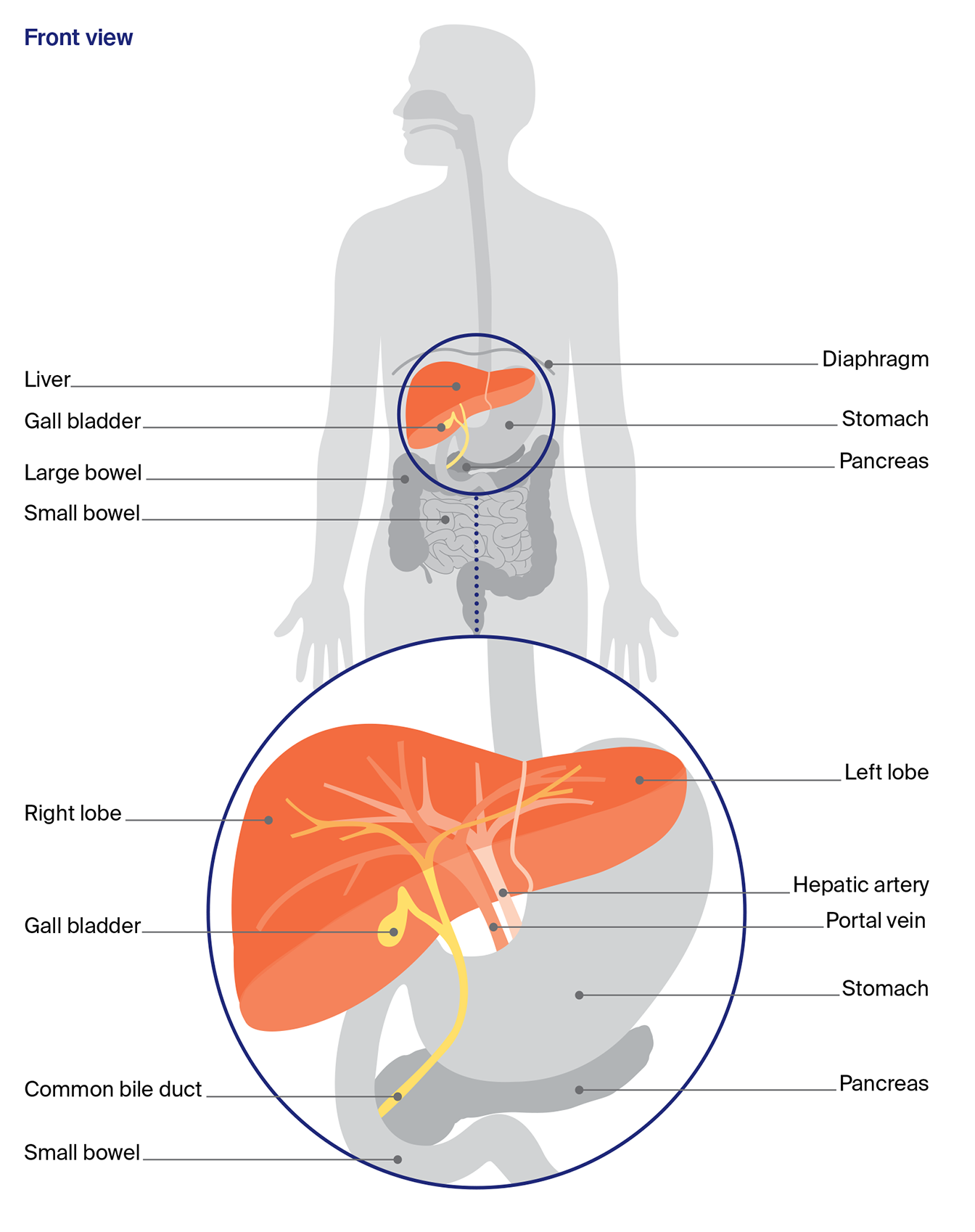
Blood flows into the liver from the hepatic artery and the portal vein. The hepatic artery carries blood from the heart. The portal vein carries blood from the digestive organs to the liver.
Bile is carried between the liver, the gallbladder and the first part of the small bowel (the duodenum) by a series of tubes called bile ducts. The common bile duct carries bile from the liver and the gallbladder to the bowel, where the bile helps to break down and absorb fats and other nutrients from food.
The liver can continue to work when only a small part is healthy. A healthy liver may be able to repair itself if it is injured or part of it is surgically removed during cancer treatment.
Your general practitioner (GP) will arrange the first tests to assess your symptoms or to follow up abnormal results from ultrasound or blood tests that have been done to check for liver cancer. If these tests show that you have liver cancer - or there is concern about possible cancer - you will usually be referred to a specialist. This is likely to be a hepatobiliary surgeon, gastroenterologist or hepatologist. The specialist will arrange further tests.
If liver cancer is diagnosed, the specialist will consider treatment options. Often these will be discussed with other health professionals at what is known as a multidisciplinary team (MDT) meeting.
During and after treatment, you will see a range of health professionals who specialise in different aspects of your care. Primary liver cancer is challenging to treat and it is recommended that you are treated in a specialist treatment centre if possible.
Liver Foundation
Services offered
Pancare Foundation
Services offered
Find the right services for your needs, wherever you are in Australia
Trusted cancer information for all people affected by cancer
We're available 9am - 5pm, Monday to Friday (excluding public holidays)