
Pancare Foundation
Services offered
Cancer information
Support from cancer nurses
Support from other health professionals
+4
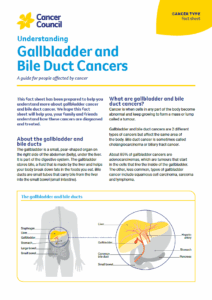
Gallbladder and bile duct cancers are 2 different types of cancers but they affect the same area of the body.
About 85% of gallbladder cancers are adenocarcinomas, which are tumours that start in the cells that line the inside of the gallbladder.
Bile duct cancer is sometimes called cholangiocarcinoma or biliary tract cancer. It can start in the bile ducts inside or outside the liver.
Being diagnosed with gallbladder or bile duct cancer can be a shock. Find helpful information in Just diagnosed, or call Cancer Connect on 13 11 20 to talk it through with our qualified professionals.
Learn more about the gallbladder (a small, pear-shaped organ under the liver) and bile ducts (small tubes that carry bile from the liver into the small bowel).
The symptoms of gallbladder and bile duct cancers include abdominal pain, jaundice, itch and fever. Risk factors include gallstones or liver problems.
Tests to diagnose gallbladder and bile duct cancers include blood tests, ultrasounds, laparoscopy, and imaging scans such as MRIs or CT scans.
Understand the main treatments for gallbladder cancer and bile duct cancer, which include surgery, radiation therapy and chemotherapy.
Learn about the different side effects of each treatment, fertility issues and staying well during and after treatment.
Learn about follow-up appointments and what happens if the cancer comes back.
It can be a good idea to prepare a list of questions before your appointments. See our list of questions about gallbladder or bile duct cancer care.
Pancare Foundation
Services offered
Rare Cancers Australia
Services offered
Find the right services for your needs, wherever you are in Australia
Trusted cancer information for all people affected by cancer
We're available 9am - 5pm, Monday to Friday (excluding public holidays)