

Cancer Hub
Services offered
Cancer information
Financial support and information
Emotional support
+3
Cancer treatment can be challenging for the whole family. You may need to cope with a range of emotions, as well as maintain some family time and keep the house running.
This section has advice for parents with cancer on how to adjust to change and stay connected to your kids.
If you are a parent with cancer, you may be keen to keep life as normal as possible for your kids during treatment. But this can be challenging when you are coping with treatment and recovery, because of frequent trips to the hospital, changes to your appearance or lower energy levels. You may feel guilty about not being able to do all the usual things with, and for, your kids.
There are no easy solutions to this problem, but you can make the most of your good days by doing fun things with the family. On the not-so good days, let your kids know, rather than trying to protect them from the reality of how you’re feeling.
It is normal for children to think mostly of themselves and how a situation affects them. Some older children and teenagers may seem annoyed about the diagnosis and act as if they don’t care about their parent. You may find their reaction hurtful or frustrating, but it is common and age-appropriate.
It can be helpful to acknowledge your child’s disappointment: “I know you’re finding it frustrating that I can’t watch you play soccer like I usually do, but I am not feeling well and I just need some quiet time right now.”
You may like to tell younger children: “I know you feel upset that I can’t play with you. I am sad too, but I am very tired. Let’s think about what we can do tomorrow when I feel better.”
It’s also important that children and teenagers understand that how they behave won’t affect your health and recovery. Children might assume they have to protect their parent, or act in a certain way or their parent won’t get better.
If you are a parent caring for someone with cancer, such as your partner or your own parent, you may feel like you have little time and energy left for your children. Although asking for and accepting help can be difficult, it may relieve some pressure and allow you to spend more time together as a family.
If you are a parent caring for someone with cancer, such as your partner or your own parent, you may feel like you have little time and energy left for your children. Although asking for and accepting help can be difficult, it may relieve some pressure and allow you to spend more time together as a family.
Caring for someone with cancer discusses ways to look after yourself and how to take a break, and includes a list of support services for carers. Call Cancer Connect on 13 11 20 for a free copy, or download it from your local Cancer Council website.
Anger, crying and withdrawal are some of the possible reactions in children. These can be protective responses that allow a child or young person time to deal with the information.
Some children may hide their feelings because they do not want to add to their parents’ stress. Even if your child’s behaviour doesn’t suggest they are struggling, let them know you appreciate how hard this situation is for them.
Children will express their emotions differently depending on their age and nature. If your kids’ reactions seem unusual, out of character or intense, consider getting some professional support.
My husband, Bruce, had a brain tumour and his personality changed because of it. At the dinner table one night, our 4-year-old, Emma, announced, ‘I wish Daddy was dead.’ I calmly asked Emma what she meant. She replied, ‘I don’t like the man who’s in my Daddy’s body. I want my real Daddy back.’ I could then explain why Bruce’s behaviour had changed.
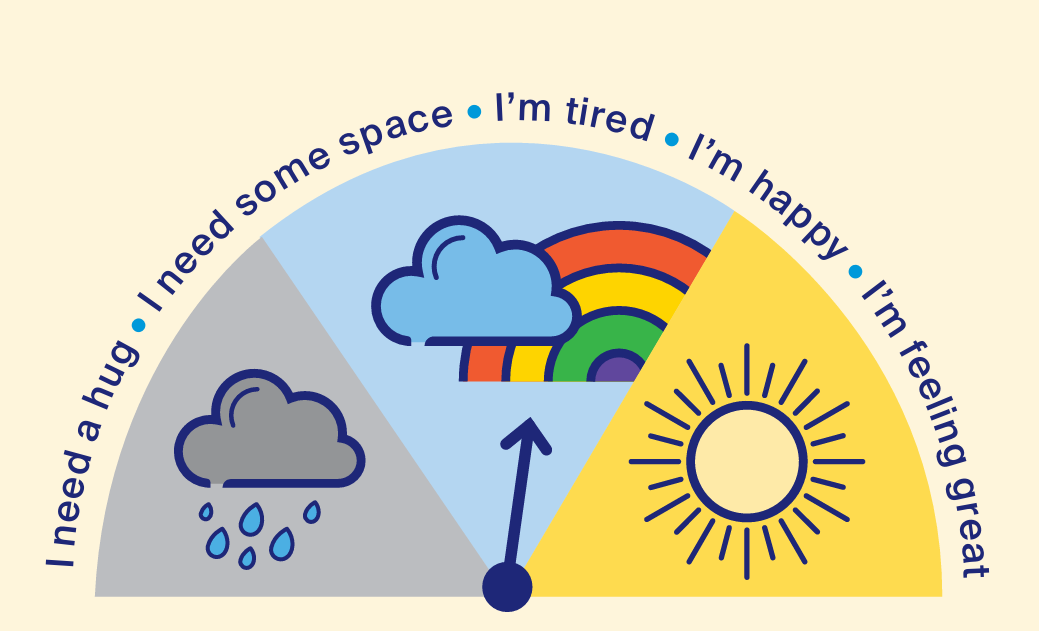
The physical and emotional health of a person with cancer will vary during and after treatment. It can sometimes be hard to let your family know how you’re feeling, and they might find it hard to ask.
An emotions thermometer may help. This simple tool allows you to show how you’re feeling every day. You can make one yourself and ask the kids to help, or there are many versions available online. Just search for “emotions thermometer”. Choose which feelings to include and add a pointer that moves to the different feelings.
Put the emotions thermometer up where everyone can see it, such as on the fridge or noticeboard.
Maintaining routines and family traditions as much as possible will help children and young people feel safe and secure. Sometimes you have to strike a balance between doing regular activities and coping with the effects of the cancer. During treatment, when life may be disrupted and unsettled, try to protect the time your family has together.
Camp Quality offers holiday accommodation and camps to families affected by cancer. This is often the first break a family has after a cancer diagnosis, and it gives them the chance to relax and reconnect. Call 1300 662 267 or visit Camp Quality.
If you need to travel for treatment, or if you have extended hospital stays, you may be away from your family for long periods. In some cases, both parents may need to travel to a major hospital and leave their children with family members or friends.
The following tips may help you stay in touch. They might also be useful if you don’t need to leave home but want extra ways to communicate with your kids
When a family member is diagnosed with cancer, it can be difficult for parents to spend one-on-one time with their children. One way to focus your attention and care is to schedule a regular 30-minute session with your child or teenager. This may help them feel important, valued and understood.
Talk with your children about the type of activities and family time that are important to them. If you have more than one child, you may need to alternate weeks for one-on-one time depending on your energy levels.
Younger children may not have developed the thinking or language skills to describe how they’re feeling, but a play session can help them to express feelings, make sense of events, and understand the world. Their play may reveal an inner world that you would never know about from what they say.
Teenagers may enjoy spending time with friends, but one-on-one time with you is important. You may like to visit a favourite cafe, go for a walk, watch a movie or listen to music with them.
It can be hard enough to maintain family rules when you’re fit and healthy, let alone when you’re dealing with the emotional and physical effects of cancer treatment or caring for someone with cancer. Some parents say they feel guilty for putting the family through the stress of cancer, so they don’t want to keep pushing their children to do homework and chores.
Maintaining the family’s usual routines and boundaries during this time can strengthen your children’s sense of security and their ability to cope.
Keeping up children’s chores, encouraging good study habits, calling out inappropriate behaviours, and sticking to regular bedtimes – all require continued and ongoing supervision from adults.
Although some flexibility may be reasonable at this time, a predictable set of boundaries and expectations can be reassuring for children and young people. Let teenagers know that the usual rules apply for curfews, drug and alcohol use, and sex.
For more information about all aspects of cancer, listen to Cancer Council’s podcast series The Thing About Cancer.
When a family is dealing with a cancer diagnosis, children may need to take on extra responsibilities. If children feel they are being useful, it can boost their self-esteem because it shows that you value and need them.
Young children can help with simple tasks like setting the table, vacuuming or feeding pets. With older children and teenagers, it’s reasonable to want them to help more around the house and do tasks like making simple meals, cleaning the kitchen, and helping with laundry.
Try to share tasks fairly among all family members and avoid overloading teenagers with chores. Jobs that need to be done are not always obvious to older children, so discuss priorities and how tasks can be divided up.
When asking teenagers to help, keep in mind that it is normal for them to spend time with their friends as well.
This can be a time to reflect on priorities and what really matters for your family. You might choose to let go of or outsource some household tasks that you previously thought were essential.
The internet is a good source of information about appropriate jobs around the house for children of all ages. Try searching for “age-appropriate chores”. Some possibilities include:
In any family, a cancer diagnosis can make it challenging to meet everyone’s needs. If you are the only parent in your household, cancer may come on top of an already heavy domestic, financial and emotional load.
Your children will need to help but may end up taking on more responsibility than they are ready for. Ask your friends and extended family to support them. You can also find out what support services are available in your area by calling Cancer Connect on 13 11 20 or Cancer Hub on 1800 431 312.
You may want to get in touch with the Carers Australia Young Carers Network. This organisation runs activities and support groups for young people (aged up to 25 years) who care for a parent with a serious illness. Even young children may be considered young carers – for example, if they are helping with cooking or cleaning. Camp Quality and Canteen can also offer support to children when a parent has cancer.
I tried to get some rest during the day so that I was bright and more energetic when the family came home in the evening. I didn’t want them to feel they had a sick mum all the time – I was only sick from the treatment, not from the disease itself.
Cancer Hub
Services offered
Find the right services for your needs, wherever you are in Australia
Trusted cancer information for all people affected by cancer
We're available 9am - 5pm, Monday to Friday (excluding public holidays)