

Pancare Foundation
Services offered
Cancer information
Support from cancer nurses
Support from other health professionals
+4
Surgery is often used for stomach cancer that has not spread. Other treatment options include chemotherapy, targeted therapy, immunotherapy or radiation therapy.
You may need a feeding tube before, during or after treatment, to maintain your weight.
Your health care team will recommend treatment based on where the cancer is in the stomach, and whether it has spread (the stage). Treatment will also depend on your age, medical history and general health.
To plan and provide care, a multidisciplinary treatment (MDT) team works together. This team may include a gastroenterologist, surgeon, radiation and medical oncologists, specialist nurses, and allied health professionals, such as a dietitian, exercise physiologist or social worker.
Surgery is often part of the treatment for stomach cancer that has not spread. For early-stage cancer, you may only need to have an endoscopic resection. If the cancer has spread, treatment may include chemotherapy, targeted therapy, immunotherapy or radiation therapy.
Surgery aims to remove all of the stomach cancer while keeping as much of the stomach as possible. The surgeon will also remove some healthy tissue around the cancer to reduce the risk of it returning. Different types of surgery can be used depending on where the cancer is in the stomach.
The surgery will be done under a general anaesthetic. There are 3 main ways to perform surgery for stomach cancer:
The surgeon makes a long cut in the upper part of the abdomen from the breastbone to the bellybutton.
The surgeon makes some small cuts in the abdomen, then inserts a thin instrument with a light and camera (laparoscope) into one of the cuts. The surgeon puts tools into the other cuts and performs surgery using the images from the camera for guidance. Also called laparoscopic or minimally invasive surgery.
This is a type of keyhole surgery where the surgeon uses robotic tools to remove the cancer through small cuts in the abdomen and/or chest.
I had surgery for stomach cancer, which is hard because my stomach is so much smaller. I have good days and bad days, but I’m back at work and I exercise every week. My prognosis for the future is good.
Only part of the stomach is removed when the cancer is in the lower part of the stomach. If necessary, nearby fatty tissue (omentum) and lymph nodes are also removed. A small part of the upper stomach attached to the oesophagus is usually left in place.
The whole stomach is removed when the cancer is in the upper or middle part of the stomach. Nearby fatty tissue (omentum), lymph nodes and parts of nearby organs, if necessary, are also removed. The surgeon rejoins the oesophagus to the small bowel.
Also called lymphadenectomy, lymph nodes are removed from around your stomach to reduce the risk of the cancer coming back and to help in the staging of the cancer.
If you are diagnosed with very early stomach cancer, you may have an endoscopic resection. This aims to remove the whole tumour during the endoscopy so further treatment is not needed. An endoscopic resection is often done as a day procedure but in some cases, you may stay in hospital overnight.
This is a general overview of what to expect when having surgery for stomach cancer. The process varies from hospital to hospital, and everyone will respond to surgery differently.
You will have several tubes in your body after surgery. These may include:
Talk to your treatment team if you want to organise support at home.
For more information on what to expect when having surgery, including preparation and recovery, see Surgery.
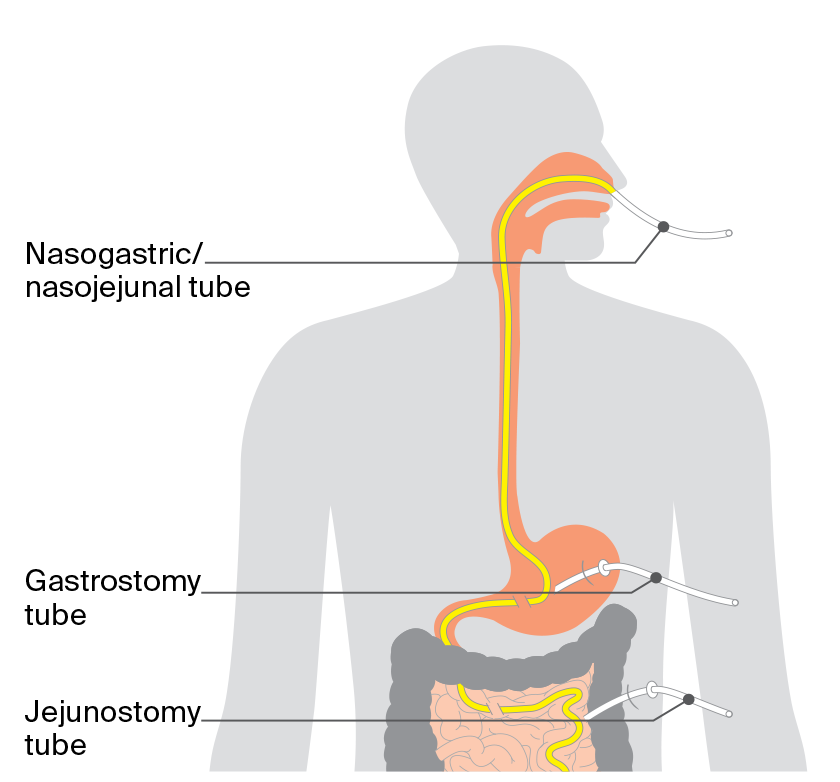
Some people with stomach cancer may need a feeding tube before, during or after treatment. This helps keep your weight steady and gives your body strength. A feeding tube can go into your stomach or small bowel. It may be put in through your nose (nasogastric or nasojejunal tube) or through your belly with a small operation (gastrostomy or jejunostomy tube).
The tube may stay in place until you can eat and drink normally again. A special liquid food (called formula) goes through the tube to give you the nutrients your body needs. If you go home with the feeding tube, a dietitian will tell you how much formula to take and how often.
Many people find that having a feeding tube is a more comfortable way to get enough food and drink if the cancer is making eating and drinking difficult. Your health care team will show you how to keep the tube clean and working well. The doctor will remove the tube when you no longer need it.
Chemotherapy uses drugs to kill or slow the growth of cancer cells. For stomach cancer, it is used:
Chemotherapy drugs are usually given as a liquid through a drip inserted into a vein (intravenous infusion). Sometimes, a small tube is placed in a vein and stays there during treatment. This is called a central venous access device (CVAD).
You will usually have treatment as an outpatient (when you visit hospital for treatment but are not admitted). Sometimes, chemotherapy is given as tablets you can take at home.
Most people have a combination of chemotherapy drugs over several sessions, with rest periods of 2–3 weeks in between. Together, the session and rest period are called a cycle.
These may include feeling sick (nausea), vomiting, appetite changes and difficulty swallowing, sore mouth or mouth ulcers, skin and nail changes, numbness in the hands or feet, ringing in the ears or hearing loss, constipation or diarrhoea, and hair loss or thinning. You may also be more likely to catch infections. If you feel unwell or have a temperature of 38°C or higher, get urgent medical attention.
Before chemotherapy begins, your doctor, pharmacist or nurse will talk to you about the side effects to watch out for or report, how to help prevent or manage them, and who to contact after hours if you need help.
Learn more about chemotherapy.
Targeted therapy is a drug treatment that works by blocking specific features of cancer cells. This helps stop the cancer from growing and spreading.
Targeted therapy is sometimes used to treat advanced stomach cancer. This treatment is usually given with chemotherapy every few weeks through a drip into a vein.
Ask your doctor what side effects to expect. Possible side effects include fever, nausea, diarrhoea and high blood pressure. Sometimes, targeted therapy can affect the way the heart works. Tell your doctor immediately if you have any side effects.
Learn more about targeted therapy.
Recent advances in treating advanced stomach cancer include immunotherapy drugs called checkpoint inhibitors. These use the body’s own immune system to fight cancer.
These may include fatigue, skin rash, diarrhoea and cough. Sometimes organs such as the lungs and bowel can become inflamed, which may lead to more serious side effects. Let your treatment team know immediately if you develop any side effects.
Learn more about immunotherapy.
Also known as radiotherapy, this treatment uses a controlled dose of radiation, such as focused x-ray beams, to kill or damage cancer cells. Radiation therapy for stomach cancer is commonly used to control bleeding.
Radiation therapy is usually given as a short course (1–14 days). Occasionally, a longer course of radiation therapy (5–6 weeks) will be given, either before or after surgery, or if surgery is not possible.
Each radiation therapy treatment takes about 15 minutes and is not painful. You will lie on a table under a machine that delivers radiation to the affected parts of your body.
Your doctor will let you know your treatment schedule. Possible side effects include fatigue, nausea, vomiting, diarrhoea and loss of appetite.
Learn more about radiation therapy.
Many people think that palliative care is for people at the end of life, but it can help at any stage of advanced stomach cancer. It helps to improve people’s quality of life by managing the symptoms of cancer without trying to cure the disease.
The treatment you are offered will be tailored to your individual needs. It may include surgery, radiation therapy, chemotherapy or other medicines. These treatments can help manage symptoms such as pain, bleeding, difficulty swallowing and nausea. They can also slow the spread of the cancer.
Learn more about .
For more information, see Palliative care and Living with advanced cancer.
You will have regular appointments to monitor your health, manage any long-term side effects and check that the cancer has not come back or spread.
During these check-ups, you may have blood tests, imaging scans or an endoscopy if needed. You will be able to discuss how you’re feeling and any concerns you may have. How often you need to see your doctor will depend on the level of monitoring needed for the type and stage of the cancer you had. You should also see a dietitian for advice about good nutrition.
For some people, stomach cancer does come back. This is known as a recurrence. If this happens, you may have further treatment, including chemotherapy, radiation therapy or surgery.
Pancare Foundation
Services offered
Find the right services for your needs, wherever you are in Australia
Trusted cancer information for all people affected by cancer
We're available 9am - 5pm, Monday to Friday (excluding public holidays)