

Australian Cervical Cancer Foundation
Services offered
Cancer information
Cancer screening
Financial support and information
Surgery is one of the main treatments for cervical cancer.
The most common type of surgery is a radical hysterectomy, which removed the uterus, cervix and top of the vagina. The type of surgery you have will depend on how far the cancer has spread.
Side effects from surgery may include bladder changes, vaginal changes or fluid build-up (lymphoedema) in the pelvic area.
For some people, surgery may be the only treatment needed. Surgery is usually recommended when the tumour is in the cervix only. The type of surgery you have will depend on how far within the cervix the cancer has spread.
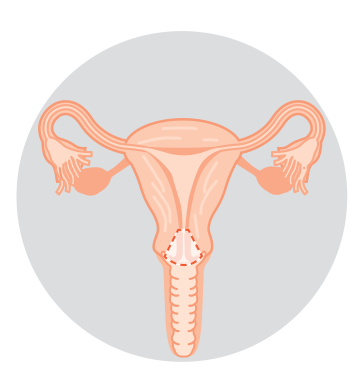
Removes a cone-shaped piece of tissue around the cancer, including a margin of healthy tissue. A cone biopsy is used to treat very early cervical cancers.
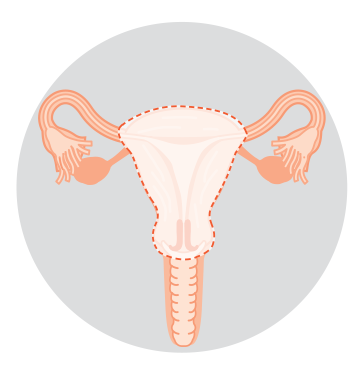
Removes the uterus and cervix. It’s used for early cervical cancer. The fallopian tubes are often removed too. If you haven’t gone through menopause, you may be able to keep your ovaries.
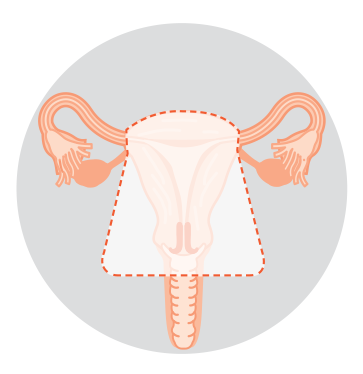
Removes the uterus, cervix and top of the vagina. It’s the usual surgery for cervical cancers. Fallopian tubes are often removed too. You may keep your ovaries if you haven’t gone through menopause.
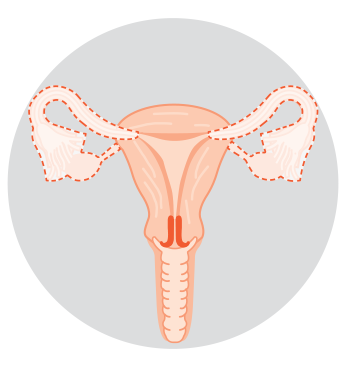
Removes both fallopian tubes and ovaries. This may be done during a hysterectomy if there’s a risk the cancer has spread, or if you’ve been through menopause.
Lymph nodes in the pelvis or groin may be removed to check for the spread of cancer. This is called a lymphadenectomy (lymph node dissection).
Surgery is done under a general anaesthetic. Research has shown that outcomes are generally better with open surgery (laparotomy). This means that the surgery is performed through a cut in the abdomen. Keyhole surgery (laparoscopy or robotic surgery) may be used for selected cases, usually early cervical cancer.
Surgery can affect some of the nerves to the bladder. You may feel that you’re not able to empty your bladder completely or that you’re emptying your bladder very slowly. These problems usually improve with time. You may also leak some urine after surgery (urinary incontinence).
Sometimes removing lymph nodes in the pelvic area can stop or slow the natural flow of lymphatic fluid from the legs. This may cause lymphoedema – a build-up of fluid in the soft tissues under the skin – in the legs or genital area. Lymphoedema may appear during treatment or months or years later.
Learn more about lymphoedema.
If your ovaries are removed before you’ve gone through menopause, it will cause sudden menopause. This means your periods will stop immediately, and you won’t be able to become pregnant. If you’re finding it difficult to manage menopause symptoms, talk to your doctor about whether menopausal hormone therapy (MHT) might be right for you.
Scar tissue in the pelvis may stick together. Sometimes, these adhesions, particularly those affecting the bowel or bladder, may cause pain or discomfort in the abdomen (belly). Rarely, adhesions may need to be treated with surgery.
Surgery can shorten the vagina, causing thinning of the walls and dryness. See Vaginal changes from treatment.
Australian Cervical Cancer Foundation
Services offered
National Cervical Screening Program
Australian Government
Services offered
Find the right services for your needs, wherever you are in Australia
Trusted cancer information for all people affected by cancer
We're available 9am - 5pm, Monday to Friday (excluding public holidays)