
Australian Cervical Cancer Foundation
Services offered
Cancer information
Cancer screening
Financial support and information
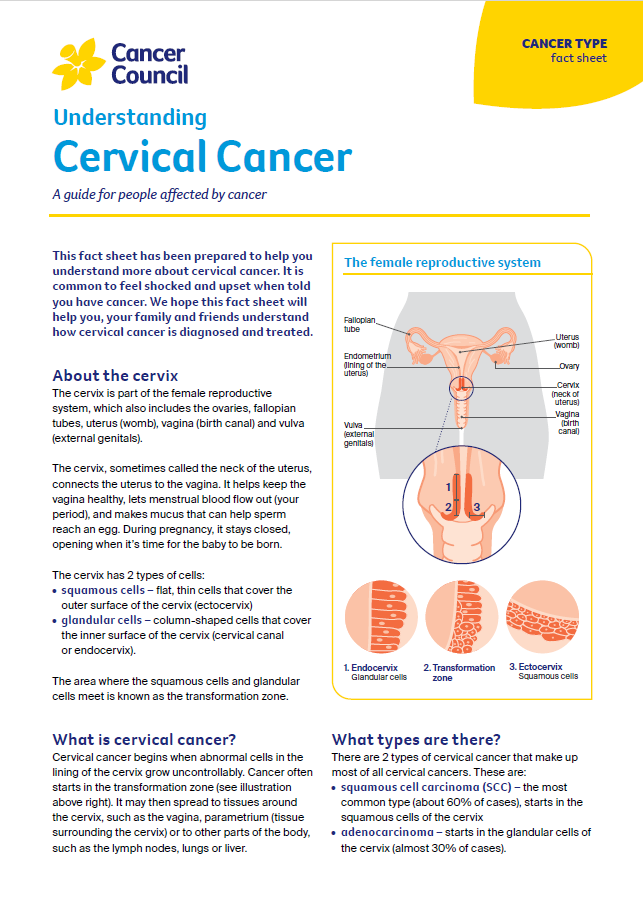
Cervical cancer starts in the cells of the cervix. The cervix is the lower part of the uterus (womb) that connects to the vagina.
Most cervical cancers are linked to infection with human papillomavirus (HPV). Regular HPV screening and vaccination mean cervical cancer is becoming less common in Australia.
A cervical cancer diagnosis can be a shock. Find helpful information in Just diagnosed, or call Cancer Connect on 13 11 20 to talk it through with our qualified professionals.
Read about types of cervical cancer, who gets cervical cancer, and which health professionals will look after your care.
Learn about cervical cancer risk factors, the role of HPV and cervical screening, and symptoms such as unusual bleeding and pelvic pain.
If cervical cancer is suspected, your doctor may arrange tests such as a pelvic examination, a colposcopy, a biopsy and scans. The tests also help show the stage of the cancer.
Treatment for cervical cancer depends on the stage of the cancer. It may include surgery, radiation therapy, chemotherapy and/or targeted therapy and immunotherapy.
Treatment for cervical cancer can cause side effects including tiredness, bladder or bowel changes, early menopause or changes to sexual health. You and your health care team can work together to help manage symptoms.
Find out what to expect from follow-up appointments and adjusting to life after treatment.
It can be a good idea to prepare a list of questions before your appointments. See our list of questions about cervical cancer care.
Australian Cervical Cancer Foundation
Services offered
National Cervical Screening Program
Australian Government
Services offered
Find the right services for your needs, wherever you are in Australia
Trusted cancer information for all people affected by cancer
We're available 9am - 5pm, Monday to Friday (excluding public holidays)