

Australian Cervical Cancer Foundation
Services offered
Cancer information
Cancer screening
Financial support and information
The cervix is part of the female reproductive system, connecting the uterus to the vagina.
The most common type of cervical cancer is squamous cell carcinoma (SCC), which starts in the squamous cells of the cervix. The other main type of cervical cancer is adenocarcinoma, which starts in the glandular cells of the cervix.
Each year, fewer than 1000 Australians are diagnosed with cervical cancer.
Cervical cancer begins when abnormal cells in the lining of the cervix grow uncontrollably. Cancer often starts in the transformation zone of the cervix. It may then spread to tissues around the cervix, such as the vagina, parametrium (tissue surrounding the cervix) or to other parts of the body, such as the lymph nodes, lungs or liver.
There are 2 types of cervical cancer that make up most of all cervical cancers. These are:
A small number of cervical cancers (less than 1 in 20) feature both squamous cells and glandular cells. These cancers are known as adenosquamous carcinomas or mixed carcinomas.
There are other rarer types of cancer that can start in the cervix. These include small cell cervical carcinoma, cervical clear cell adenocarcinoma and cervical sarcoma.
The cervix is part of the female reproductive system, which also includes the ovaries, fallopian tubes, uterus (womb), vagina (birth canal) and vulva (external genitals).
The cervix, sometimes called the neck of the uterus, connects the uterus to the vagina. It helps keep the vagina healthy, lets menstrual blood flow out (your period), and makes mucus that can help sperm reach an egg. During pregnancy, it stays closed, opening when it’s time for the baby to be born. The cervix has 2 types of cells:
The area where the squamous cells and glandular cells meet is known as the transformation zone.
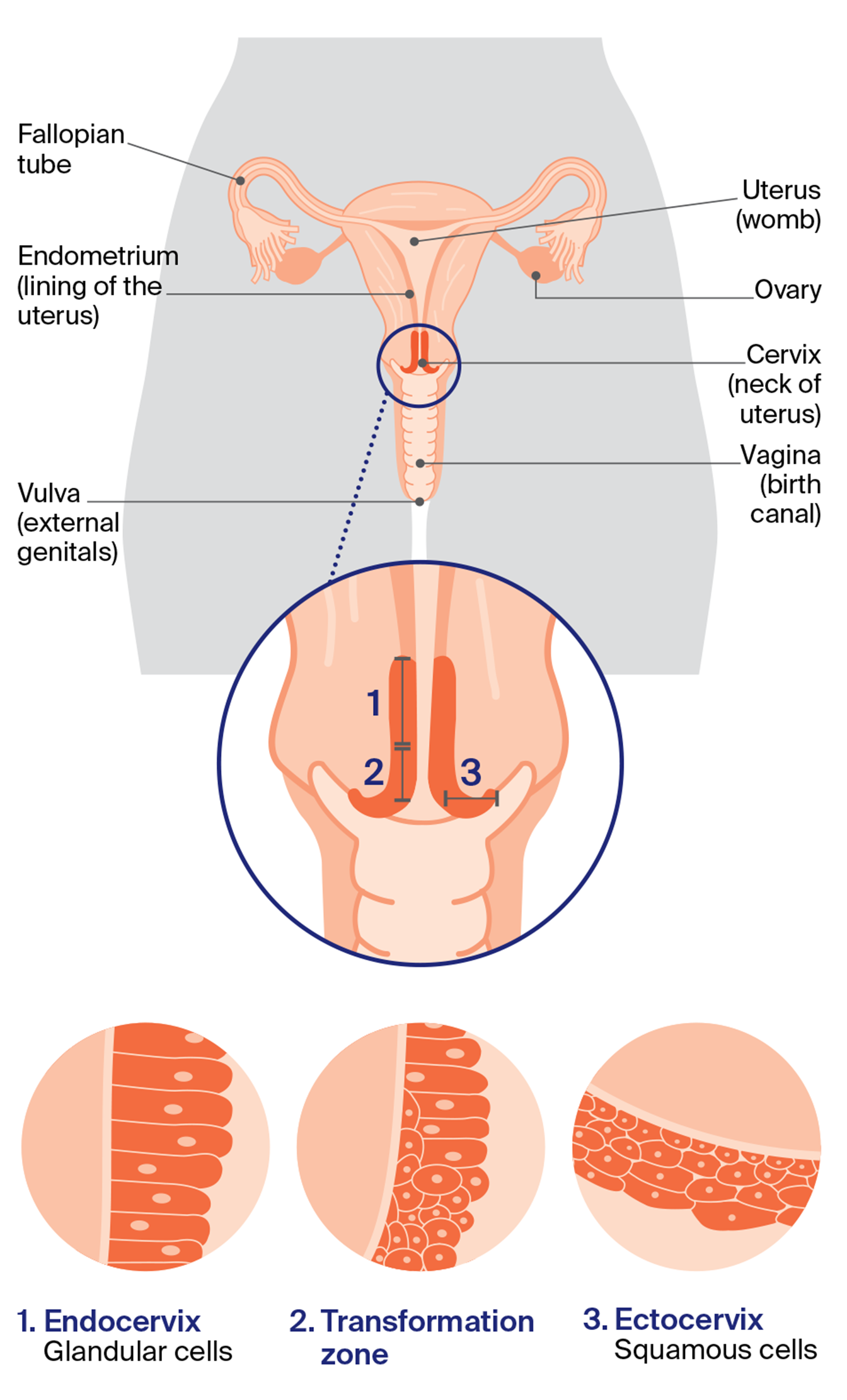
Anyone with a cervix can get cervical cancer – women, transgender men and people with an intersex variation. Each year in Australia, fewer than 1000 people are diagnosed with cervical cancer.
Cervical cancer is most commonly diagnosed in people over the age of 30. More than half of all cervical cancer cases are diagnosed in those aged 30–49 years, but it can occur at any age.
Cervical cancer has become much less common in Australia since the National Cervical Screening Program started in 1991. The program uses screening tests to look for early changes to the cells in the cervix that are not cancer but, if left untreated, may turn into cancer.
Australia is predicted to eliminate cervical cancer by 2035. This is largely due to the national human papillomavirus (HPV) vaccination program, which was introduced in 2007. HPV causes almost all cases of cervical cancer. Cervical cancer will be considered eliminated in Australia when there are fewer than 4 new cases per 100,000 people a year.
Australian Cervical Cancer Foundation
Services offered
National Cervical Screening Program
Australian Government
Services offered
Find the right services for your needs, wherever you are in Australia
Trusted cancer information for all people affected by cancer
We're available 9am - 5pm, Monday to Friday (excluding public holidays)