

Bowel Cancer Australia
Services offered
Cancer information
Support from cancer nurses
Support from other health professionals
+3
If you have early-stage bowel cancer, you will usually be offered surgery to remove some or all of the bowel. A common type of surgery is a colectomy, which removes part of the colon and nearby lymph nodes. Your doctor will discuss the surgery best suited for you and what to expect after surgery.
Side effects of bowel surgery can include fatigue, changes in bowel or bladder function, and changes to what you can eat.
The aim of surgery is to remove the area of the bowel with cancer and the nearby lymph nodes. You will be given a general anaesthetic and have either open or keyhole surgery. Your doctor will discuss which method is best suited for you.
Open surgery - This is usually done with one long cut (incision) down the middle of your tummy. Open surgery leaves a larger wound and scar, and has a longer recovery time and hospital stay. It is widely available.
Keyhole surgery - Also called minimally invasive, laparoscopic or robotic surgery. The surgeon makes some small cuts in the abdomen and passes a thin tube with a light and camera (laparoscope) into one opening. They insert tools into the other cuts to remove the section of the bowel with cancer, using the camera as a guide. Keyhole surgery usually means less pain, scarring, time in hospital and a faster recovery.
The most common surgery for colon cancer is a colectomy (removal of part of the colon). Lymph nodes near the cancer are also removed. The surgeon cuts the bowel on either side of the cancer (with a small border of healthy tissue called the margin) and then joins the 2 ends of the bowel back together. This join is called an anastomosis.
Having a stoma - Sometimes one end of the bowel is brought through an opening made in your abdomen and stitched to the skin. Called a stoma, it lets faeces out to be collected in a bag. The stoma is usually temporary, and the operation is reversed later. In some cases, the stoma is permanent. Improved surgical techniques mean fewer people need a permanent stoma. For more information, see Having a stoma.
There are different types of colectomies depending on which part of the colon is removed. The surgery may be done as open or keyhole surgery.
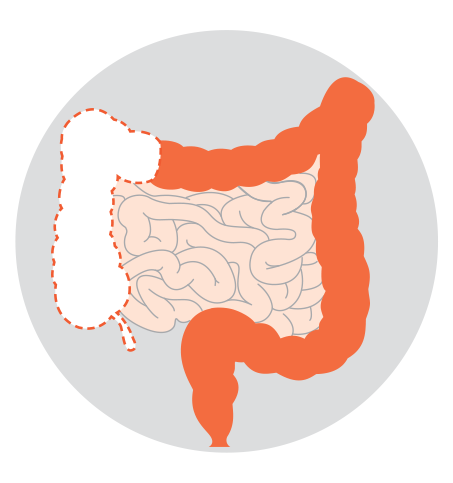
The right side of the colon is removed.
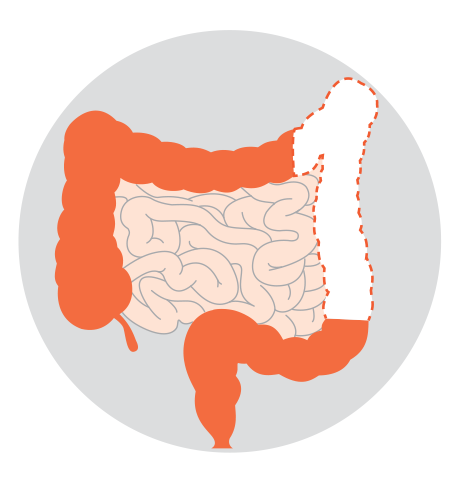
The left side of the colon is removed.
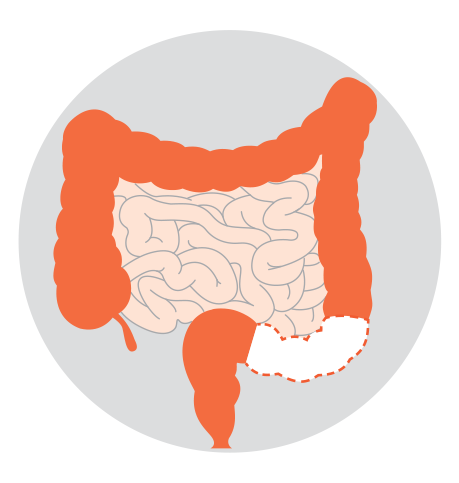
The sigmoid colon is removed.
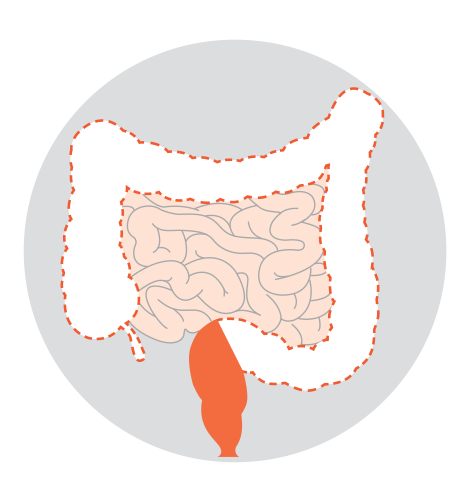
Most or all of the colon is removed.
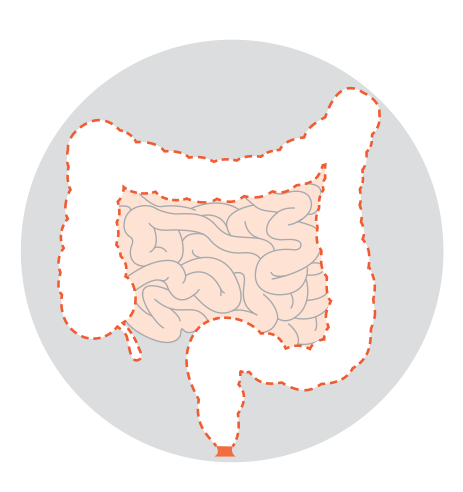
All of the colon and the rectum are removed.
The type of operation you have depends on where in the rectum the cancer is, whether the bowel can be rejoined, and where in the rectum the join can be made. There are 2 main types of operation – an anterior resection or an abdominoperineal resection (which may also be called an abdominoperineal excision).
The surgery may be done as open or keyhole surgery.
This is the most common operation. You may have a high anterior resection or an ultra-low anterior resection. As part of the procedure, the surgeon may create a temporary stoma (which will usually be reversed later).
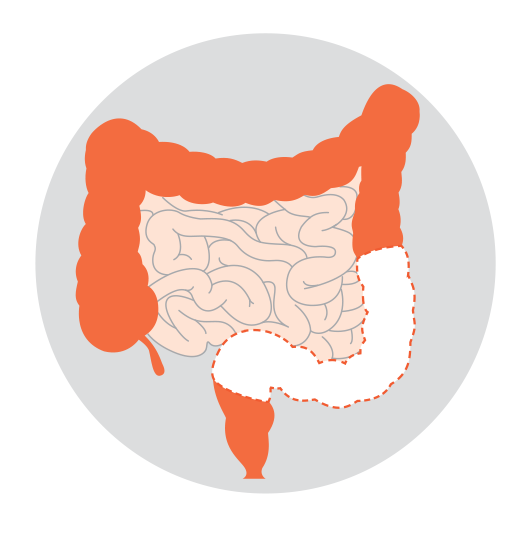
The surgeon removes the lower left part of the colon and the upper part of the rectum. Nearby lymph nodes and surrounding fatty tissue are also removed. The lower end of your bowel is rejoined to the top of the remaining rectum.
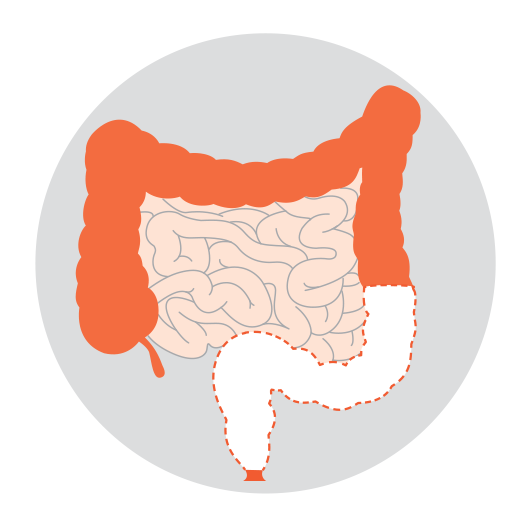
The lower left part of the colon and all or part of the rectum are removed, along with nearby lymph nodes and surrounding fatty tissue. The end of the remaining bowel is joined to the lowest part of the rectum, just above the anus. In some cases, the surgeon may make a pouch using the remaining colon and join this pouch to the anus to improve ongoing bowel function. This is known as a colonic J-pouch.
This procedure may be recommended if the cancer is near the anal sphincter or it is too low to be removed without causing incontinence (loss of control over bowel movements). After an abdominoperineal resection, you will need a permanent stoma (colostomy). See more details about having a stoma and speak to your surgeon about any concerns you may have.
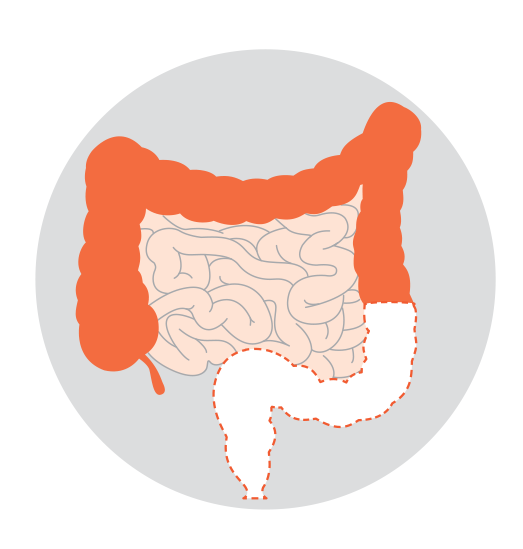
The sigmoid colon, the entire rectum and the anus are removed. Your surgeon uses the descending colon to create a permanent stoma (known as a colostomy) for faeces to leave the body. The anal area will be stitched up and permanently closed.
Used for larger benign polyps. Some very early cancers that involve only the inner lining of the bowel may be suitable for endoscopic resection (also called endoscopic mucosal resection or EMR). This involves cutting out the tumour during a colonoscopy. A bowel resection may also still be needed.
People who have very early-stage rectal cancer or are not fit for a major operation may have a local excision. The surgeon puts instruments into the anus to remove the cancer from the lining of the rectum, along with a margin of healthy tissue, without cutting into the abdomen. Methods include:
In a small number of people, 2 separate cancers may be found in the large bowel at the same time. The cancers may be discovered through tests or during surgery.
In this case, there are several options for surgery, including to remove:
In some locally advanced cancers, other organs that the bowel cancer is attached to may also be removed along with the bowel containing the cancer.
The type of surgery your doctor recommends depends on several factors, including your age, where the tumours are in the bowel, genetic and other risk factors, and your preferences.
Sometimes bowel cancer grows and completely blocks the bowel. This is called a bowel obstruction. Waste matter cannot pass through the blocked bowel easily, and may cause:
Sometimes the obstruction is found and cleared during the surgery to remove the cancer. In other cases, you will need emergency surgery to clear the blockage.
If a section of the bowel needs to be removed, it may be possible to rejoin the bowel during the surgery, but some people may need a stoma. Sometimes a stoma is made before or “upstream” from the obstruction to relieve the blockage and allow time for staging scans of the cancer or chemoradiation before surgery.
If only one area of the bowel is blocked or you are not fit enough for major bowel surgery, you may have a small hollow tube (stent) put in to help keep the bowel open and relieve symptoms.
A stent may be permanent, or it can be used to help manage the blockage until you are fit enough to have a colectomy or resection. The stent is inserted through the rectum using a colonoscope.
A dietitian or your surgeon or stomal therapist may suggest you take a stool softener or add more fluid to your diet to help food or waste pass through the blockage or stent more easily. Other people may be advised to eat low-fibre foods. Talk to a dietitian about suitable foods for your situation.
If you are unable to have bowel surgery or a stent, you may be given medicine to help control the symptoms of a bowel obstruction.
Your surgeon will talk to you about the risks and complications of bowel surgery. As with any major operation, surgery for bowel cancer has risks. These may include infection, bleeding, blood clots, damage to nearby organs, or leaking from the joins between the remaining parts of the bowel. After the operation, you will be carefully monitored for any complications.
Your recovery time after the operation will depend on your age, whether you had open or keyhole surgery, whether you have a stoma, and your general health. You will probably be in hospital for 2–7 days, but it can take 2–3 months to fully recover. While in hospital you will start a plan (called enhanced recovery after surgery or ERAS) to help you recover and minimise the time spent in hospital.
You will have some pain and discomfort for several days after surgery, but this can be controlled with pain medicines.
Pain medicines may be given:
Let your doctor or nurse know if you are in pain so they can adjust the medicines to make you as comfortable as possible. Do not wait until the pain is severe.
Some people go home with a stoma. A stomal therapy nurse will see you after the operation to teach you how to look after the stoma and attach bags. You will stay in hospital until you feel confident managing the stoma.
You may notice changes to how your bowel and bladder work. These changes usually improve within a few months but, for some people, it can take longer. Internal scar tissue (adhesions) from bowel surgery can increase the risk of developing a bowel obstruction. This may occur even many years after the surgery.
In males, removing the rectum may affect the nerves controlling erections or ejaculation. You may have trouble getting or keeping an erection firm enough for intercourse or other sexual activity. In females, if the rectum is removed, there may be a different feeling in the vagina during intercourse. It may be uncomfortable, as the rectum no longer cushions the vagina.
You may need to change what you eat after treatment or if you have a stoma.
It is normal to feel tired after surgery. Although it’s a good idea to stay active and do gentle exercise as recommended by your doctor, you may find that you tire easily and need to rest during the day. Take breaks if you feel tired, and follow your doctor’s advice about restrictions, such as avoiding heavy lifting. You might have to remind your family and friends that it may take you several months to recover from surgery.
Bowel Cancer Australia
Services offered
National Bowel Cancer Screening Program
Australian Government
Services offered
Find the right services for your needs, wherever you are in Australia
Trusted cancer information for all people affected by cancer
We're available 9am - 5pm, Monday to Friday (excluding public holidays)