

Bowel Cancer Australia
Services offered
Cancer information
Support from cancer nurses
Support from other health professionals
+3
After bowel surgery, some people will need to have a stoma, which is a surgically created opening in the abdomen. A stoma may be temporary or permanent. Stomal therapy nurses and stoma associations can provide support and information to help you get used to life with a stoma.
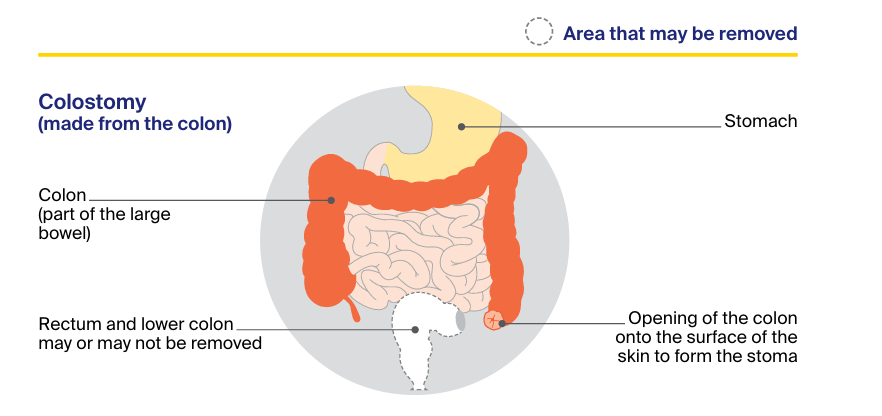
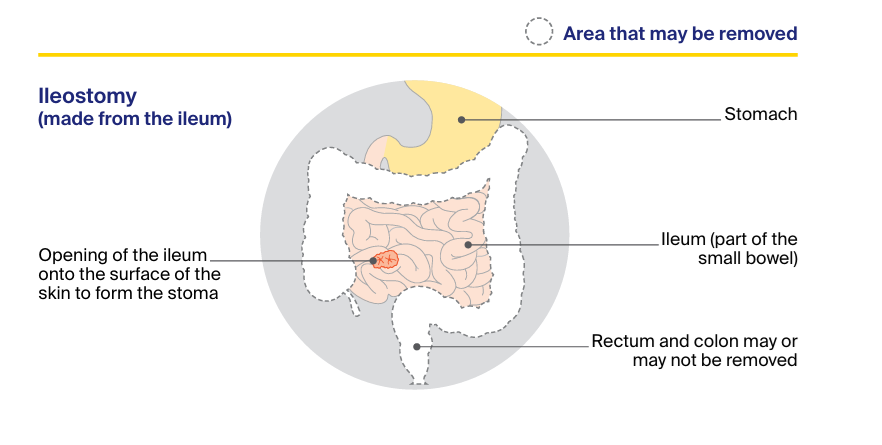
A stoma is a surgically created opening in the abdomen that allows waste (faeces, stools or poo) to leave the body. There are 2 main types of stoma (colostomy and ileostomy).
Stomas may be temporary (usually formed from a loop of the bowel) or permanent (formed from the end of the bowel). If you may need a stoma because of surgery, you will usually see a stomal therapy nurse beforehand. They will mark on your abdomen where the stoma will be placed, taking into account skin folds, you being able to see the stoma, and any prominent bones or old scars.
Needed only until the newly joined bowel heals. A loop of the bowel is brought out through a cut in the abdomen. The bowel is then cut and stitched to the skin to create an opening. This may also be done with the end of the bowel. You will have another operation, usually after 3–12 months, to close the stoma and rejoin the bowel. This is called a stoma reversal. Some people may have a stoma for longer, as you usually wait until all treatment is complete before closing the stoma.
About 1 in 10 people with rectal cancer need a permanent stoma when the tumour involves the anal sphincter muscles or they aren’t strong enough to control the bowel (incontinence). Permanent stomas are less common with colon cancer.
Like the inside of the mouth, a stoma is soft, moist, and red or pink. It may be level with the surrounding skin, slightly raised or in a dip (recessed). The stoma doesn’t have any feeling, but the skin around it does. Stomas vary in size and can change shape after surgery.
A type of stoma made from the colon (part of the large bowel).
A type of stoma made from the ileum (part of the small bowel).
When the bowel moves, wind and waste matter come out through the stoma. You can’t control when this happens, so a small bag on the outside of the body collects the waste matter. This is called a stoma bag or an appliance. Stoma bags have adhesive (glue) on the back so they stick securely to the skin and are leakproof and don’t smell. A filter lets out wind (but not the smell), to stop it inflating the bag. If your bag fills with air, talk to your stomal therapy nurse for ways to prevent this.
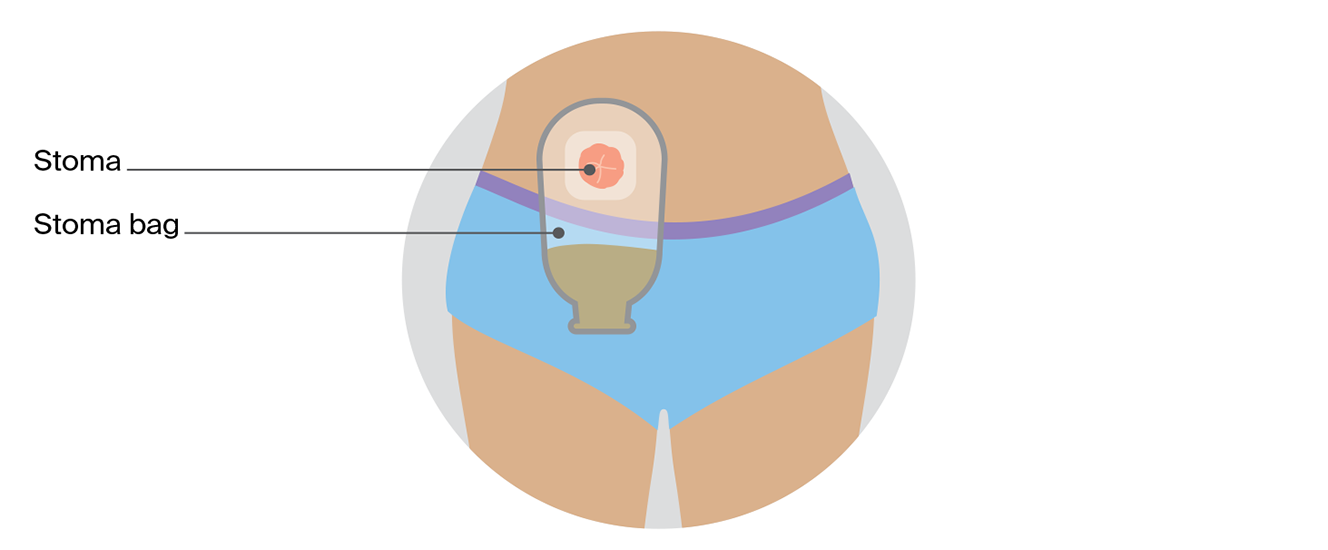
When you’re in hospital, a stomal therapy nurse will teach you how to change your bag, help you choose a bag that suits your body shape and explain how to attach it securely.
Stoma bags can be drainable (able to be emptied) or closed (thrown out after each bowel movement). After a colostomy, you may be able to wear a drainable or closed bag, depending on how thick or watery your waste matter is. After an ileostomy, you wear a drainable bag. How often you need to empty or change a stoma bag is affected by what you eat and drink.
If you have a colostomy in your descending colon, you may be able to wash out the colon with water (colostomy irrigation) to remove waste, then wear a small cover rather than a stoma bag. Ask your doctor or stomal therapy nurse about this option.
Having a stoma, even temporarily, is a big change and takes some getting used to. Thousands of Australians have a stoma and lead a mostly normal life. The stoma may sometimes affect your lifestyle, but most issues can be managed, especially with some planning.
You may worry about the bag being seen under clothing. Although the bag may seem obvious to you, most people won’t notice the bag unless you tell them. The stoma’s location may make some clothes less comfortable (e.g. tight waistbands, belts), but you will generally be able to keep wearing your normal clothes. You can also buy underwear that is designed for people with a stoma.
You may worry that the stoma will affect your ability to have sex. Getting used to looking after the stoma will help you feel more confident. Sex when you have a stoma may need a little planning, but can still be satisfying and fulfilling. However, it is dangerous to use the stoma hole in any sexual activity.
This is when some of the bowel comes out through the stoma opening. Sometimes the prolapse will slide back in by itself, but it may pop in and out. Your stomal therapy nurse or surgeon can tell you how to look after the prolapsed stoma and adapt the stoma bag.
You may need to change what you eat at first to help the stoma settle. Eating a diet of bland, soft, low-fibre food for the first 4–6 weeks will help – the stoma hole is swollen at first so the opening is narrower. Foods that irritate the stoma vary from person to person.
Sometimes food can build up and cause a blockage, stopping solids, fluids and gas moving through. You may need to change what and how you eat (see below) to help avoid this. A stoma blockage can be uncomfortable and cause a bloated feeling or nausea. If symptoms of a blockage last for 2 hours or you vomit, contact your nurse or hospital.
How much waste comes out depends on how, what and when you eat. Over time, most people find they can eat a normal healthy diet. If you have concerns, talk to a stomal therapist or ask to see a dietitian. Bowel Cancer Australia has recipes for people recovering from surgery or with a stoma. Call 1800 727 336.
If there is a chance you could need a stoma, the surgeon will usually refer you to a stomal therapy nurse before surgery. Stomal therapy nurses are registered nurses with special training in stoma care. They are available at most major hospitals, district nursing agencies and in private practice. A stomal therapy nurse can talk to you about the best position for the stoma, answer questions about your surgery and recovery, and give you information about adjusting to life with a stoma. To find a nurse, visit Australian Association of Stomal Therapy Nurses.
The stomal therapy nurse will ask if you’d like to join a stoma (or ostomy) association. For a small yearly membership fee, you will be able to get free stoma appliances and products. Some stoma associations provide assistance and information and coordinate support groups. Visit the Australian Council of Stoma Associations for more information.
The Australian Government’s Stoma Appliance Scheme (SAS) provides free stoma supplies to people with a temporary or permanent stoma. To apply for the SAS, you must hold a Medicare card and belong to a stoma association. Visit The Department of Health, Disability and Ageing and type “stoma appliance scheme” into the search box for more details.
There are many support groups or forums on social media you can follow or join, including at Bowel Cancer Australia.
Bowel Cancer Australia
Services offered
National Bowel Cancer Screening Program
Australian Government
Services offered
Find the right services for your needs, wherever you are in Australia
Trusted cancer information for all people affected by cancer
We're available 9am - 5pm, Monday to Friday (excluding public holidays)