

Rare Cancers Australia
Services offered
Cancer information
Support from cancer nurses
Support from other health professionals
+6
Primary bone cancer means that the cancer starts on the surface, in the outer layer or in the centre of the bone. Primary bone cancer is rare; about 270 Australians are diagnosed every year.
There are more than 30 types of primary bone cancer. The most common types are osteosarcoma, which begins in the cells that grow bone tissue, and chondrosarcoma, which begins in the cells that grow cartilage.
Learn about the bones and the other types of bone cancer below.
A typical healthy person has over 200 bones, which:
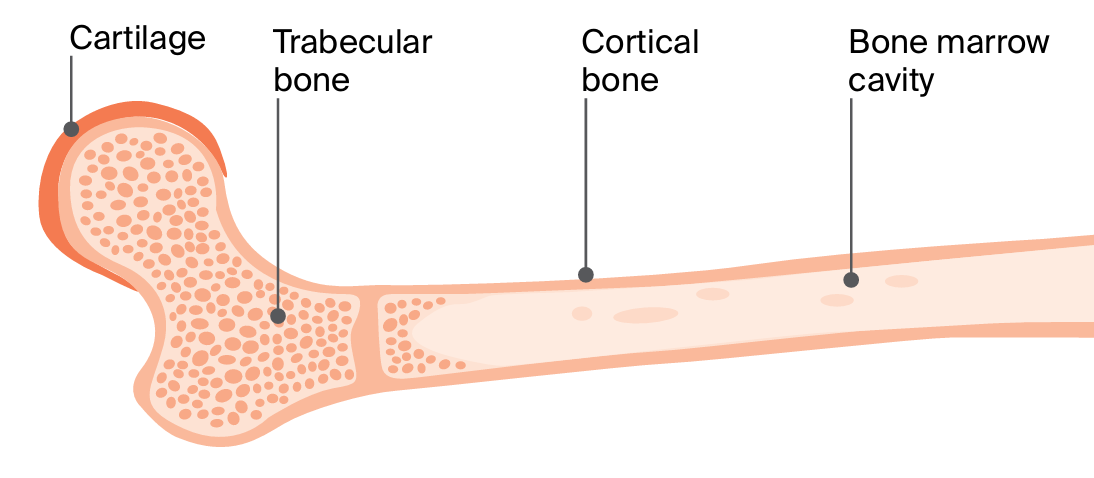
Bones are made up of different parts, including a hard outer layer (known as cortical bone) and an inner core (known as trabecular bone).
The bone marrow is found in this inner core.
Cartilage is the tough material at the end of each bone that allows one bone to move against another at a joint.
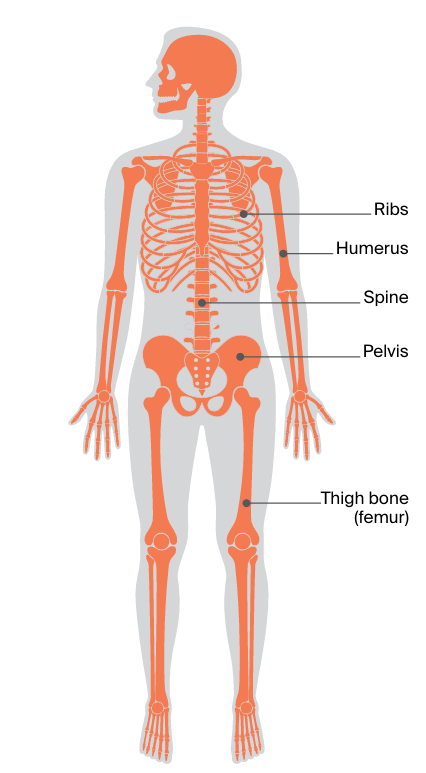
Bones commonly affected by primary bone cancer include the spine, ribs, pelvis and upper bones of the arms (humerus) and legs (femur).
Bone cancer can start as either a primary or secondary cancer. The 2 types are different and this section is only about primary bone cancer.
This means that the cancer starts in a bone. It may develop on the surface, in the outer layer or from the centre of the bone. As a tumour grows, cancer cells multiply and destroy the bone. If left untreated, primary bone cancer can spread to other parts of the body.
There are more than 30 types of primary bone cancer. The most common types are:
Cancer that affects the soft tissues around the bones is known as soft tissue sarcoma, and may be treated differently.
This means that the cancer started in another part of the body (e.g. breast, lung) and has spread to the bone. For more information, see Secondary bone cancer.
Primary bone cancer is rare. About 270 Australians are diagnosed with primary bone cancer each year. It affects people of all ages, but most often occurs in people aged 10–25 and over 50.
Rare Cancers Australia
Services offered
Find the right services for your needs, wherever you are in Australia
Trusted cancer information for all people affected by cancer
We're available 9am - 5pm, Monday to Friday (excluding public holidays)