
Overview
Targeted therapy is a drug treatment that stops cancer growing by targeting certain features of cancer cells. It’s available for many cancers, including bowel, breast, lung and melanoma.
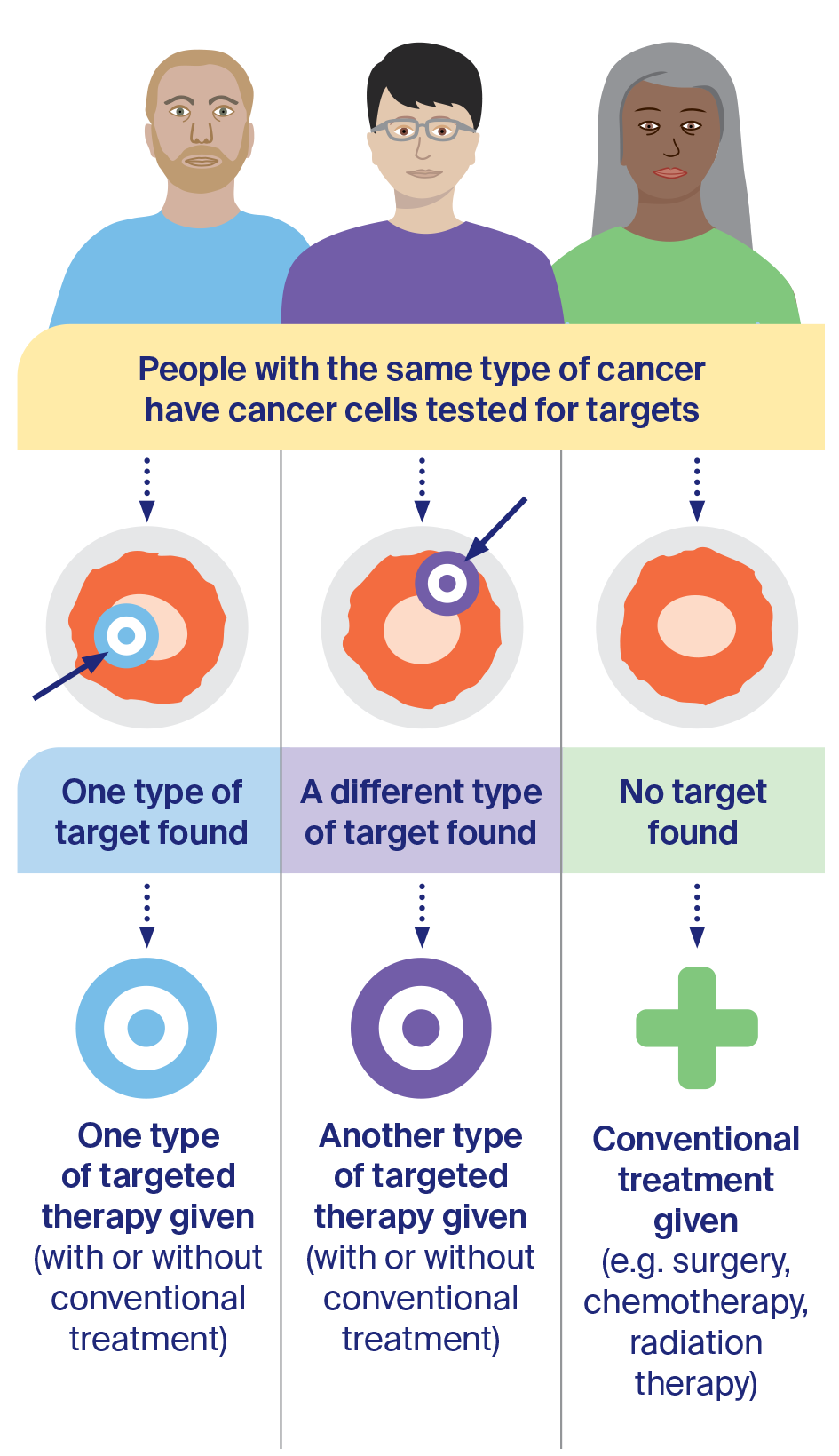
Before targeted therapy is used, cancer cells are tested to see if they have the feature that the treatment targets (called the “molecular target”). Targeted therapy may be used on its own or with treatments such as surgery or chemotherapy.
Learn more about how targeted therapy works, and when it’s used, below.
What's on this page

What is targeted therapy?
Targeted therapy is a drug treatment that targets specific features of cancer cells to stop the cancer growing and spreading. The drugs circulate through the body like chemotherapy but they work in a more focused way and may have fewer side effects than chemotherapy. However, targeted therapy does not work for all cancer types or all people.
How targeted therapy works
The body constantly makes new cells to help us grow, replace worn-out tissue and heal injuries. Healthy cells multiply and die in an orderly way. Cancer cells are different – they multiply faster and keep growing. This happens because of changes in the genes of the cancer cells.
These gene changes affect the proteins that allow the cancer cells to grow and survive; they also create features within or on the surface of the cancer cells that can be targeted. Each targeted therapy drug acts on a particular feature of the cancer cell. Your doctor may call this the “molecular target”. The drug will only be given if tests show that the cancer cells have the target.
Targeted therapy may kill the cancer cells or slow their growth, causing the signs and symptoms of cancer to reduce or disappear. These drugs often have to be taken long term, but many people continue their usual activities and enjoy a good quality of life.
Who can have targeted therapy?
For some types of cancer, your doctor will test a tissue sample to see if the cells contain a particular target that is allowing the cancer to grow. People with the same cancer type may be offered different treatments based on their test results.
The chance of having cancer cells with a suitable target for a particular targeted therapy may be much higher or lower depending on the type of cancer.
How cancer is treated
Because each cancer is unique, people may have different treatment plans, even if they have the same type of cancer.
The 3 most common cancer treatments are:
- surgery
- chemotherapy
- radiation therapy (also called radiotherapy).
Other treatments used for some types of cancer include:
- targeted therapy
- immunotherapy
- hormone therapy.
Targeted therapy, chemotherapy, immunotherapy and hormone therapy are different types of drug therapy. They are known as systemic treatment because the drugs circulate and kill cancer cells throughout the body.
Cancer treatments may be used on their own or in combination. For example, you may have surgery to remove a tumour, followed by targeted therapy to stop the cancer returning. Sometimes, targeted therapy is combined with chemotherapy. Doctors will recommend the best treatment for you based on the type and stage of cancer, its genetic make-up, your age and your general health.
To learn more about other treatments, see our sections on surgery, chemotherapy, radiation therapy and immunotherapy.
When is targeted therapy used?
Using targeted therapy to treat cancer has improved survival rates for several types of cancer, and many people respond well. However, targeted therapy is not an option for everyone with cancer.
In Australia, targeted therapy drugs are now available for a range of cancers, including:
- blood cancers such as leukaemia and lymphoma
- common cancers such as bowel, breast, lung and melanoma
- other cancers such as cervical, head and neck, kidney, liver, ovarian, sarcoma, stomach and thyroid.
For most of these cancers, targeted therapy is available only when the cancer is advanced. For some types, however, it may also be available for early-stage cancer to improve the chance of a good outcome.
These are the main types of targeted therapy, but new drugs are becoming available all the time. Talk to your doctor about the latest options.
Targeted therapy may be used:
- before surgery to reduce the size of a cancer (neoadjuvant therapy)
- after surgery to destroy any remaining cancer cells (adjuvant therapy)
- to treat cancer after initial treatments if the cancer has come back (recurrent disease) or hasn’t responded to other treatments
- as initial treatment for advanced cancer that has certain gene changes
- as long-term treatment to try to prevent the cancer coming back or growing (called maintenance treatment).
Most targeted therapy drugs are not safe to use during pregnancy or while breastfeeding. Ask your doctor for advice about contraception. If you may want to have children in the future, talk to your doctor about your options (e.g. storing sperm or eggs) before starting targeted therapy. If you become pregnant while taking targeted therapy, let your medical team know immediately.
Asking your doctor questions will help you make an informed decision about cancer treatment. Try to prepare a list of questions before your appointments. See some questions about targeted therapy that you may want to add to your list.
Find support services
Find the right services for your needs, wherever you are in Australia
Read cancer information
Trusted cancer information for all people affected by cancer
Need to talk to someone?
We're available 9am - 5pm, Monday to Friday (excluding public holidays)