

Australian Cancer Trials
Cancer Australia
Services offered
Information about clinical trials
Clinical trials test new or modified ways to prevent, screen, diagnose and treat cancer.
You may take part in a randomised controlled trial, where participants are randomly put into groups receiving different treatments, or a non-randomised trial, such as one where all participants receive the same treatment.
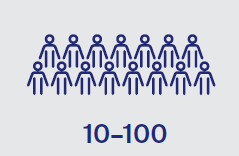
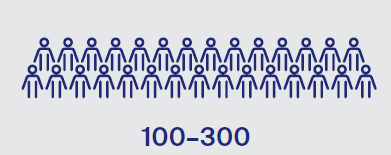
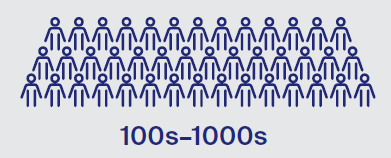
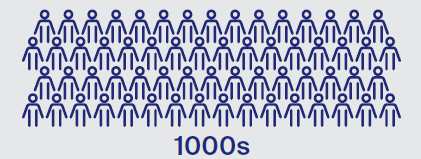
There are up to 4 phases in a clinical trial to test the safety of a new treatment. Less than 100 people usually take part in phase 1, while thousands take part in phase 4.
Cancer clinical trials are research studies that use volunteers to test new ways (interventions) to diagnose, treat and manage cancer. If a trial proves that a test, treatment or other intervention is better than existing options, it may become the new standard of care for patients in the future.
A medicine or another intervention can be developed in a laboratory and tested on animals, but it is only once it has been tested on the human body that we can know it works in people. It also has to be tested on enough people to show that any benefit is not just a random effect for a single person.
A clinical trial will be designed to answer a particular type of research question.
Treatment trials – These test new treatments, new ways of giving existing treatments, or new combinations of treatments. They look at whether the treatment works and if it causes side effects.
The treatments that can be tested include:
Most cancer clinical trials in Australia are treatment trials. The information in this section mostly relates to treatment trials.
Prevention trials – These work out whether medicines and health programs lower the risk of developing diseases such as cancer.
Screening trials – These look at new methods of detecting diseases before symptoms appear.
Diagnostic trials – These identify more accurate or easier tests for diagnosing a particular disease in people who have signs or symptoms.
Quality of life trials – These test ways to improve the comfort and quality of life of people who have cancer. They are done alongside a treatment trial.
Find out how to get involved in a clinical trial or another type of study.
When I was diagnosed with cancer, a friend told me about the study. Getting involved was simple. Participating in cancer research is about giving to other people, and I think that’s a very valuable thing.
Researchers spend many years developing new treatments or medicines in the laboratory before involving people. They then plan the clinical trial to progress in a series of steps called phases. Every phase considers whether the risks outweigh the benefits. Information gathered in each phase determines whether the study can move on to the next phase, and whether the drug or treatment is approved for use. There can be up to four phases, but not all clinical trials go through every phase. See a description of the different phases below.
It is important for researchers to know that the results of a study are accurate and not caused by chance. This means they must follow strict guidelines. Researchers also need to make sure their own – or the participants’ – ideas or beliefs about the research don’t unfairly influence the results. There are various ways to make sure clinical trials are fair and reliable.
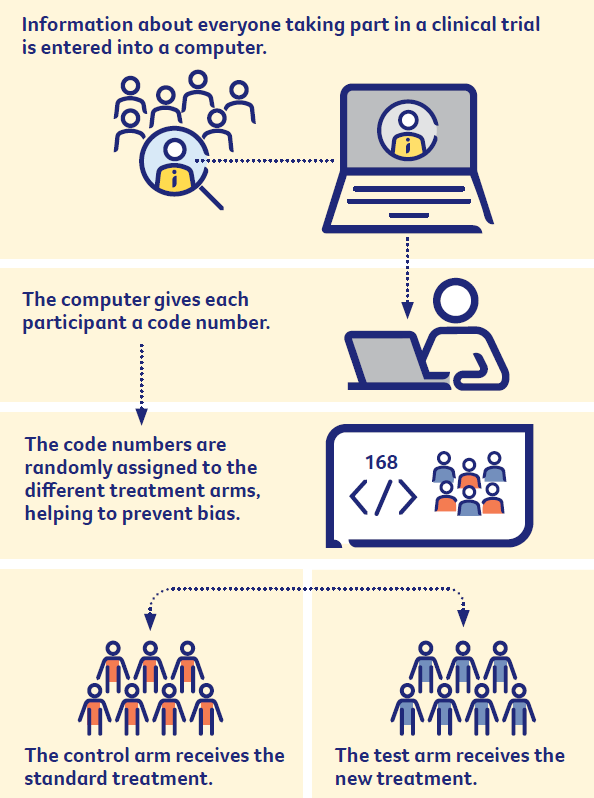
Many clinical trials are randomised controlled trials (RCTs). A randomised controlled trial helps prevent bias, so it is the best way to test if a new treatment works. (Bias occurs when the results of a trial are affected by human choice, expectations or other factors not related to the treatment being tested.)
Most phase 3 trials and some phase 2 trials are randomised. This means participants in the study are put into two or more groups (known as treatment arms) at random. The two groups then receive different treatments, and the results of the different groups are compared. Researchers cannot choose who goes into each group (see below).
Test or experimental arm – This group is given the new treatment that is being tested. Sometimes, the experimental treatment is given in addition to the current standard treatment.
Control arm – This group receives the current standard treatment for the disease or an inactive treatment known as a placebo.
When randomly allocated groups are compared with each other, it is possible to work out which treatment is better. This is because researchers can be certain that the results are related to the treatment, and not to any other factors (see also Blinded studies).
In a randomised controlled trial, people in the control arm may receive the standard treatment or a placebo.
This is the current most effective treatment given to people for their disease or condition. For example, the standard treatment for early breast cancer is surgery, often followed by chemotherapy, radiation therapy and/or hormone therapy.
In some cases, the current standard of care is for the doctors to monitor the cancer closely with regular tests and check-ups, and only offer treatment if the cancer progresses. This approach may be known as active surveillance or watchful waiting. For example, active surveillance is recommended for some early thyroid cancers that aren’t causing any symptoms and are low risk, since the risks of treatment may outweigh the benefits in this situation.
This is an inactive or “dummy” treatment. It is made to look, taste or feel like the treatment being tested, but it doesn’t have any active (therapeutic) ingredients (if a medicine) or beneficial effect. Examples of placebos are sugar pills and saline injections.
A placebo is used to show whether any improvements are because of the actual treatment or because of other factors linked with being in the study, such as being more closely monitored or simply expecting the treatment to be helpful. If the people on the experimental treatment improve more than those on the placebo, this provides stronger evidence that it is the experimental treatment that is responsible.
Participants will be told if a study uses a placebo, but they won’t be told which treatment they are having, and the research team usually don’t know either.
In cancer treatment trials, placebos may be used:
In a blinded study, participants don’t know which arm of a study they’re in. Some randomised controlled trials are called double-blind studies as neither the participant nor the research team know who is receiving the experimental or control treatment. In a double-blind trial, the researchers only discover who is in each arm of the study at the end of the trial when the results are being analysed.
Blinding is used only when participants can’t tell the difference between the two types of treatment. It is not used when the control and experimental treatment are noticeably different – for example, it would be hard to hide surgery and massage from the participant.
The aim of blinding is to reduce bias in the reporting of benefits and side effects. If you don’t know which treatment you’re having, the results are less likely to be influenced by your or your doctor’s views. For example, if you or your doctor knew you were having the experimental treatment, you might report that you’re feeling better than you actually are because you believe you are having a more effective treatment. In an emergency, your doctor can find out what treatment you’re having by contacting those running the study.
In crossover studies, the people in each trial arm receive that treatment for a time and may then have the opportunity to swap to the other treatment. This can mean all participants have all treatments and helps confirm which is the most effective. If the new treatment doesn’t work as hoped with the first group, the second group won’t cross over. You also won’t cross over if you are doing well on the first treatment.
In a single arm trial, everyone receives the same experimental treatment. This method may be used for phase 1 and phase 2 trials, or where the cancer being treated is rare and it is hard to conduct a randomised trial.
For most treatment trials, you will have the treatment as part of the trial. Another way researchers can compare how well different treatments work is through registry trials. A registry trial collects information from people with a particular type of cancer who are having routine treatment. It can’t be used for testing new treatments, but it can answer a range of questions about existing treatments.
Your cancer treatment team may talk to you about joining a registry trial. If you choose to join the registry, you agree to share your health information, such as your medical history, the treatments you are having and the results of tests. This information will then be compared with information from many other patients to work out which treatment approaches are the most effective.
Registry trials are a cost-effective way to run a clinical trial and they allow many more people to participate in cancer research.
Clinical trials are not the only type of clinical research studies. You may also be invited to get involved in behavioural research or translational research.
Behavioural researchers try to understand why people behave in the way that they do. They study the characteristics, lifestyles and social situations of different people to see how these factors may affect the risk of developing or surviving cancer. They then try to develop ways to prevent or change behaviours that might increase cancer risk or lower survival outcomes. Behavioural researchers also look at the emotional and social impacts of cancer on the person with cancer, as well as the impact on their family and friends.
If you take part in a behavioural research study, you may be asked to fill in surveys or be interviewed about your lifestyle, including your eating, drinking, smoking and exercise habits.
You may also be able to take part in a program aimed at changing these behaviours. For example, you might be offered free counselling, an exercise class or a session on healthy eating. The aim of the programs may be to reduce cancer risk or to improve how you cope with the impacts of cancer.
One area of behavioural research is called psychosocial research. This looks at how cancer affects people emotionally, psychologically and socially. In cancer care, this is sometimes called psycho-oncology. Researchers try to understand how patients and carers cope emotionally at different stages of a disease. They develop and test ways to improve people’s ability to deal with the impacts of cancer.
Translational research forms a link between laboratory and clinical research, or between clinical research and standard treatments. It aims to get new treatments or medical approaches into practice quickly. It is sometimes called “bench to bedside” research because laboratory research results are directly used to create new therapies and tests. The findings of behavioural and psychosocial research are also translated into information resources for people affected by cancer.
There can also be “bedside to bench” research – for example, hospitals, treatment centres and health professionals may collect information about how well a treatment works to help laboratory researchers work out what to study next.
Australian Cancer Trials
Cancer Australia
Services offered
Find the right services for your needs, wherever you are in Australia
Trusted cancer information for all people affected by cancer
We're available 9am - 5pm, Monday to Friday (excluding public holidays)