
Overview
Chemotherapy can be given on its own or with surgery, radiation therapy or other drug therapies. You may have one drug or a combination of drugs depending on the cancer type.
Chemotherapy is usually given as a liquid through a thin tube into a vein (intravenously). You may have a tube remain in your vein in between treatments. This is a central venous access device (CVAD).
Other ways of having chemotherapy include tablets, injections or creams.
What’s on this page

How chemotherapy is planned
Most cancers have treatment guides called protocols. These set out which drugs to have, how much and how often. You can find information about protocols for chemotherapy online at the eviQ cancer treatments website. Your specialist may need to adjust the protocols to suit your individual situation.
You may have treatment with one chemotherapy drug or a combination of several drugs. The names of the chemotherapy drugs, the dose (the amount of drugs) and the treatment schedule (how often you have the drugs) will be recorded in a treatment plan. You’ll have tests throughout chemotherapy to monitor your response, and your treatment plan may be adjusted based on the results and any side effects.
Chemotherapy can be given on its own or as part of a treatment plan that could include surgery, radiation therapy or other drug therapies.
The treatment course
How often and how long you have chemotherapy for is known as a treatment course. This will vary depending on the type of cancer you have, the reason for having treatment, the drugs used, and how your body responds to chemotherapy.
Chemotherapy is commonly given as a period of treatment followed by a break. This is called a cycle. For example, you may have treatment on days 1, 2 and 3, then a break until day 28. Then a new cycle will begin. The length of the cycle depends on the type of chemotherapy drugs.
The break between cycles lets your body recover. If you need more time for your blood count to recover and any side effects to improve, the specialist may decide to delay your next cycle. If you have any concerns about changes to your treatment or any delays, talk to your specialist.
What to expect when having chemotherapy
This information will apply in most cases, but things may be done slightly differently depending on how and where you have treatment.
Tests you may have
Tests you may have
Before chemotherapy and between cycles, you’ll have several tests to help plan treatment. These may include:
- weight and height measured to work out the right dose
- blood tests to check the number of blood cells, how well your kidneys and liver are working, and if you have hepatitis B virus
- x-rays and scans to check that you’re well enough for treatment and to see how the tumour is responding to treatment.
For some chemotherapy drugs, you may also have:
- heart monitoring tests to see if the drugs are affecting how your heart works
- lung function tests to see if the drugs are affecting how your lungs work.
Receiving the treatment
Receiving the treatment
While having chemotherapy, you’ll usually be:
- seated in a reclining chair in a room with other patients
- able to walk around the room (e.g. if you need to go to the toilet)
- given anti-nausea (antiemetic) medicine so you don’t feel sick
- given several glasses of water to help flush the chemotherapy drugs through the kidneys and bladder
- monitored throughout the session; nurses will also talk to you about ways to manage side effects
- able to have someone with you to support you during treatment
- able to travel to and from treatment by yourself; it’s recommended that someone travels with you the first time in case you feel unwell.
Telehealth appointments
You may be able to have some appointments from home over the phone or a video link. Called telehealth, it can reduce how often you need to go to the hospital, which can be useful if you live a long way from treatment.
Although telehealth can’t replace all face-to-face appointments, you can use it to talk about a range of issues including test results, prescriptions and side effects. To find out more, talk to your treatment team or call Cancer Connect on 13 11 20.
Having intravenous (IV) chemotherapy
Chemotherapy drugs are usually put straight into your blood as a liquid through a drip inserted into a vein (intravenous infusion). To prepare for IV chemotherapy, the treatment team will insert a narrow tube into a vein. This may be a cannula, which is usually removed after each treatment session, or a type of central venous access device, which stays in place between sessions. The type of device used will depend on how often you need chemotherapy, how long it will take to give each dose and how long the device will need to stay in place.
Chemotherapy will usually be given during day visits to your hospital or treatment centre. In most cases, a single session takes between 20 minutes and several hours. This depends on what kind of treatment you’re having. For some types of cancer, a treatment session may take several days. This can be given with a portable pump that you can use at home. The pump provides a continuous dose of chemotherapy.
The infusion process may cause reactions (e.g. feeling hot or flushed, skin rashes, or difficulty breathing). While some drugs are more likely to cause a reaction in the first and second infusions, others may cause reactions later in the course. Your doctor can give you information. A nurse will check for signs of a reaction and may give you medicines to help prevent them. Sometimes a reaction happens several hours after the infusion. If you develop any signs or feel unwell after you get home, contact the hospital straightaway.
My chemo infusions took about 8 hours because I had 2 drugs and a saline solution in between. It was a long day, sitting in the chair having infusions.
How IV chemotherapy is delivered
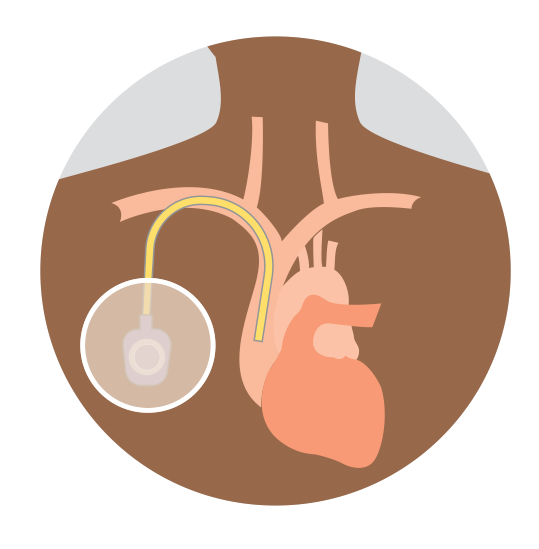
Central venous access device (CVAD)
This is a thin plastic tube that remains in your vein throughout the treatment course (for several weeks or months). It allows the treatment team to give chemotherapy, other drugs, fluid or blood transfusions, and to draw blood. A CVAD is inserted under local anaesthetic, and it shouldn’t cause discomfort or pain.
Common types include: centrally inserted catheter (central venous catheter) which is inserted into the chest; peripherally inserted central catheter (PICC) which is inserted into the arm; and port-a-cath (port) which is surgically inserted under the skin of the chest or arm.
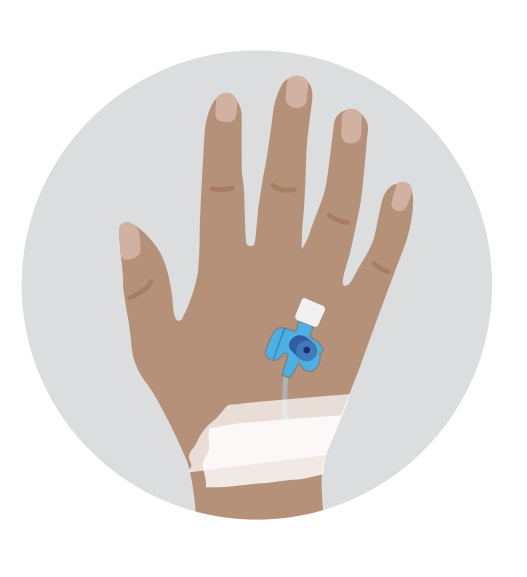
Cannula
This is a small plastic tube inserted into a vein in your arm or the back of your hand. Having a cannula put in can be uncomfortable, but it should only take a few minutes. The cannula can be kept in place if you need to stay in hospital for a few days. If you have chemotherapy as day treatment every few weeks, the cannula is usually put in and taken out each time you visit.
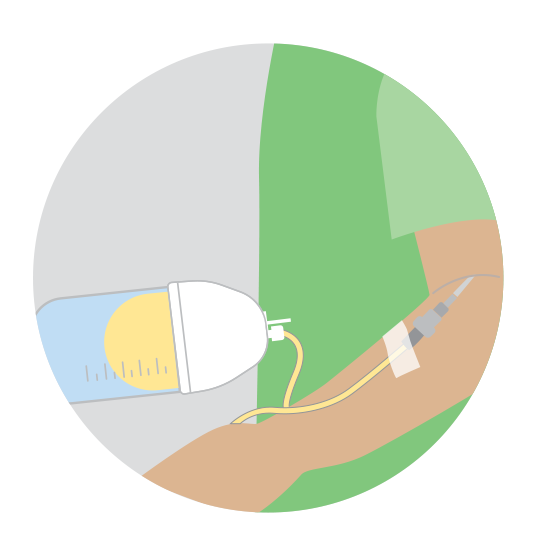
Portable pump
This is a device that gives a prescribed amount of chemotherapy continuously for up to a week. It’s attached to a CVAD and does not need to be connected to a power point. Different types of pumps can be used (pictured is an elastomeric infusion pump). The pumps are small and can be carried in a bag and tucked under a pillow when you’re sleeping.
Caring for your CVAD
A nurse will show you how to look after your CVAD to prevent infections or blockages. You may visit the clinic, or a nurse may visit you at home to help clean tubes or lines. Contact your healthcare team immediately if there is pain, redness or swelling around the CVAD.
Other ways of having chemotherapy
There are other ways of having chemotherapy, depending on the drugs being used and the type of cancer you have. You may be offered oral chemotherapy, injections, or creams that you apply to the skin.
Oral chemotherapy
Oral chemotherapy
Some types of chemotherapy can be taken as tablets or capsules at home. Your doctor, nurse or pharmacist will tell you how and when to take them, and how to handle the drugs safely.
Injections (local chemotherapy)
Injections (local chemotherapy)
Less commonly, chemotherapy can be injected using a needle into different parts of the body, including:
- into a muscle, usually in your buttock or thigh (intramuscular)
- under the skin (subcutaneous)
- into the fluid around the spine (intrathecal – this is also known as a lumbar puncture)
- into an artery (intra-arterial)
- into the abdomen (intraperitoneal)
- into the outer lining of the lungs (intrapleural)
- into the bladder (intravesical)
- into the tumour (intralesional; this method is rare).
Cream
Cream
Some skin cancers are treated using a chemotherapy cream applied directly to the skin. This is called topical chemotherapy.
Transarterial chemoembolisation (TACE)
Transarterial chemoembolisation (TACE)
This treatment is used for primary liver cancer or some types of cancer that have spread to the liver. TACE combines chemotherapy and a procedure which stops blood flow to the tumour (embolisation). The tumour is injected with chemotherapy as well as a substance (usually oil or tiny plastic beads) that blocks the tumour’s blood supply.
Waiting for chemotherapy
Having chemotherapy may mean you spend a lot of time waiting for health professionals, blood tests, test results, and for the necessary safety checks to be done. It also takes time for your drugs to be prepared, and then, for the drugs to be given.
While you’re waiting, you may want to:
- read a book or magazine
- listen to music or a podcast, or write in a journal
- do a crossword puzzle or play a game on your phone
- chat with a companion (many treatment centres allow a support person to stay with you during treatment)
- meditate, practise relaxation techniques or rest
- use a laptop, smartphone or ereader – check whether it’s okay to use devices and if power points are available. Ask if there is wi-fi.
You’ll be able to sit in a comfortable chair and wear your own clothes while receiving treatment. Many treatment centres will provide biscuits and water, tea and coffee, but it’s a good idea to bring your own water bottle and snacks in case of long delays.
At first, you may feel uncomfortable being around other people with cancer. However, many people find support from others who are having chemotherapy at the same time. Joining a support group may be a good way to meet other people going through a similar experience. Call Cancer Connect on 13 11 20 to find out about support groups in your area.
I became good friends with a lady who began chemotherapy on the same day as me. The companionship was a great support.
How will I know chemotherapy is working?
You might wonder whether experiencing side effects is a sign that the chemotherapy is working. However, whether or not you have side effects is not a sign of how well chemotherapy is working.
Throughout treatment, you’ll be closely monitored by your specialist. You’ll have tests to check how well the chemotherapy drugs are working, and whether the cancer has shrunk or disappeared after chemotherapy. This is called the treatment response, and it helps your doctor decide whether to continue or change the chemotherapy plan.
If tests show that the cancer has shrunk and is unable to be detected, this may be called remission or complete response, which means there is no evidence of disease (NED). Depending on the guidelines for the type of cancer you have, this may mean chemotherapy can stop or it may continue for a period of time.
Once you’ve completed the course of chemotherapy, your doctor will monitor you for several months or years. This is because cancer can sometimes come back in the same place or grow in another part of the body.
Find support services
Find the right services for your needs, wherever you are in Australia
Read cancer information
Trusted cancer information for all people affected by cancer
Need to talk to someone?
We're available 9am - 5pm, Monday to Friday (excluding public holidays)