
Overview
Common side effects of cancer treatment are fatigue and pain, which can impact your enjoyment of sex or desire for sex.
Other physical issues connected to cancer treatment, such as incontinence, the loss of a body part or the need for a stoma, can affect your feelings about sex.
This section explains these changes and ways to manage them.
What’s on this page

Fatigue
It’s common to feel tired and lack energy during and after cancer and its treatment. This can last for weeks, months or years and affects everyone differently. Fatigue may cause you to lose interest in sex or be too tired to take an active role. Your partner may also be tired, and not feel like sex.
Tips for managing fatigue
- Do some regular light to moderate exercise. This has been shown to reduce fatigue. Even a walk around the block can help. An exercise physiologist or physiotherapist can suggest exercises suited to you.
- Plan some time to rest before having sex.
- Use memories and fantasies, or erotic material to spark your interest.
- Try being intimate at different times of the day.
- Talk to an occupational therapist, cancer nurse or Cancer Connect on 13 11 20 consultant about ways to manage fatigue.
- Spend time being affectionate with your partner – hugging, kissing and holding hands can help you feel close when you’re too tired for sex.
- For more information, see Fatigue and listen to Cancer Council's podcast episode Managing Cancer Fatigue.
Pain
After surgery, you may feel sore for several weeks, or sometimes longer. It may be uncomfortable to be touched or hugged, especially if your wounds are still healing or the area around a scar is painful. Pain can reduce your pleasure or interest in sex, and make it harder to reach orgasm. It may make some positions uncomfortable. Some pain medicines may also make you feel sleepy or tired, which can affect your sex drive.
After my operation I had quite a bit of pain. I would either take the pain medication or try and get into a comfortable position with the pillows around me.
Painful intercourse
Painful intercourse
It’s important not to push through pain during sex. This can often make things worse. In the female body, pelvic or abdominal surgery, radiation therapy or treatment that affects hormones can make the vagina smaller or less moist, which can make intercourse painful.
Some people experience vaginismus, where the vagina muscles tighten during or before penetration. This is an unconscious reaction, often caused by fear that intercourse will be painful. Vulvodynia is another condition that causes pain or a burning feeling along vaginal walls during sexual intercourse, often due to dryness or other side effects from treatments. Ask your health care team for a referral to a qualified pelvic health physiotherapist. They can teach you ways to relax your muscles during intercourse.
Scar tissue in the penis after surgery can cause pain or bleeding, but these usually settle down in time. Surgery or radiation therapy can irritate the prostate or urethra, which can cause painful orgasms. Anal sex can be painful after radiation treatment for prostate or anal cancer. Consider other ways to be intimate, such as oral sex.
Tips for managing pain
Tips for managing pain
Managing pain during sex
- Plan sex for the time of day when you have the least amount of pain. If you are using pain medicine, take it about an hour before sex so it has time to work
- Try different positions (such as lying side by side) to find one that may be more comfortable for both of you and puts less pressure on painful areas.
- Use pillows or cushions to help support your body and reduce pressure on sore areas.
- Try relaxation techniques or have a warm bath or massage before having sex.
- If pain continues, ask your doctor for a referral to a specialist pain clinic. Treating pain early and using a holistic approach can lead to better long-term results.
- Listen to Cancer Council's podcast episode Managing Cancer Pain.
Making penetrative sex more comfortable
- Avoid deep pelvic thrusts. Choose positions where you can control the depth of penetration.
- Use plenty of lubricant. A water-based lubricant is easier to wash off but a silicone-based one will last longer. Ask your health care team which one is best for you.
- Try to be close to orgasm or very aroused before penetration.
- A women’s pelvic health physiotherapist can give you advice on using vaginal dilators and pelvic floor exercises to help with pain during intercourse. Using vaginal dilators can be challenging, but they may help over time.
- Ask an occupational therapist what products can help with positioning during sex – they may suggest wedges, pillows, electric beds or transfer boards.
Incontinence
Trouble controlling the flow of urine or pee (urinary incontinence) or bowel movements (faecal incontinence) is a common side effect after treatment for cancer of the prostate, bladder, bowel and penis, or the female reproductive organs. Incontinence may be temporary or permanent. The pelvic floor muscles, which affect bladder and bowel control, can also affect sexual function and arousal. Sometimes pelvic floor muscles can become too tight (hypertonic pelvic floor), which may make it harder to fully empty the bladder and bowel.
Having bladder or bowel issues can be embarrassing for your sex life, but there are ways to manage them. Ask your GP for a referral to an accredited pelvic health physiotherapist for advice. You can find a list of health providers or call Continence Health Australia on 1800 33 00 66 for help.
Tips for managing bladder and bowel issues
- Talk to your partner about the incontinence.
- Wait at least 2–3 hours after a meal, and empty your bowel and bladder before having sex.
- After prostate surgery, try sex with you on the bottom and your partner on top.
- Use thick towels, washable blankets or sheets that wick moisture away. A waterproof mattress protector may help you feel less anxious.
- If you have a catheter for draining urine, tape the tube to your skin, remove the bag and insert a flow valve or stopper before sex. If the catheter is in the penis, fold it back against the penis and cover it with a condom to hold in place. Make sure there’s enough catheter tube for the penis to extend.
- Talk to a continence nurse about using plugs for your rectum if you have trouble with faeces (poo) leaking.
How to exercise your pelvic floor muscles
How to exercise your pelvic floor muscles
To find your pelvic floor muscles, try stopping your flow of urine for a couple of seconds while emptying your bladder. You use your pelvic floor muscles to do this. You need to do pelvic floor exercises several times a day. The technique is the same for males and females.
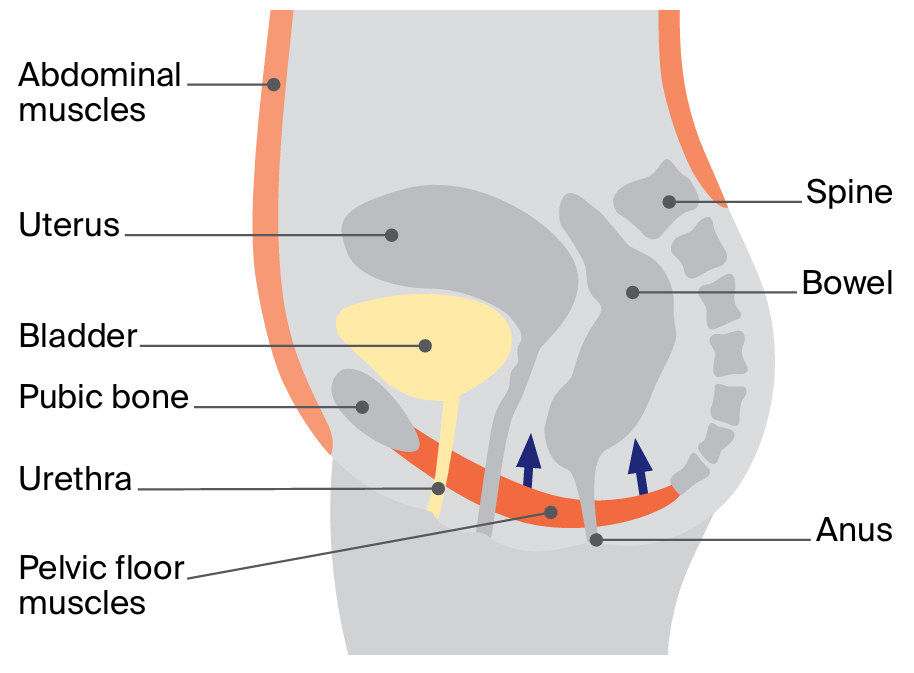
Female
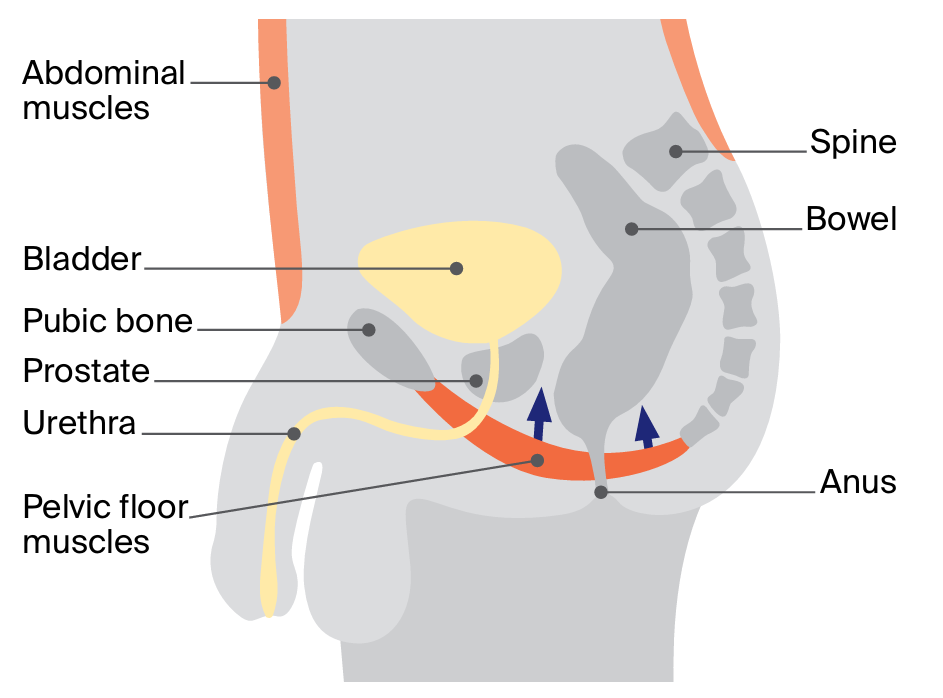
Male
- First, relax all of your pelvic floor and belly or stomach (abdominal) muscles.
- Gently lift your pelvic floor muscles up and hold while you continue breathing normally. Keep your upper abdominal muscles relaxed. Try to hold the contraction for up to 10 seconds. Relax your muscles slowly after each hold.
- Repeat this exercise up to 10 times. Rest for 10–20 seconds between contractions. Relax your pelvic floor muscles completely during the rest periods.
Removal of a body part
If your cancer treatment involved removing a limb, breast or part of your genitals, you may feel grief, loss and anger. These feelings can affect your interest in sex and your sexual confidence.
It takes time to get used to how your body has changed and how that makes you feel. Try to remember that people love you for who you are, not for just how your body looks.
See suggestions on how to feel better about your body. Talking to a psychologist or counsellor may help you adjust to the changes and improve your sex life and relationships.
Using a prostheses
Using a prostheses
If you had a breast, penis or testicle removed, you may choose to use a prosthesis to improve your self-esteem. This is a personal decision and not something everyone wants. Your doctor can explain your options and what the procedure involves.
If you are worried about how the breast area looks, you may consider nipple tattooing. This can create the colour and shape of a nipple.
If you have a brain tumour
If you have a brain tumour
Any type of tumour in the brain and its treatment can have an effect on your sex life and intimacy. Many people only think about the sexual side effects when cancer directly involves the genital organs, but the brain is important for sexual arousal.
Some areas of the brain are especially important for sexual function. These include the frontal, temporal and parietal lobes, and pituitary gland. When these are affected, it can cause changes in behaviour, thinking and memory, personality and social skills.
Tips for sex and intimacy after the removal of a body part
- Show your partner the changes. If it feels okay, show them how to touch the area in a way that feels good.
- Be patient with yourself. It may take time to feel comfortable about your body again.
- Touch your genitals to work out what feels different and what feels good now. You can also explore other parts of your body that make you feel aroused when touched. This may take some time and practice.
- If you feel worried about how your partner (or a potential partner) may react, remember that talking openly can help. Sharing your feelings and keeping an open mind can help you find new ways to be intimate.
- Ask your partner to stroke different areas of your body if your usual erogenous zones have changed. This may include kissing and touching your neck, ears, inner thighs and genitals.
- Look at yourself in the mirror to get used to the changes to your body.
- If you’ve had one or both breasts removed, see Breast prostheses and reconstruction.
- If you’ve had a limb removed, try wearing your limb prosthesis during sex. If you prefer to take off the prosthesis, use pillows to support the affected limb.
- Try a Look Good Feel Better workshop. Call 1800 650 960 to book in.
- Talk to a sexual health physician, psychosexual counsellor or sex therapist if your body changes are affecting your sex life or relationship. Visit Society of Australian Sexologists to find an accredited sex therapist or sexologist.
- Call Cancer Connect on 13 11 20 to talk to someone about your feelings.
Sex life with a stoma
Having a stoma usually worries the person with the stoma more than their partner. Getting used to looking after the stoma will help your confidence, and sex may feel more relaxed with a little planning. The bag won’t come off during sex if it’s properly sealed.
Tips for sex when you have a stoma
- Wait for 2–3 hours after a big meal before having sex.
- Change the bag and check the seal, so you don’t worry about it leaking. Tape the pouch to your skin so it doesn’t move around.
- You can cover the bag with a specially made fabric pouch. Or you can fold the bag in half and cover it with a cummerbund (wide elastic support band). You can wear a “body tube” that covers the belly, with a hidden pocket for the bag.
- Wear clothes that make you feel good – a mini-slip, short nightgown, special stoma underwear or boxer shorts. High-waisted underwear can cover the stoma, or crotchless underwear may help if you don’t want to get completely naked.
- Try positions that don’t push on the stoma (e.g. lying side by side). A pillow can help protect the stoma.
- Ask a stomal therapy nurse about learning irrigation. This is when you use a stoma cap or a small pouch (a “mini”) during sex. You can only use a cap or mini if you’re sure no waste will come out. Take care, as a cap or mini can’t hold any outflow. You might want to use one during oral sex, so that a bag is not near your partner’s face.
- Use a pouch deodorant or essential oils in the room if you’re worried about smell.
- Never use your stoma for sex. It is dangerous for the stoma to be penetrated.
- Find a stoma association.
Find support services
Find the right services for your needs, wherever you are in Australia
Read cancer information
Trusted cancer information for all people affected by cancer
Need to talk to someone?
We're available 9am - 5pm, Monday to Friday (excluding public holidays)