
Overview
Lymphoedema is swelling in the body that occurs when the lymphatic system isn’t working properly.
Some cancer treatments as well as some cancers can damage the lymphatic system, which causes swelling.
Read more below about the lymphatic system, risk factors for lymphoedema and commonly affected areas.
What's on this page

What is lymphoedema?
Lymphoedema is swelling (oedema) in the body. It develops when lymph fluid builds up in the tissues under the skin or sometimes deeper in the abdomen (belly) and chest areas.
It usually occurs in an arm or leg, but can also affect other parts of the body, such as the neck. This happens when the lymphatic system is not working properly.
Lymphoedema can be either primary (when the lymphatic system has not developed properly) or secondary (when the lymphatic system is damaged). This information is only about secondary lymphoedema, which sometimes happens after cancer or its treatment.
When does lymphoedema develop?
Cancer or cancer treatment can damage or block the lymphatic system. When this occurs, lymph fluid doesn’t drain as it should and instead builds up in the tissues. This causes swelling.
Lymphoedema can affect people during cancer treatment, just after treatment, in remission (when signs and symptoms of cancer reduce) or months or years after cancer treatment. It can also develop while you're living with advanced cancer or receiving palliative treatment. It usually develops very slowly.
The lymphatic system
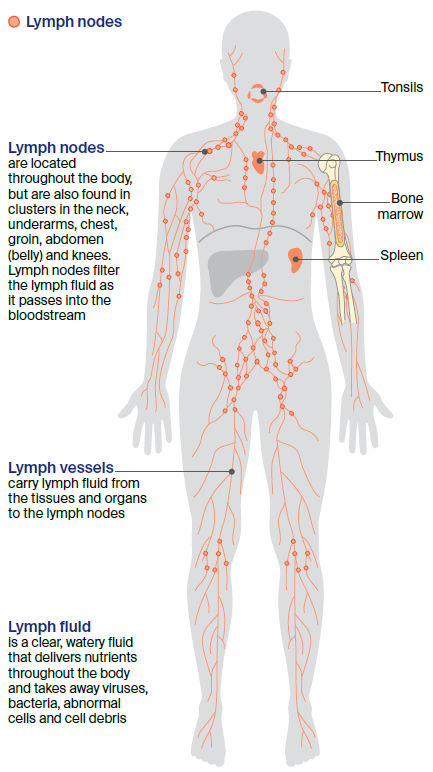
The lymphatic system is part of the immune system. It helps to protect the body from disease, get rid of waste, and drain fluid. It is a network of lymph nodes, lymph vessels and lymph fluid. White blood cells called lymphocytes are produced by lymph nodes. Lymphocytes are also produced by lymph tissue found in other parts of the body, including the spleen, bone marrow, thymus and tonsils. Lymphocytes help to protect the body against disease and infection.
What are the risk factors for lymphoedema?
Whether or not you develop lymphoedema after treatment for cancer depends on the location of the cancer, its stage and the type of treatment you have. While the risk is ongoing, most people who are at risk never develop lymphoedema. Find out tips on how to reduce the risk of lymphoedema.
Some risk factors for lymphoedema include:
- surgery to remove lymph nodes – the more nodes removed, the greater the risk
- radiation therapy
- some chemotherapy drugs
- an infection in the at-risk limb
- being overweight or obese
- injury to the lymphatic system (e.g. a tumour growing near a lymph node or vessel)
- underlying primary lymphoedema
- inflammatory disorders such as arthritis
- not being able to move around easily.
If left untreated, lymphoedema can progress and cause a range of problems, including:
- trouble moving around and doing usual activities
- discomfort and sometimes pain
- difficulty fitting into clothes or shoes
- an increased risk of infections
- further hardening of the skin
- lymph fluid leaking from the skin (lymphorrhoea)
- very rarely, the development of angiosarcoma, a type of soft tissue cancer.
How common is lymphoedema?
Lymphoedema can occur after treatment for many different cancers. There are few statistics about how common lymphoedema is after cancer treatment, and the incidence differs for each cancer type. One study estimated that lymphoedema occurs in about 20% of people treated for cancers of the vulva, vagina, ovary, uterus, cervix, breast, prostate, or melanoma.
Commonly affected areas
- bladder cancer – genitals, legs
- breast cancer – arm, hand, breast, chest, trunk
- cervical cancer – genitals, legs
- head and neck cancer – face, below the chin and/or neck
- melanoma – any part of the body, depending on the area affected by melanoma
- ovarian cancer – genitals, abdomen/trunk, legs
- prostate cancer – genitals, abdomen/trunk, legs
- uterine cancer – genitals, abdomen/trunk, legs
- vulvar or vaginal cancer – genitals, abdomen/trunk, legs
Find support services
Find the right services for your needs, wherever you are in Australia
Read cancer information
Trusted cancer information for all people affected by cancer
Need to talk to someone?
We're available 9am - 5pm, Monday to Friday (excluding public holidays)