
Overview
Eating well is important before, during and after treatment for cancer, because cancer and treatment both place extra demands on the body. Eating well can help give you strength and energy, help your body cope with the side effects of treatment and speed up recovery.
The best eating plan for you is something you can discuss with your doctor and dietician. This may be different to the general guidelines for healthy eating.
What’s on this page

You may know that eating well is important for your overall health and wellbeing, but not be aware of all the benefits. Good nutrition can:
- give you more energy and strength
- help you achieve or maintain a healthy weight
- improve your mood
- help prevent or reduce the risk of some conditions, such as heart disease, type 2 diabetes and even some cancers.
What to eat
The Australian Dietary Guidelines provide advice on eating for health and wellbeing for the general population. They were developed by the National Health and Medical Research Council (NHMRC).
The key recommendations from the Australian Dietary Guidelines are outlined below. Following these guidelines will help ensure you eat well and may reduce your risk of developing some cancers. It is also important to be as physically active as possible.
For more information on physical activity, see How important is exercise? and Exercise for people living with cancer.
What to drink
Fluids are essential for the body to function. All the organs, tissues and cells in your body need fluids to keep working properly. As a general guide, you should aim to drink at least 8–10 glasses of fluid per day. Most of this should be plain water, but fluid from soups, smoothies, milk, fruit juices, or ice cubes is also good. Tea and coffee also provide fluid, but they may cause you to urinate (pee) more often.
Alcohol may lead to weight gain and increase the risk of heart disease, type 2 diabetes and several cancers, such as bowel and breast cancers. When it comes to cancer risk, there is no safe level of alcohol use. For healthy people who drink alcohol, Cancer Council recommends you follow the NHMRC guidelines and have no more than 10 standard drinks a week and no more than 4 standard drinks on any one day (see the Department of Health's standard drinks guide).
General guidelines for healthy eating
The Australian Dietary Guidelines set out 5 key recommendations for adults. People with cancer may need to be more flexible about their food choices and ask their doctor about breastfeeding.
Five key recommendations for healthy eating
- Achieve and maintain a healthy weight by being physically active and choosing nutritious food and drinks to meet your energy needs.
- Enjoy a wide variety of nutritious foods from the 5 food groups every day (see diagram below).
- Limit your intake of alcohol and foods containing saturated fat, added salt and added sugars.
- Encourage, support and promote breastfeeding.
- Care for your food – prepare and store it safely.
Foods to limit
- Use small amounts of fats such as butter and cooking oils. Choose varieties that are low in saturated and trans fats.
- If you choose to eat fast food, processed meats and sweets and drink alcohol, only have them sometimes and in small amounts.
The diagram below is based on the NHMRC’s Australian Guide to Healthy Eating diagram. Aim to eat a wide variety of foods from the 5 food groups and drink plenty of water. For more details, visit Eat For Health.
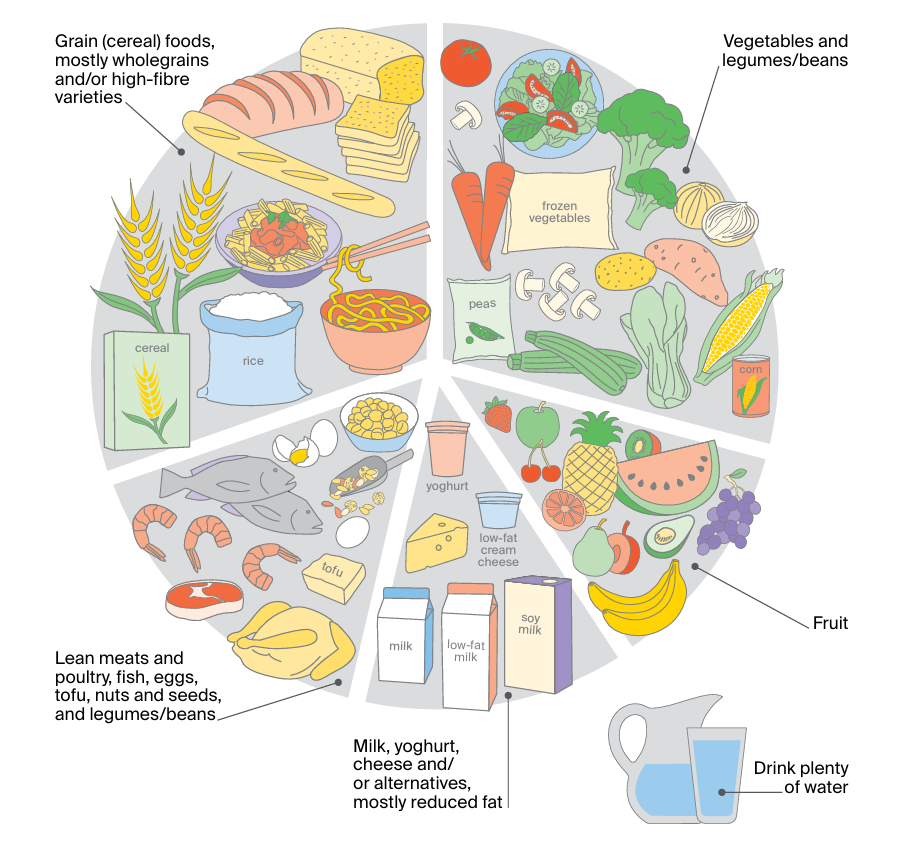
Note: At the time of this information’s publication, the Australian Dietary Guidelines were under review.
Eating and drinking during cancer treatment
Cancer and its treatment both place extra demands on the body. Research shows that eating well before, during and after cancer treatment can help:
- improve quality of life by giving you more energy, keeping your muscles strong, helping you stay a healthy weight, and boosting mood
- your body cope with the side effects of treatment, improve how well treatment works, reduce length of hospital stays, and speed up recovery
- heal wounds and rebuild damaged tissues after surgery, radiation therapy, chemotherapy and other treatments
- improve your immune system and ability to fight infections
- reduce the risk of cancer coming back (recurrence).
During treatment, the side effects of cancer and its treatment may make it hard to eat enough or you may have trouble eating some foods.
You may need to be more flexible with what you eat. This may mean that the foods you are able to eat are quite different to those in your normal diet and perhaps not foods that are recommended as part of a healthy diet.
Your food choices may be different from the Australian Dietary Guidelines before, during and after cancer treatment.
Alcohol can also interact with some medicines. Check with your doctors before drinking wine, beer or spirits during cancer treatment.
How to eat well after a cancer diagnosis
During cancer treatment and recovery, you may need to adapt what you eat to help meet your body’s changing needs.
Preparing for treatment
Preparing for treatment
- Try to eat as well as you can before starting treatment.
- Eat a wide variety of foods from the 5 food groups and do some physical activity to build muscle (if you are feeling well enough).
- If you have lost weight or you are not eating as well as usual, you may need food with more energy (kilojoules, also known as calories) and protein.
- Ask your general practitioner (GP) or oncologist for a referral to a dietitian for advice about what to eat. You can also be referred to other health professionals, such as physiotherapists, exercise physiologists and psychologists. These health professionals can help prepare you for cancer treatment.
- Plan for days you don’t feel like cooking. Fill your freezer with frozen meals.
- Organise a meal roster with family and friends.
During treatment
During treatment
- You may need food with more energy (kilojoules) and protein. If you don’t have much of an appetite, try eating small, frequent meals or snacks, rather than 3 large meals a day.
- If treatment affects what you can eat, see Treatment side effects and nutrition.
- If you are losing weight, discuss how to avoid further weight loss. Ask for a referral to a dietitian if weight loss is ongoing or fast.
- Do regular physical activity to improve appetite and mood, reduce fatigue, help digestion and prevent constipation. Exercise professionals such as a physiotherapist or exercise physiologist can help you develop an exercise plan.
- Check with your doctor or dietitian before taking vitamin and mineral supplements or making major changes to your diet.
- Look out for signs of malnutrition.
After treatment
After treatment
- Try to maintain your weight to help you recover faster.
- Eat a wide variety of foods and do some physical activity to rebuild muscle and help you recover from the side effects of cancer treatment. For help developing an exercise plan, see a physiotherapist or exercise physiologist.
- If you continue to have treatment side effects that affect what you can eat, see Treatment side effects and nutrition.
- See a dietitian for support and help.
Recovery and beyond
Recovery and beyond
- Focus on healthy eating once you’ve recovered from the side effects of treatment. See general healthy eating guidelines.
- Avoid excess weight gain and be physically active to help lower the chance of cancer coming back. See physical activity guidelines for adults.
- Limit how much alcohol you drink. If you do drink, have no more than 10 standard drinks a week and no more than 4 standard drinks in one day.
- Visit your doctor for regular check-ups and see a dietitian for support.
Living with advanced cancer
Living with advanced cancer
- Good nutrition can improve quality of life.
- Adjust what you eat to meet your changing nutritional needs. For example, you may choose full-cream rather than low-fat milk.
- Talk to your doctor about medicines that may improve your appetite.
- Consider nutritional supplements if you can’t eat enough. Discuss options with your doctor, palliative care specialist or dietitian.
- For more information, see Nutrition and advanced cancer.
Some terms that may be unfamiliar are explained in our glossary.
Find support services
Find the right services for your needs, wherever you are in Australia
Read cancer information
Trusted cancer information for all people affected by cancer
Need to talk to someone?
We're available 9am - 5pm, Monday to Friday (excluding public holidays)