

Ovarian Cancer Australia
Services offered
Cancer information
Support from cancer nurses
Emotional support
+2
Surgery for ovarian cancer usually involves a total hysterectomy (removal of the uterus and cervix), as well as the removal of both fallopian tubes and both ovaries. You may need chemotherapy before or after surgery.
It will take several weeks or more to recover from the operation. A physiotherapist or exercise physiologist can suggest exercises to help you return to your normal activities.
In some cases, surgery will be the initial treatment for ovarian cancer. This surgery can be complex. It is recommended that a gynaecological oncologist who is at a hospital that does a lot of these operations (a high-volume centre) does the surgery. The Australian Society of Gynaecologic Oncologists has a list of specialists by state and territory. Learn how find a specialist near you.
Surgery allows your gynaecological oncologist to confirm the diagnosis of ovarian cancer and also work out if the cancer has spread.
The gynaecological oncologist will talk to you about the most suitable type of surgery, as well as the risks and side effects. These may include infertility. If the option to have children is important to you, talk to your doctor before surgery and ask for a referral to a fertility specialist.
You will be given a general anaesthetic and will have either a laparoscopy (with 3–4 small cuts in your abdomen) or a laparotomy (with a vertical cut from around your bellybutton to your pubic line). A laparoscopy may be used to see if a suspicious mass is cancerous; if the cancer is advanced, you will usually have a laparotomy.
You may have a biopsy during surgery if you cannot have an image-guided biopsy, or to remove and check a suspicious tumour. The tissue samples will be sent to a pathologist, who will check them for signs of cancer. The results will help decide if you need debulking surgery (see below).
If cancer is found, the surgeon will remove as much visible cancer as possible. This is called debulking or cytoreductive surgery. You may also have chemotherapy before or after surgery.
Debulking usually means removing the ovaries, fallopian tubes, uterus and cervix. Depending on how far the cancer has spread, other organs or tissue may also be removed during the same operation.
The omentum is a sheet of fatty tissue that hangs down in front of the large bowel like an apron. If the cancer has spread to the omentum, it will need to be removed. The omentum may also be removed even if there is no visible sign cancer has spread, because it may contain cancer cells that cannot be seen during surgery.
Cancer cells can spread from your ovaries to nearby lymph nodes. Your doctor may suggest removing some nodes in a lymphadenectomy (also called lymph node dissection).
If cancer has spread to the bowel, some of the bowel may need to be removed. Rarely, a new opening called a stoma might be created (colostomy or ileostomy).
Ovarian cancer can spread to many organs in the abdomen. In some cases, parts of the liver, diaphragm, bladder and spleen may be removed if it is safe to do so.
I felt great relief after the surgery, as once the tumour had been removed, the pain that I had in my lower abdomen and hip was gone.
If ovarian cancer is found, all or some of the reproductive organs will be removed. The type of surgery you have will depend on how certain the gynaecological oncologist is that cancer is present and where the cancer has spread.

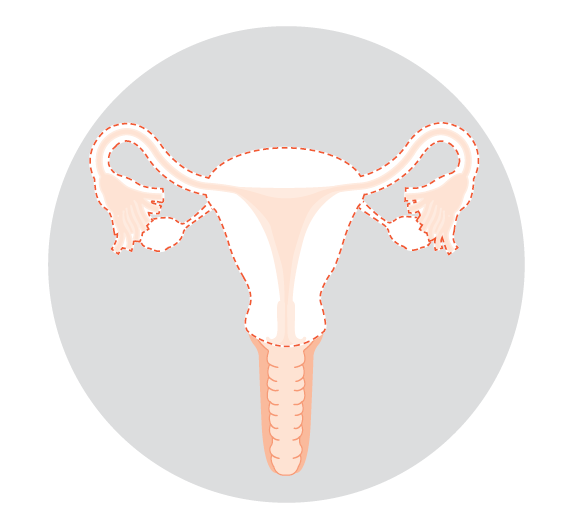
In most cases, surgery for ovarian cancer means removing the uterus and cervix, along with both fallopian tubes and ovaries.
Removing the uterus will mean you cannot get pregnant and carry a child.
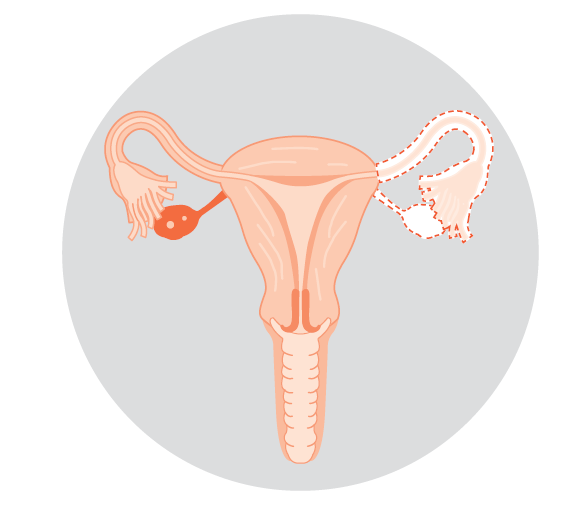
If cancer is found early and it is in one ovary, you may have only one ovary and fallopian tube removed.
This may be offered to some younger women with early-stage cancer who still wish to have children.
When you wake up after the operation, you will be in a recovery room near the operating theatre or in the intensive care unit. Once you are fully conscious, you will be taken back to your bed on the hospital ward. The surgeon will visit you as soon as possible to explain the results of the operation.
You are likely to have several tubes in place, which will be removed as you recover. These could include:
As with all major surgery, you will have some discomfort or pain, but this can be controlled. For the first 1–2 days, you may be given pain medicine through a:
Let your doctor or nurse know if you are in pain so they can adjust your medicines to make you as comfortable as possible. Pain that is treated early is better managed. After you go home, you can continue taking pain medicines as needed.
During a laparoscopy, carbon dioxide gas is used to inflate the abdomen. The gas can irritate nearby nerves. This can cause pain in the lower chest and up into the shoulder area, which is known as “referred pain”. This type of pain can be quite uncomfortable and may last several days. Walking and mild pain medicines can help ease the pain in the shoulder. Applying heat to the area may also help.
You will be encouraged to move around and be active as soon as you can. It is common to be given a daily injection of blood-thinning medicine to reduce the risk of blood clots. Depending on your risk of clotting, you may be taught to give this injection to yourself so you can continue it for a few weeks at home. You may also be advised to wear compression stockings for 3–4 weeks to help the blood in your legs to circulate and to avoid clots.
You can expect some light vaginal bleeding after the surgery, which should stop within 2 weeks. Your treatment team will talk to you about how you can keep the wound clean to prevent infection once you go home.
If you had part of the bowel removed and have a stoma, a stomal therapy nurse will explain how to manage it.
Your stay in hospital will generally be 1–4 days. How long you stay will depend on the type of surgery you had and how quickly you recover. If you had laparoscopic surgery, you will be able to go home on the first or second day after the operation.
Your recovery time will depend on the type of surgery you had, your general health, and your support at home. If you don’t have support from family, friends or neighbours, ask your nurse or the hospital social worker if it’s possible to get help at home. In most cases, you will feel better within 1–2 weeks and should be able to fully return to your usual activities after 4–8 weeks. Ask your treatment team for more information about your particular circumstances.
When you get home from hospital, take things easy and do only what is comfortable. You may like to try meditation or some relaxation techniques to reduce anxiety or tension.
Avoid heavy lifting (more than 3–4 kg) or heavy work (e.g. gardening) for at least 6–8 weeks. This will depend on the method and kind of surgery you’ve had.
Depending on the type of work you do, you will probably need time off work. Ask your treatment team how long this might be.
You will need to avoid driving after the surgery until pain in no way limits your ability to move freely. Discuss this issue with your doctor. Check with your car insurer for any exclusions regarding major surgery and driving.
Your treatment team will probably encourage you to walk on the day of the surgery. Research suggests that exercise helps manage some treatment side effects and speed up a return to usual activities. Speak to your doctor about suitable exercise and ask for a referral to a physiotherapist or exercise physiologist. To avoid infection, it’s best to avoid swimming for 5–6 weeks after surgery.
To help your body recover from surgery, eat a well-balanced diet that includes a variety of foods. Include proteins such as lean meat, fish, eggs, milk, yoghurt, nuts and legumes/beans.
You may experience constipation after having a hysterectomy and taking strong pain medicines. You will probably be offered stool softeners while you’re taking pain medicines and until your bowel movements return to normal.
Sexual intercourse should be avoided for up to 8 weeks after a hysterectomy. Ask your doctor or nurse when you can have sex again, and explore ways you and your partner can be intimate.
All tissue and fluids removed during surgery are checked for cancer cells by a pathologist. The results will help confirm the type of ovarian cancer you have, if it has spread (metastasised), and its stage.
Your doctor should have all the test results within 2 weeks of surgery. Further treatment will depend on the type, stage and grade of the cancer.
If the cancer is advanced, it’s more likely to come back, so surgery will usually be followed by chemotherapy, and occasionally by targeted therapy. Radiation therapy is recommended only in particular cases.
Ovarian Cancer Australia
Services offered
Find the right services for your needs, wherever you are in Australia
Trusted cancer information for all people affected by cancer
We're available 9am - 5pm, Monday to Friday (excluding public holidays)