Neuroendocrine tumours (NETs) are a rare group of tumours. Also known as neuroendocrine neoplasms (NENs), they begin in cells in the neuroendocrine system. This system is made up of glands and nerve cells all over the body that make hormones. These hormones control how the body works.
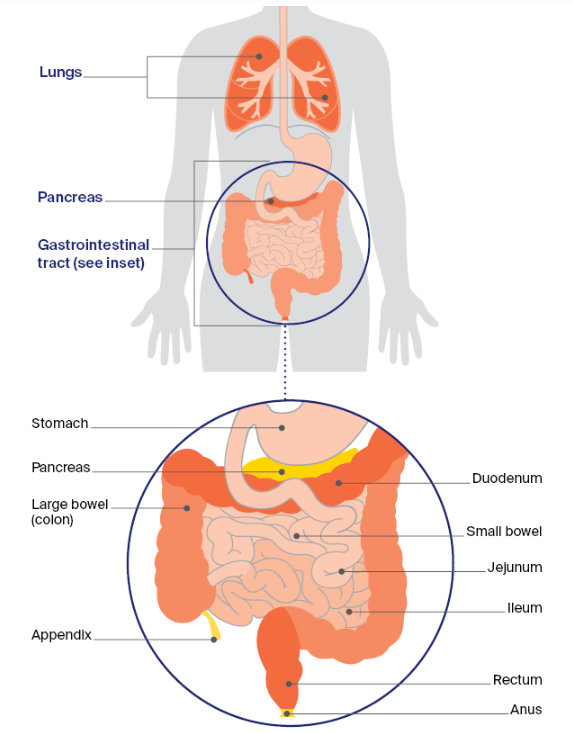
NETs are grouped according to where in the body they began. Gastrointestinal NETs start in the gastrointestinal (GI) tract, in the digestive system. Pancreatic NETs start in the pancreas, and lung NETs develop in the lungs.
The GI tract, pancreas and lungs are the most common places for NETs to develop, though they can happen anywhere in the body.
The neuroendocrine system is made up of many glands and nerve cells all over the body that produce hormones and then release them into the bloodstream. These hormones help control how the body works, for example, in digesting food.
Neuroendocrine tumours (NETs), also called neuroendocrine neoplasms (NENs), are a rare group of tumours that develop from neuroendocrine cells that become abnormal and keep growing. All NETs are considered cancer (malignant), but some grow slowly (low grade) while some grow quickly (high grade). The high grade tumours are also known as neuroendocrine carcinomas (NECs).
Malignant tumours can spread through the bloodstream or lymph vessels and form another tumour at other parts of the body. This new tumour is known as secondary cancer or metastasis.
How common are NETs?
NETs are not common but the number of people being diagnosed is slowly increasing. There is an almost equal risk for males and females. Around 5700 Australians are diagnosed with a specific NET each year, with most new cases being diagnosed in people aged 40 years or over.
Types of NETs
NETs are grouped according to where in the body the cancer started. Some NETs make extra hormones, which can cause certain symptoms. These are referred to as functional tumours. NETs that do not produce extra hormones are known as non-functional tumours.
Gastrointestinal
These NETs start in the gastrointestinal (GI) tract, which is part of the digestive system. They include:
gastric NETs, in the stomach
duodenal NETs
small bowel NETs, including the jejunum and ileum
large bowel NETs, in the colon
appendiceal NETs
rectal NETs, near the anus.
Pancreatic
The pancreas is a long, flat gland that lies between your stomach and spine. It makes digestive juices and hormones. Pancreatic NETs start in the neuroendocrine cells of the pancreas and make up about 5% of cancers in the pancreas. Most (about 90%) of pancreatic NETs do not produce extra hormones and are called non-functioning.
Functional pancreatic NETs are rare and most are named after the hormone they overproduce:
insulinomas produce too much insulin
glucagonomas produce too much glucagon
gastrinomas produce too much gastrin
somatostatinomas produce too much somatostatin
VIPomas produce too much of a substance called vasoactive intestinal peptide.
Lung
Lung NETs make up about 14% of lung cancers. The 4 subtypes of lung NETs are:
typical carcinoids
atypical carcinoids
large cell neuroendocrine carcinomas
small cell lung neuroendocrine cancer.
Other types of NETs
Merkel cell carcinoma is a fast-growing cancer in cells in the top layer of the skin. For a directory of specialists in Merkel cell carcinoma care and treatment, visit the Australasian Merkel Cell Carcinoma Interest Group.
Neuroblastoma, a tumour in the adrenal glands above the kidneys, is more commonly diagnosed in children. For more information, visit Neuroblastoma Australia.
For more information on other types of NETs, including thymic, testicular, prostate, ovarian and endometrial, multiple endocrine neoplasia (MEN), pheochromocytoma, paraganglioma and medullary thyroid carcinoma, visit NeuroEndocrine Cancer Australia.