
Overview
Knowing what happens to your body during sex can help you to understand any changes.
The sexual response cycle includes several phases and is influenced by your brain, hormones and body.
Cancer treatments that affect the sensitivity of certain body parts, or affect the level of certain hormones, can change how you experience or desire sex.
What’s on this page

Feeling like you want to have sex is called your sexual desire or libido. It is affected by your physical and emotional wellbeing, levels of sex hormones, relationship and body image, as well as the need to express love, give and receive pleasure, and connect with others. Some cancer treatments can reduce your desire or libido.
When we talk about anatomy in this information, we use the words “female” and “male” to refer to parts of the body, not a gender. Some people, including those who identify as transgender and non-binary, may have diverse gender identities or experiences of their bodies.
The sexual response
Knowing what happens to your body during sex can help you to understand any changes. This is called the sexual response cycle. It includes several different phases: desire (wanting sex), arousal (feeling excited or turned on), plateau, orgasm and resolution. These phases are the same for all genders, but the timing can be different for each person. You may not go through every stage (e.g. you may not orgasm).
Arousal can begin in 2 ways – from the brain (psychogenic), or by touch (reflexogenic). The brain controls your interest in sex through memories, feelings and thoughts – what you see, smell, touch, taste, hear and imagine. If you are touched on the genitals or a sensitive area, this can start the process of feeling like sex.
Erogenous zones
Areas of the body that make you feel aroused when touched are called erogenous zones. The main ones are the clitoris, labia, vagina, penis, scrotum and anus. Other erogenous zones include the breasts, nipples, chest, mouth, ears, neck and inner thighs. Cancer or its treatment may change how these areas feel. They may become more sensitive or they may lose some sensation.
The male sexual and reproductive anatomy
Androgens (male sex hormones)
The main androgen is testosterone, which is made mostly in the testicles. It’s also produced in small amounts by everyone’s adrenal glands (including females).
Some cancer treatments (e.g. for prostate cancer) use testosteronedepriving drugs called androgen deprivation therapy or ADT. These medicines can cause erection problems, fatigue and low interest in sex (libido). They may also increase body fat and change your body image. If you are on ADT, exercise may help you to maintain muscle mass and bone strength, and support your mental health.
The ovaries also make small amounts of androgens, which may help female sexual wellbeing. Androgens often drop during and after chemotherapy, and can decrease suddenly if the ovaries are removed.
The male sexual and reproductive anatomy
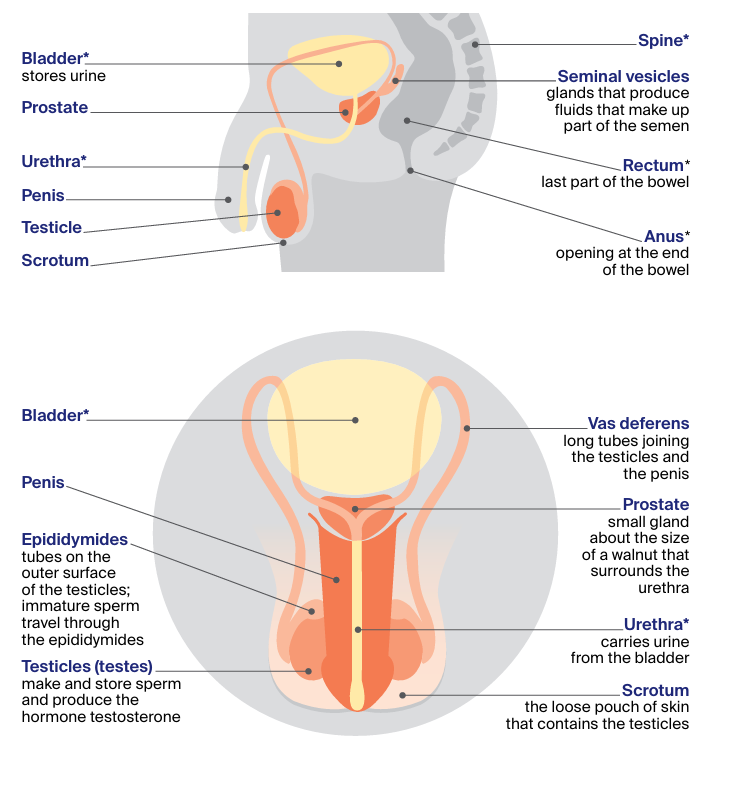
*Not part of the external sexual organs or the reproductive system
The female sexual and reproductive anatomy
Oestrogen and progesterone (female sex hormones)
Oestrogen keeps the vagina moist and stretchy. It helps with concentration and overall wellbeing. Progesterone controls reproduction (periods and pregnancy). These hormones are mostly made in the ovaries before menopause, but some continue to be made in the adrenal glands. Some cancer treatments may lower these hormones or cause early menopause.
The female sexual and reproductive anatomy
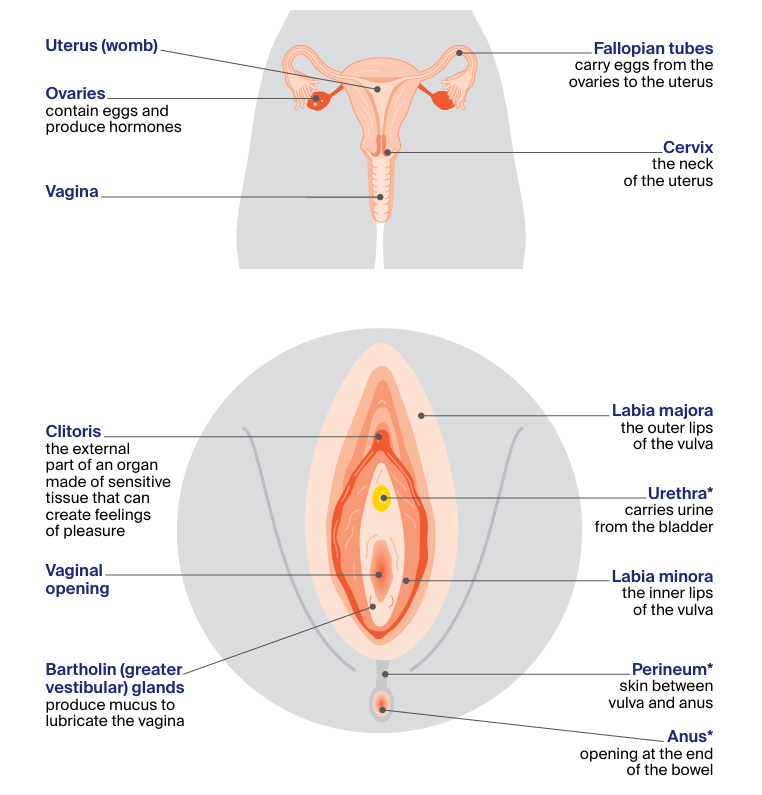
*Not part of the external sexual organs or the reproductive system
About sex hormones
Hormones are made naturally in your body. They control many functions, including how you grow and develop, and your ability to have children (your fertility). Generally, males have more testosterone and females have more oestrogen and progesterone. These hormones may vary for transgender or intersex people.
Low sex hormones or sudden hormone changes can affect your mood or lead to depression. Talk to your doctor for more information.
Find support services
Find the right services for your needs, wherever you are in Australia
Read cancer information
Trusted cancer information for all people affected by cancer
Need to talk to someone?
We're available 9am - 5pm, Monday to Friday (excluding public holidays)