
Overview
Infertility is when a person or couple is unable to conceive a child. Cancer and its treatment can affect your fertility depending on your age and the treatment you have.
Some procedures, such as freezing eggs, embryos or sperm, can help to preserve your fertility. If your fertility is important to you, let your doctors know before you start treatment. You may need to wait between 6 months to 2 years after finishing treatment before you try to fall pregnant.
Preserving your fertility and getting pregnant after having fertility issues can be expensive but you may be able to have treatment in a public hospital.
What’s on this page

What is infertility?
Infertility is defined as a condition where a person or couple is unable to conceive. This may result from female or male factors, or a combination of both, or the reasons may be unknown. For females under 35, the term usually refers to trying unsuccessfully to conceive for 12 months. If a female is 35 or older, the term is used after 6 months of trying.
Could cancer affect my fertility?
Cancer and its treatment may affect your fertility, depending on the type of cancer and treatment you have. Chemotherapy and radiation therapy can damage reproductive organs involved in creating or carrying an unborn baby, such as the ovaries, cervix, uterus or testicles. Sometimes these organs are damaged or removed during surgery, which can harm or destroy eggs or sperm, or make it difficult to carry a pregnancy to term.
Fertility problems after treatment may only last months to years or they may be permanent.
Call Cancer Connect on 13 11 20 for information about different cancer types and their treatments.
Age and fertility
Age is one of the most important factors in how cancer treatment affects fertility.
Female age and fertility
Females are born with all the eggs they will have in their lifetime. From the age of 30, fertility starts to decline and this decline speeds up after 35. It then becomes harder to conceive and the risk of chromosomal conditions (e.g. Down syndrome) increases.
From your early 40s, although you may still have regular periods, it is usually difficult to conceive a child because of lower egg quality. After menopause, it won’t be possible to conceive a child naturally.
How cancer treatments affect fertility will vary. Before and after puberty, the effect of chemotherapy and radiation therapy on fertility depends on the drugs used or the dose.
Before puberty, high doses of drugs or radiation to the pelvis may cause enough damage to the ovaries that both puberty and future fertility are affected. After puberty, treatment to the ovaries can cause periods to stop permanently. Even if periods return after treatment, some women may experience medically induced menopause.
Male age and fertility
The quality and quantity of sperm decreases with age. This means it may take longer for an older man to conceive with his partner. Before and after puberty, some chemotherapy and radiation therapy may affect sperm production and may cause infertility. The impact of radiation will depend on the dose and what organs are affected by the radiation.
What is fertility preservation?
This describes the procedures that can help preserve your fertility, for example, freezing eggs, embryos or sperm, or using injections that cause a temporary state of menopause to preserve your ovaries. Other procedures include freezing ovarian or testicular tissue. If a cancer treatment may affect your fertility, fertility preservation procedures are usually done before treatment begins. Your fertility may also be protected during treatment – for example, with ovarian transposition (oophoropexy) or radiation shielding.
Pregnancy and cancer
When can I try to get pregnant after treatment?
When can I try to get pregnant after treatment?
Timing of pregnancy and when to use contraception is an important discussion to have with your cancer specialist. Some cancer specialists advise waiting between 6 months and 2 years after treatment ends. This may be to allow your sperm or eggs to recover, and to ensure you remain in good health.
If you have a hormone-sensitive cancer and are taking anti-oestrogen drugs, you will need to wait for 9 months after you finish taking these drugs before getting pregnant.
Will pregnancy cause the cancer to come back?
Will pregnancy cause the cancer to come back?
Research shows that for most types of cancers, pregnancy does not increase the chances of cancer coming back. Research is continuing, so discuss this issue with your specialist. Studies to date suggest that survival rates for people who have children after cancer are no different from people who don’t have children after treatment.
Should I have a child after I’ve had cancer?
Should I have a child after I’ve had cancer?
This is a very personal decision. Many people who have had cancer do go on to have children. Others decide not to have children. Having cancer may change the way you feel about having a child. Having a family is very important to many cancer survivors and with advice from specialists, this can be safe and successful.
If you have a partner, discuss your family plans with each other and with your treatment team. Worrying about cancer coming back may make it hard for you to make plans, including having a child. Fertility clinics often have counsellors who can talk through your situation. Ask to be referred to a counsellor who has experience in both cancer and fertility.
Can cancer be passed on to my children?
Can cancer be passed on to my children?
Studies show that if one or both parents have a history of cancer, their child has the same risk of getting cancer as anyone else. About 5% of some cancers are caused by an inherited gene fault from either parent. This is known as familial cancer. If you inherit a gene fault from either of your parents, this will increase the risk of you developing cancer. You may also pass on this gene fault to your children.
If your diagnosis is linked to an inherited gene fault, you may consider having preimplantation genetic testing (PGT) as part of in-vitro fertilisation (IVF). This involves testing embryos for genetic conditions. Only unaffected embryos are implanted into the uterus. This reduces the chance of the gene being passed on to the child. A fertility clinic can provide more information.
Will pregnancy cause the cancer to come back?
Research shows that for most types of cancers, pregnancy does not increase the chances of cancer coming back. Research is continuing, so discuss this issue with your specialist. Studies to date suggest that survival rates for people who have children after cancer are no different from people who don’t have children after treatment.
Should I have a child after I’ve had cancer?
This is a very personal decision. Many people who have had cancer do go on to have children. Others decide not to have children. Having cancer may change the way you feel about having a child. Having a family is very important to many cancer survivors and with advice from specialists, this can be safe and successful.
If you have a partner, discuss your family plans with each other and with your treatment team. Worrying about cancer coming back may make it hard for you to make plans, including having a child. Fertility clinics often have counsellors who can talk through your situation. Ask to be referred to a counsellor who has experience in both cancer and fertility.
Can cancer be passed on to my children?
Studies show that if one or both parents have a history of cancer, their child has the same risk of getting cancer as anyone else. About 5% of some cancers are caused by an inherited gene fault from either parent. This is known as familial cancer. If you inherit a gene fault from either of your parents, this will increase the risk of you developing cancer. You may also pass on this gene fault to your children.
If your diagnosis is linked to an inherited gene fault, you may consider having preimplantation genetic testing (PGT) as part of in-vitro fertilisation (IVF). This involves testing embryos for genetic conditions. Only unaffected embryos are implanted into the uterus. This reduces the chance of the gene being passed on to the child. A fertility clinic can provide more information.
Will my doctor talk to me about fertility?
Fertility is an important part of health for everyone. But your doctor may not discuss whether you want children in the future if they make assumptions based on your age, sexual orientation, gender, or whether you have children or not, or if they are focused on starting treatment immediately. If fertility matters to you, let your health professional know before treatment begins.
Ask your cancer specialist about the chances of your treatment causing fertility problems and what you can do now if you want to have a child later (e.g. freezing eggs, or ovarian, sperm or testicular tissue). Ask to be referred to a fertility clinic or oncofertility specialist, or if it is possible to plan treatment in ways that protect or limit damage to reproductive organs to reduce the chances of infertility after treatment.
Tell the fertility clinic or oncofertility specialist that you are having treatment for cancer so that they can arrange an appointment for you as soon as possible. Your cancer care team may also be able to help you get an appointment quickly. The fertility clinic can give you information about:
- how your age and cancer treatment might affect fertility
- the options available to you
- how likely it is that each option will lead to pregnancy
- costs of the different options
- using donor eggs or sperm in the future
- any counselling you might need.
If you have a partner, try to attend appointments together and include them in the decision-making process. You may also wish to bring a family member or friend for support.
Who else can I talk to?
There are several people who can help with fertility concerns.
Health professionals you may see
- cancer specialist – might be a medical oncologist, radiation oncologist, gynaecological oncologist, surgeon or haematologist
- fertility specialist – diagnoses, treats and manages infertility and reproductive hormonal disorders; may be an obstetrician, reproductive endocrinologist or urologist
- oncofertility specialist – specialises in fertility care of adults or children with cancer
- cancer care coordinator – a nurse specialist who coordinates your care throughout diagnosis and treatment and works closely with other members of your healthcare team
- fertility counsellor – provides support and advice for people with fertility concerns
- genetic counsellor – provides advice for people with a strong family history of cancer or a genetic condition linked to cancer
- gynaecological oncologist – diagnoses and treats cancers of the female reproductive system (e.g. ovarian, cervical)
- urologist, andrologist – diagnose and treat diseases of the urinary system and the male reproductive system.
Breast Cancer Network Australia has a resource called Fertility and breast cancer treatment to help women with breast cancer make fertility-related decisions.
Fertility treatments
What is in-vitro fertilisation (IVF)?
What is in-vitro fertilisation (IVF)?
IVF is a method for achieving a pregnancy after fertility issues, but it will only be an option for some people after cancer. IVF is when an egg is fertilised with sperm in a laboratory and later implanted into a female body. Eggs, sperm or embryos frozen before cancer treatment can be used. One full cycle of IVF, pictured below, takes about 2–3 weeks.*
*This is a simplified overview, and is not to scale.
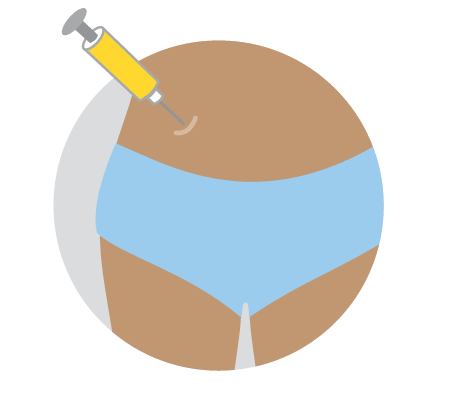
1. Ovarian stimulation
Hormone injections daily for 10–14 days help stimulate your body to produce more eggs.
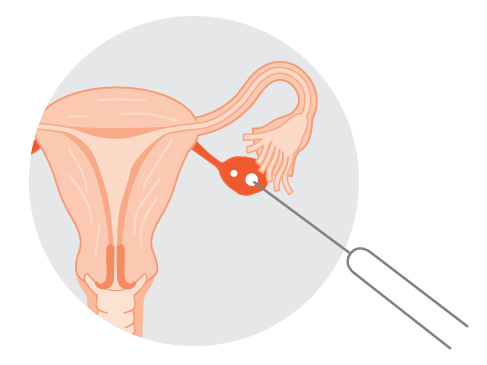
2. Egg collection
Mature egg/s are collected from the follicle using a needle guided by ultrasound.
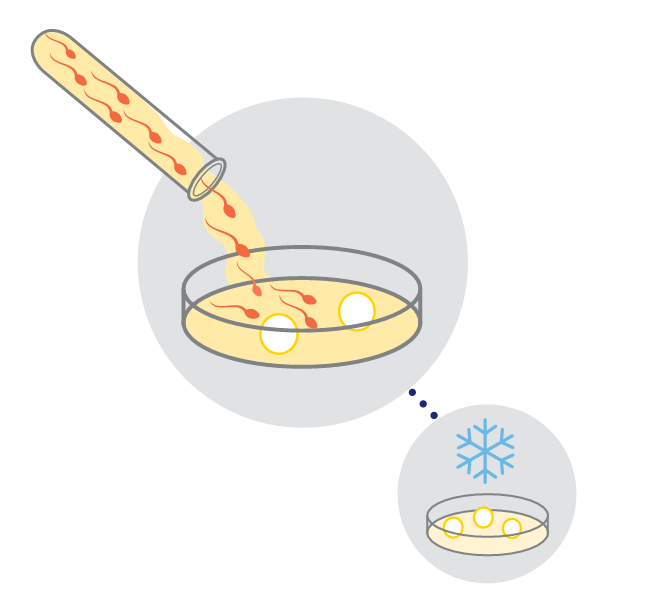
3. Egg and sperm combined
The eggs are combined with sperm from a partner or donor, or frozen (cryopreservation) for later use.
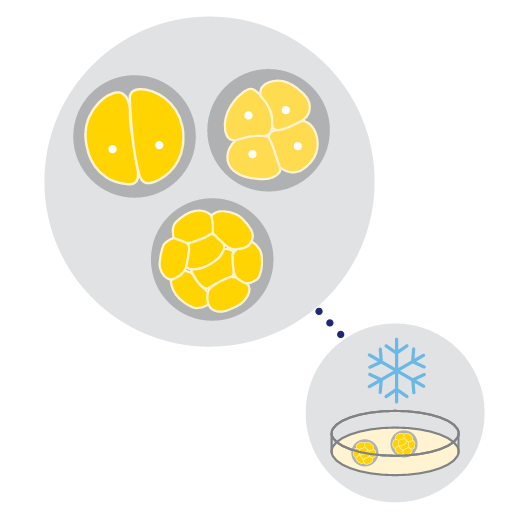
4. Embryo freezing
Fertilised eggs may divide and form embryos. Embryos can also be frozen (cryopreservation) for later use.
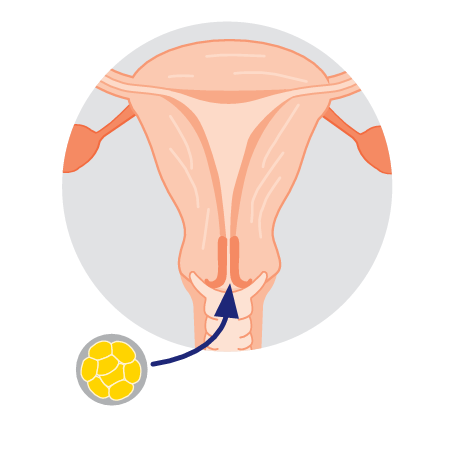
5. Embryo transfer
A syringe and tube are used to implant embryos into your body (or a surrogate). This will usually happen after cancer treatment.
What are the main costs of fertility treatment?
What are the main costs of fertility treatment?
Fertility preservation can be expensive, and this may influence your decision-making. The cost of fertility treatment varies – you may be able to have treatment at a fertility unit in a public hospital or a private clinic.
Ask your fertility specialist for a written estimate of their fees and any Medicare rebates. Ask your private health fund (if you belong to one) what costs they will cover and what you’ll have to pay.
Depending on the treatment you have, costs may include:
- fertility specialist appointments – ask if they offer a discount for people diagnosed with cancer
- medicines and blood tests
- fees for procedures (e.g. the different steps in the IVF cycle for egg or sperm collection, preimplantation genetic testing, and implantation of embryos after treatment)
- day surgery, operating theatre and anaesthetist fees
- egg, sperm and embryo storage (cryopreservation) – ask your clinic about up-front payments, instalment payments and ongoing fees.
If you need in-vitro fertilisation (IVF) to have a baby in the future (e.g. by using your frozen sperm, eggs or embryos), private fertility clinics will usually charge their standard fees.
For more information, see Cancer and your finances or call Cancer Connect on 13 11 20.
Medicare will cover the cost to see a specialist only if you have a referral. The referral should list both you and your partner so you can claim the maximum benefit.
Making decisions about fertility
Making decisions about fertility
After a cancer diagnosis, you may be asked to make fertility decisions before you’ve given much thought to whether you want to have a child in the future. Even if you think, “But I don’t want kids” or “My family is complete”, you may be encouraged to consider fertility options to keep your choices open for the future. These decisions are personal, and you need to feel comfortable with your choices.
Learn more about the options
Generally, people make decisions they are comfortable with – and have fewer regrets later – if they gather information and think about the possible outcomes. Ask your fertility specialist to explain each fertility option, including risks, benefits, side effects, costs and success rates. See our questions checklist for examples of questions you can ask.
Talk it over
Discuss the options with people close to you (such as your partner, a friend or family member). Ask your cancer specialist whether you should see a fertility specialist or oncofertility specialist. You can also get a referral from your general practitioner (GP). As well as explaining your fertility options, these specialists can help with contraception and hormone management to prevent ovulation during cancer treatment.
Expect to experience doubts
It’s common to feel unsure when making tough decisions. Keeping a journal or blog about your experience may help you come to a decision and reflect on your feelings.
What if I’m already pregnant?
Being diagnosed with cancer during pregnancy is uncommon – it is estimated that 1 in every 1000 pregnant females are diagnosed with cancer. Call Cancer Connect on 13 11 20 for more information about pregnancy and cancer.
Treatment during pregnancy
This may be possible, but you need to discuss the potential risks and benefits to you and the baby with your oncologist before treatment begins. In some cases, treatment can be delayed until after the baby’s birth. For some cancers, chemotherapy may be safely used after the first trimester (12 weeks), usually with a break of a few weeks before the birth.
Termination
Some people diagnosed with cancer in the early weeks of pregnancy decide to terminate the pregnancy so they can start treatment immediately.
Change in birth plan
If you are diagnosed later in the pregnancy, you may be able to have the baby before the due date.
Breastfeeding
You will be advised not to breastfeed while having chemotherapy, targeted therapy, or immunotherapy as drugs can be passed to the baby through the breastmilk. If you are having radiation therapy, talk with your doctor about whether it is safe to continue breastfeeding during treatment.
My oncologist wanted to start treatment as soon as possible, so my obstetrician and oncologist decided on a day to deliver my son. He was delivered safely at 32 weeks.
Find support services
Find the right services for your needs, wherever you are in Australia
Read cancer information
Trusted cancer information for all people affected by cancer
Need to talk to someone?
We're available 9am - 5pm, Monday to Friday (excluding public holidays)