
Overview
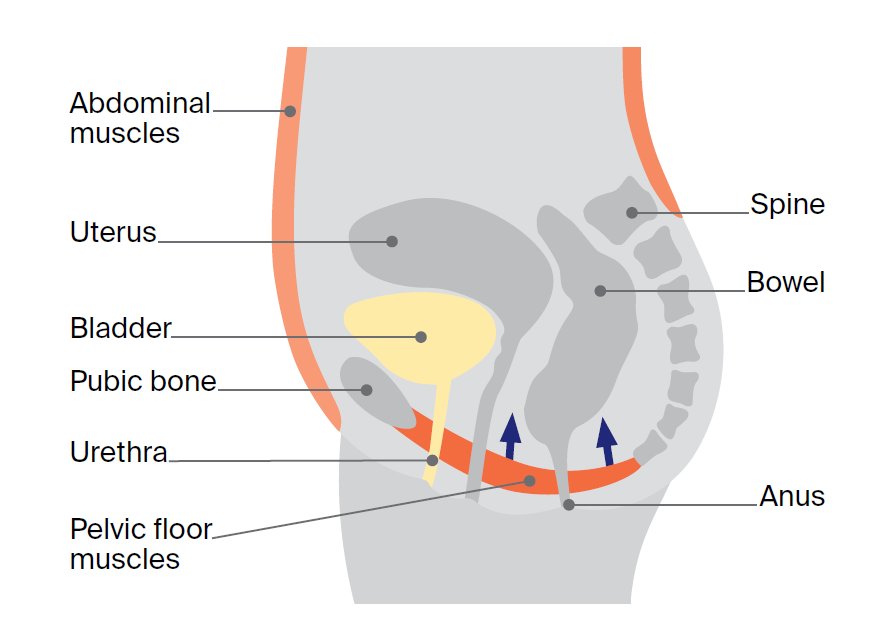
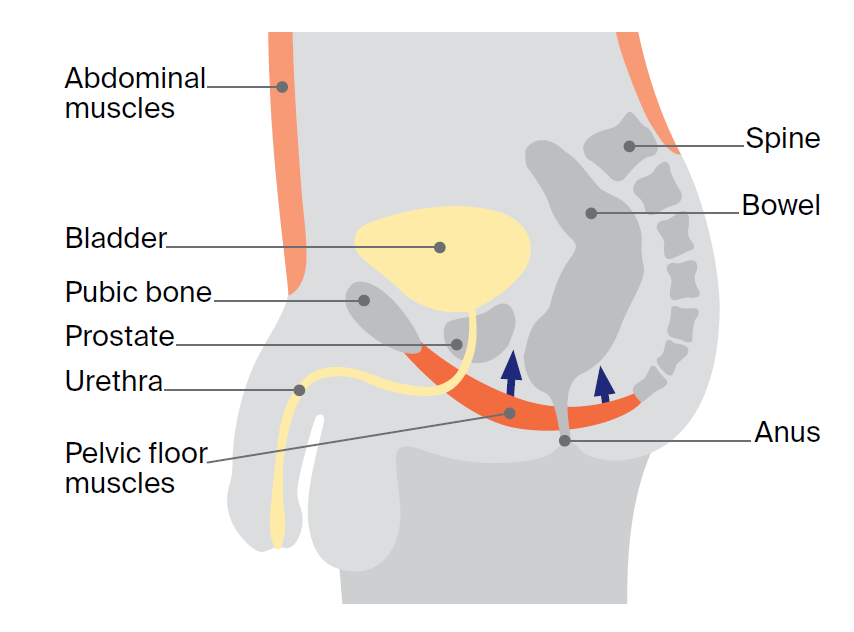
Your pelvic floor muscles support your bladder and bowel, and the uterus in females. These muscles can become weaker for a range of reasons, including some cancer treatments and surgery. Pelvic floor exercises can help strengthen the muscles and should be done regularly.
If you have pelvic floor symptoms or have recently had surgery, talk to your healthcare team or a pelvic floor specialist before starting exercises
What’s on this page

Your pelvic floor muscles stretch from the bottom of your pelvis and support your bowel, bladder, and uterus for females. A strong pelvic floor helps control urination (peeing) and bowel movements, sexual function, and stability of the abdomen (core) and spine. Your pelvic floor can become weak due to age, childbirth, constipation, obesity, coughing a lot, heavy lifting, and abdominal or pelvic surgery. Chemotherapy and hormone therapy can also impact the pelvic floor.
Seeing a pelvic floor expert
Continence nurses and pelvic floor physiotherapists can assess how your pelvic floor is working and tailor an exercise program to your needs. Ask your doctor or specialist for a referral to a continence nurse or physiotherapist before doing pelvic floor exercises if you:
- have had recent pelvic or abdominal surgery
- have problems with urine or faeces (poo) leaking when coughing, sneezing, laughing or exercising
- often need to go to the toilet urgently
- have difficulty controlling bowel movements and wind
- feel like you haven’t fully emptied your bowel after having a bowel movement
- have dragging, heaviness or a bulge in the vagina
- experience a lack of sensation or pain during sex.
For suitable exercises, visit Pelvic Floor First. To find a continence nurse or pelvic floor physiotherapist, call the National Continence Helpline on 1800 33 00 66. Search for a physiotherapist at the Australian Physiotherapy Association.
How to exercise your pelvic floor muscles – female
Pelvic floor exercises should be done several times a day. You can be standing, sitting or lying down. You can even do them while watching TV or waiting at traffic lights.
Finding your pelvic floor muscles
When you try to stop your urine stream for a couple of seconds while you are peeing, you use your pelvic floor muscles. Another way is to feel the muscles you use when you imagine stopping the flow of urine and holding in wind.
- Start by relaxing all of your pelvic floor (including the muscles around the bottom) and your tummy (abdominal) muscles.
- Gently lift your pelvic floor muscles up and hold while you continue breathing normally. Keep your upper abdominal muscles relaxed. Try to hold the contraction for up to 10 seconds (while breathing). Then relax your muscles slowly.
- Repeat the exercise up to 10 times. Rest and completely relax your pelvic floor muscles for 10–20 seconds between each set.
How to exercise your pelvic floor muscles – male
Pelvic floor exercises should be done several times a day. You can be standing, sitting or lying down. You can even do them while watching TV or waiting at traffic lights.
Finding your pelvic floor muscles
Imagine resting your scrotum on a plate, then contract the muscles that lift your scrotum off the plate. Some cues to help turn on the pelvic floor muscles include trying to lift the scrotum up towards the tummy, trying to bring the base of the penis in towards the lower tummy and trying to stop as you’re doing a pee.
- Start by relaxing all of your pelvic floor (including muscles around the bottom) and your tummy (abdominal) muscles.
- Gently lift your pelvic floor muscles up and hold while you continue breathing normally. Keep your upper abdominal muscles relaxed. Try to hold the contraction for up to 10 seconds (while breathing). Then relax your muscles slowly.
- Repeat the exercise up to 10 times. Rest and completely relax your pelvic floor muscles for 10–20 seconds between each set.
Safety tips
- Do not hold your breath.
- Do not tighten your tummy above the belly button. Focus on pulling up and holding on to urine and wind.
- Do not try too hard. You may end up contracting other nearby muscles. Try changing positions if you can’t feel the pelvic floor muscles lifting and squeezing.
Find support services
Find the right services for your needs, wherever you are in Australia
Read cancer information
Trusted cancer information for all people affected by cancer
Need to talk to someone?
We're available 9am - 5pm, Monday to Friday (excluding public holidays)