Cancer is a disease of the cells. Cells are the body’s basic building blocks – they make up tissues and organs. The body constantly makes new cells to help us grow, replace worn-out tissue and heal injuries.
Normally, cells multiply and die in an orderly way, so that each new cell replaces one lost. Sometimes, however, cells become abnormal and keep growing when they shouldn’t. These cells may turn into cancer.
In some cancers, such as breast or prostate cancer, the abnormal cells form a mass or lump called a tumour. In other cancers, such as leukaemia, the abnormal cells build up in the blood.
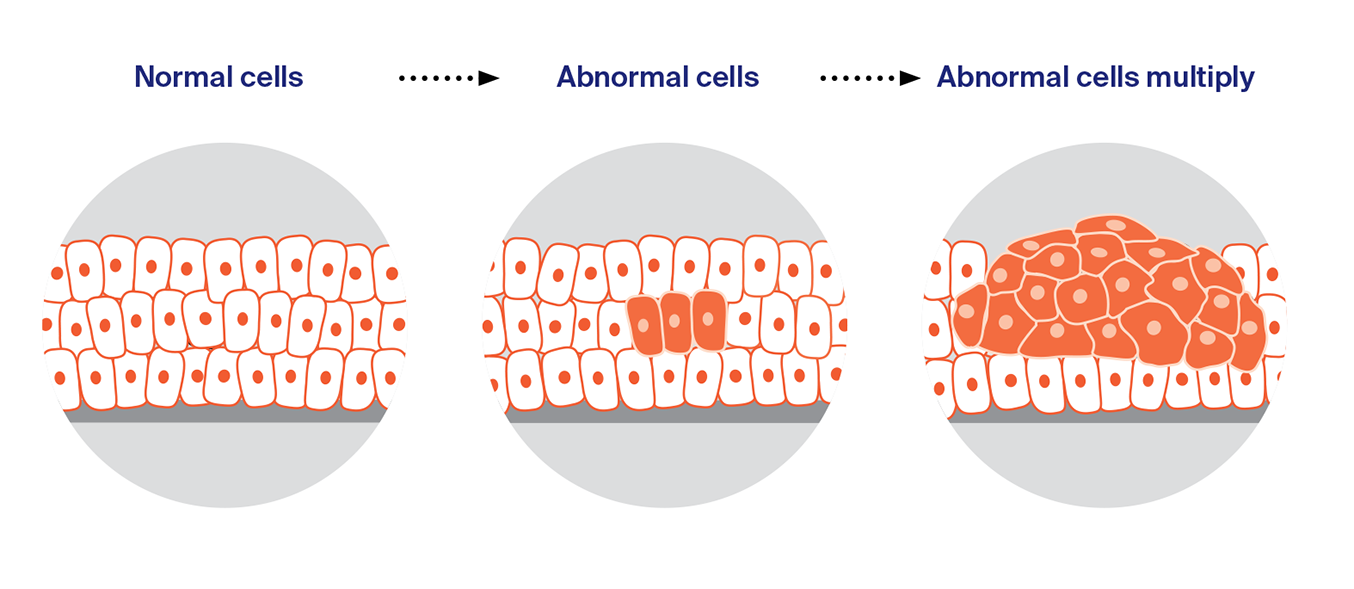
Not all tumours are cancer. Benign tumours tend to grow slowly and usually don’t spread to other parts of the body or turn into cancer. Cancerous tumours are also known as malignant tumours. These have the potential to spread. They may grow into nearby tissue, destroying normal cells. The cancer cells can break away and travel through the bloodstream or lymph vessels to other parts of the body.
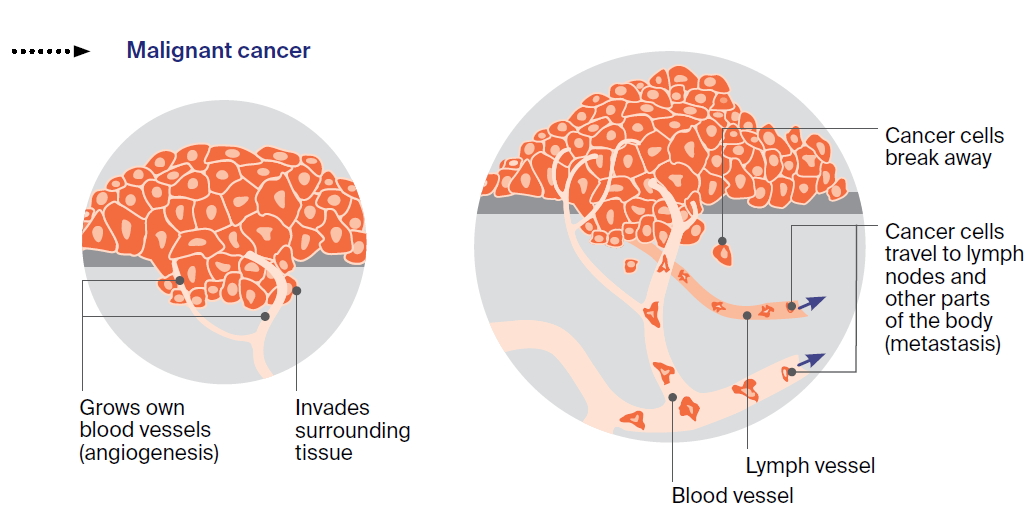
The cancer that first develops in a tissue or organ is called the primary cancer. It is considered localised cancer if it has not spread to other parts of the body. If the primary cancer cells grow and form another tumour at a new site, it is called a secondary cancer or metastasis. A metastasis keeps the name of the original cancer. For example, bowel cancer that has spread to the liver is called metastatic bowel cancer, even though the main symptoms may be coming from the liver.
Find support services
Find the right services for your needs, wherever you are in Australia
Read cancer information
Trusted cancer information for all people affected by cancer
Need to talk to someone?
We're available 9am - 5pm, Monday to Friday (excluding public holidays)