
Rare Cancers Australia
Services offered
Cancer information
Support from cancer nurses
Support from other health professionals
+6
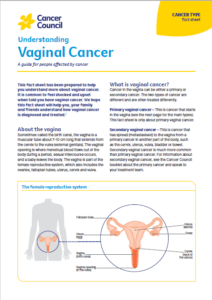
The vagina is sometimes called the birth canal. It is a muscular tube that extends from the cervix to the vulva. The vaginal opening is where period (menstrual) blood flows out, where sexual intercourse happens and where a baby is born.
Vaginal cancer is one of the rarest cancers that affects the female reproductive system. The 2 main types are named after the cells where they start: squamous cell carcinoma and adenocarcinoma.
A vaginal cancer diagnosis can be a shock. Find helpful information in Just diagnosed, or call Cancer Connect on 13 11 20 to talk it through with our qualified professionals.
Read about the vagina and the female reproductive system, the different types of vaginal cancer and who gets vaginal cancer.
The symptoms of vaginal cancer include bloody vaginal discharge and pain during sex. Risk factors include infection with human papillomavirus (HPV).
Initial tests may include a physical examination and a colposcopy, which uses a magnifier to looks at the vagina. The doctor may take a small tissue sample (biopsy).
The main treatment is radiation therapy, which can be delivered externally, as well as internally (brachytherapy). You may also have surgery or chemotherapy.
Learn about the possible long-term side effects of vaginal cancer treatment, such as bladder changes and menopause, and how to get support to manage them.
Learn about the follow-up treatment schedule for vaginal cancer and what happens if the cancer comes back.
It can be a good idea to prepare a list of questions before your appointments. See our list of questions about vaginal cancer treatment and care.
Rare Cancers Australia
Services offered
Find the right services for your needs, wherever you are in Australia
Trusted cancer information for all people affected by cancer
We're available 9am - 5pm, Monday to Friday (excluding public holidays)