Overview
The testicles (or testes) are 2 egg-shaped glands that are part of the male reproductive system. They make and store sperm, and also make the hormone testosterone.
Testicular cancer is the most common cancer diagnosed in men aged 20–39 (other than skin cancers).
Most testicular cancers begin as a condition called germ cell neoplasia in situ (GCNIS). The most common types of testicular cancer are germ cell tumours (seminoma and non-seminoma).
A testicular cancer diagnosis can be a shock. Find helpful information in Just diagnosed, or call Cancer Connect on 13 11 20 to talk it through with our qualified professionals.
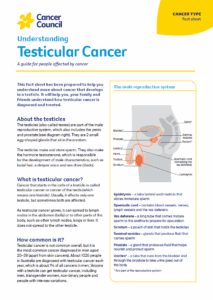

What's in this fact sheet
About testicular cancer
Read about the testicles and the male reproductive system, types of testicular cancer, and who gets testicular cancer.
Symptoms and risk factors
Learn about risk factors such as family history and infertility, and symptoms such as a lump, swelling or a change in the testicle.
Diagnosis
Test may include a physical examination, ultrasound, blood tests, and scans, but the only way to be sure of the diagnosis is to remove the testicle for testing.
Treatment
The surgery to remove a testicle is called an orchidectomy. Find out what to expect and when you might also need chemotherapy or further surgery.
Managing side effects
Find out how treatment for testicular cancer may affect fertility and sex, and about the option of replacing the removed testicle with a prosthesis.
Life after treatment
Learn about follow-up care and what happens if the cancer returns.
Need to talk to someone?
We're available 9am - 5pm, Monday to Friday (excluding public holidays)
Find support services
Find the right services for your needs, wherever you are in Australia