


Rare Cancers Australia
Services offered
Cancer information
Support from cancer nurses
Support from other health professionals
+6
Each year, around 2600 people are diagnosed with cancer of unknown primary (CUP). About half of CUP cases are adenocarcinomas, which affect cells in the lining of organs.
Secondary cancers are often found in the liver, lung, abdomen, bones and lymph nodes, but they can grow anywhere in the body.
Find out more about types of CUP and the health professionals who will look after you.
Cancer of unknown primary (CUP) is when cancer cells are found in the body but the place the cancer began is not known. This means it is a secondary cancer that has spread to a new place from an unknown primary cancer somewhere else in the body.
With CUP, secondary cancers are commonly found in the liver, lung, abdomen, bones and lymph nodes, although they can grow in any part of the body.
Health professionals may also call CUP metastatic malignancy of unknown primary or occult primary cancer.
To diagnose secondary cancer, a specialist doctor called a pathologist looks at the cancer cells under a microscope. They can see that the cancer cells do not belong to the surrounding tissue, and this can be confirmed by further tests on the cells (see Tumour markers). With CUP, there are many different places in the body the cancer cells might have started.
Less than 5% of people diagnosed with cancer will have CUP. There are about 2650 new cases of CUP diagnosed each year in Australia. CUP is more common in people over the age of 60.
For most people diagnosed with cancer, the primary cancer is easy to identify. Doctors conduct tests to find out where the cancer started to grow and to see if it has spread. Sometimes, however, cancer is found in one or more secondary sites and test results can’t show where the cancer began.
Reasons why your doctors cannot find the primary cancer include:
Finding the primary cancer can help doctors decide what treatment to recommend and give them a better idea of how the cancer is likely to respond to treatment. If the primary cancer can’t be found, tests on cells from the secondary cancer can often suggest what the primary cancer is most likely to be. This helps your doctor to plan treatment.
I have found it complex to talk to people about my cancer … It seems incomprehensible to have a cancer that has spread but has no named starting point.
It can be frightening to be diagnosed with CUP, but there are treatments available. Your doctor will discuss the best options for you.
The aim of treatment may be to:
Most people with a new diagnosis of cancer need several tests to find out how far the cancer has spread throughout the body.
People with CUP may need extra tests to try to find where the cancer started (see more information on tests). The tests may take time and be tiring, particularly if you are feeling unwell. Waiting for the results can be a stressful time. You may also feel frustrated if the tests don’t find the primary cancer.
Your doctors will only suggest tests that they think are needed. It is okay to ask your doctors to explain the tests and the difference the results will make to your care. You may also want to ask if there are any specialised tests available at another hospital or treatment centre that may help find the primary cancer.
At some point, your doctors may decide that more tests won’t help find the primary cancer and it would be better to focus on starting treatment. Even if you decide not to have more tests, your family and friends may want you to have more tests. It may help to explain why you want to stop testing and share this information with them. Your medical team can provide support with these discussions.
Even if tests can’t find where the cancer started, your doctor will try to work out what type of cell the cancer developed from. Knowing the type of cell helps doctors work out what sort of treatment is most likely to be helpful.
Most cancers are cancers of the epithelial cells, which are found in the lining of the skin and internal organs. These cancers are known as carcinomas. In most people with CUP, doctors can tell that they have some sort of carcinoma. There are different types of carcinoma depending on which type of epithelial cell is affected. Your doctor will explain the type of CUP you have.
Mucus-producing (glandular) cells, which form part of the lining of many organs and can also group together to form structures called glands.
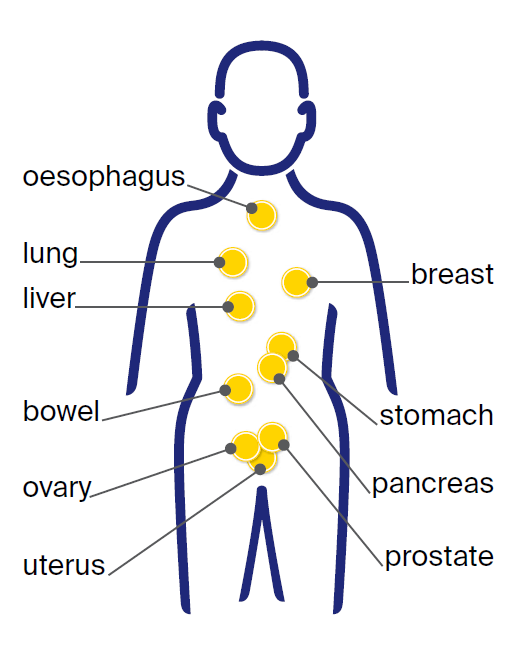
About 50% of CUP cases.
Squamous cells, which are thin, flat cells normally found on the surface of the skin or in the lining of some organs.
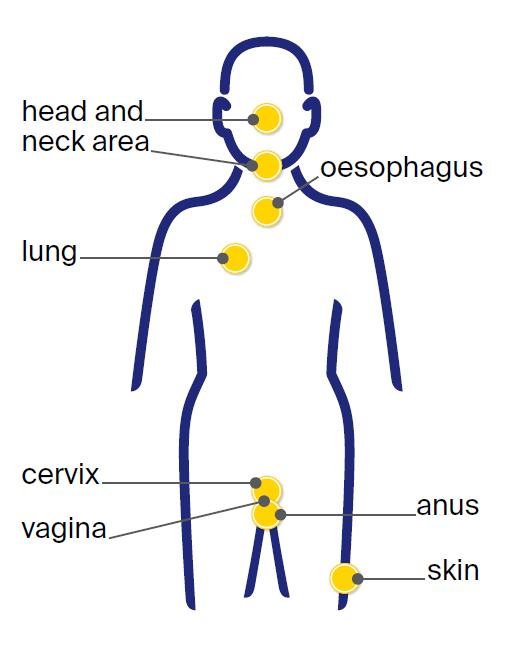
About 15% of CUP cases.
Specialised neuroendocrine cells found throughout the body that sometimes produce hormones.
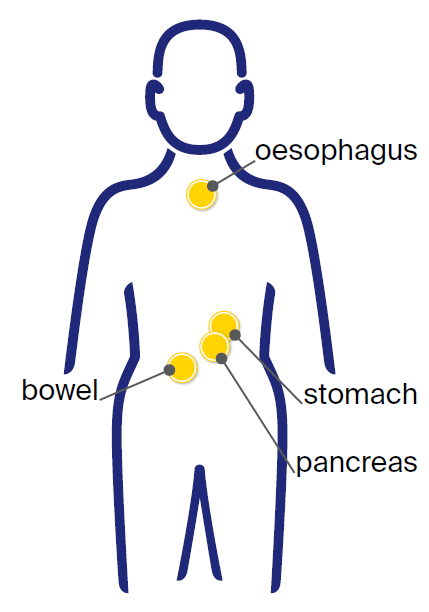
Less commonly may start elsewhere such as in the lungs or gynaecological or urinary systems.
Under 5% of CUP cases.
Tests show that the cancer cells are a carcinoma, but don’t show the specific type of epithelial cell affected.

Not enough detail to suggest where the primary site may have been.
About 30% of CUP cases.
Unknown – tests show that the cells are cancerous, but not whether they are a carcinoma or another form of cancer (such as a sarcoma or melanoma).
Not enough detail to suggest where the primary site may have been.
Under 5% of CUP cases.
Your GP will arrange the first tests to assess your symptoms. If these tests do not rule out cancer, you will usually be referred to a specialist for further tests. The type of specialist you see will depend on your symptoms, the suspected location of the cancer and the types of tests you need. For example, you may see a gastroenterologist (digestive tract, bowel or stomach), gynaecologist (female reproductive system), urologist (urinary tract or kidneys; male reproductive system), respiratory physician or thoracic surgeon (chest and lung), neurosurgeon (brain and spinal cord), ear nose and throat surgeon, or haematologist (blood cells). Sometimes your main specialist will be a medical oncologist who treats all types of cancer.
If cancer is diagnosed, the specialist will consider treatment options. Often these will be discussed with other health professionals at what is known as a multidisciplinary team (MDT) meeting. During and after treatment, you will see a range of health professionals who specialise in different aspects of your care.
Rare Cancers Australia
Services offered
Head and Neck Cancer Australia
Services offered
Find the right services for your needs, wherever you are in Australia
Trusted cancer information for all people affected by cancer
We're available 9am - 5pm, Monday to Friday (excluding public holidays)