
Overview
Checkpoint inhibitors trigger an immune response that can lead to redness, swelling or pain (inflammation) in the body. Common side effects including fatigue, skin rash, itching, joint pain, dry eyes and abdominal pain. Tell your treatment team about any new symptoms so that they can be managed.
What's on this page

Side effects of checkpoint inhibitors
Like all treatments, checkpoint inhibitors can cause side effects. These are sometimes called immune-related adverse events (irAEs).
Checkpoint inhibitor side effects are different to the side effects of other cancer treatments and need to be managed differently.
Checkpoint inhibitors trigger an immune response that can lead to redness, swelling or pain (inflammation) anywhere in the body. The diagram below shows examples of common and rare side effects. You are unlikely to have all of the side effects shown. The side effects you have will depend on the drug and how your body responds. While some people have serious side effects, others have just 1-2 mild issues. Although there are many possible side effects linked to checkpoint inhibitors, it’s uncommon to get more than a few.
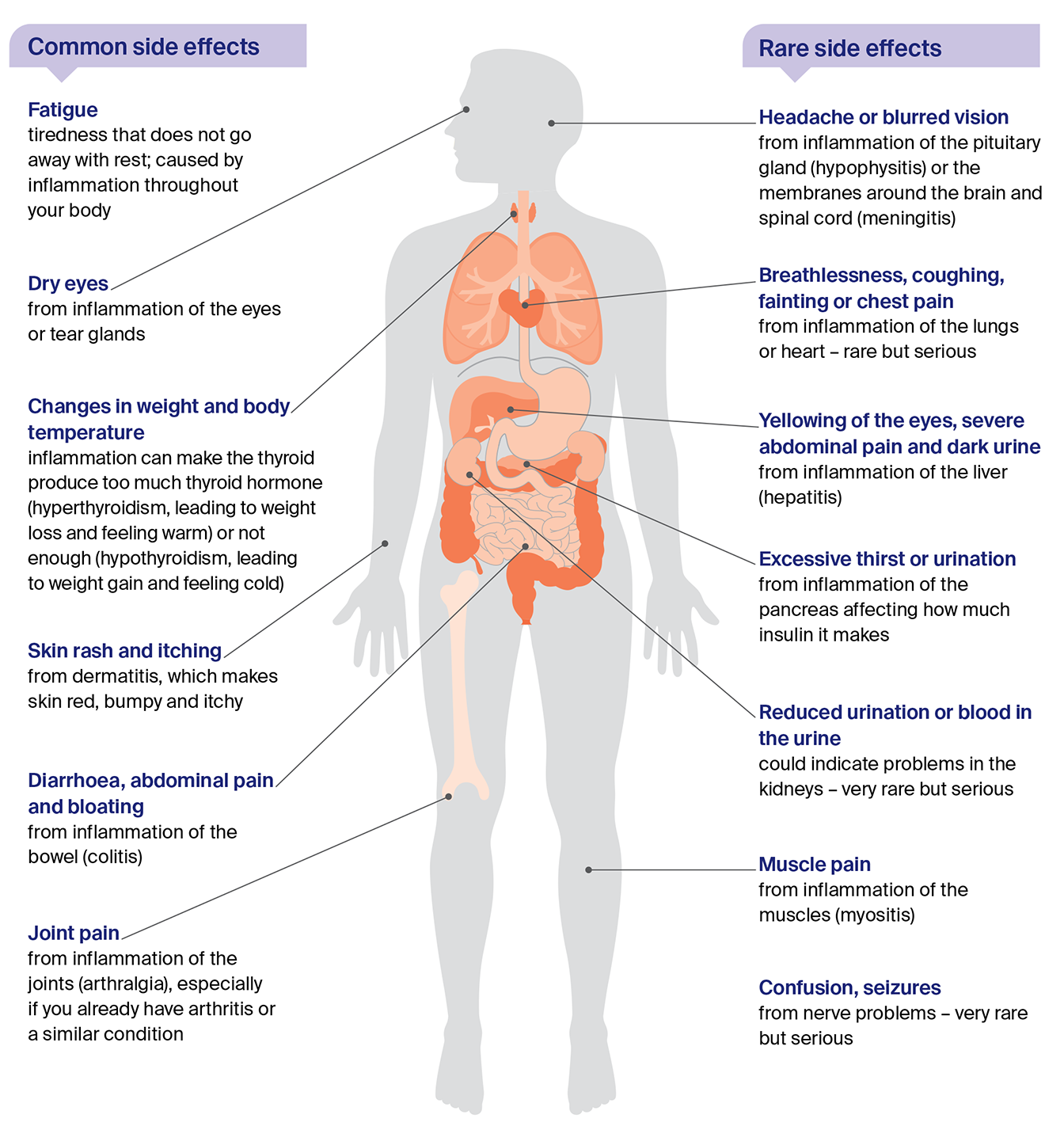
Other rare side effects can occur, and some can be life-threatening. Let your treatment team know about any new or worsening side effects during or after treatment. Do not try to treat them yourself. Most checkpoint inhibitor side effects can be managed and reversed if they are reported early.
When to expect side effects
You may have side effects within days of starting treatment, but more commonly they occur several weeks or months after starting treatment. In rare cases, new side effects can appear months after finishing treatment.
Most people have mild side effects. Side effects are likely to be more severe if you are having higher doses or a combination of checkpoint inhibitor drugs, or if you are having immunotherapy with other cancer treatments.
Immunotherapy treatment involved adapting to new drugs and managing side effects with my oncology team.
Managing side effects
Because checkpoint inhibitors work differently from other cancer treatments, it’s important to work closely with your treatment team to monitor any side effects and how the cancer responds.
Before starting checkpoint inhibitors, discuss the potential side effects with your cancer specialist. Ask about the side effects that should be reported, who to report them to, and who to contact after hours. You can find out more about the side effects of specific checkpoint inhibitors at eviQ.
You will usually have some tests to check that you are well enough to have immunotherapy before treatment begins. Throughout treatment, you will have regular blood tests, and the team will ask you questions to check for early signs of side effects. New side effects can appear months after having immunotherapy, so ask your cancer specialist how long you need to keep watching for side effects.
Let your treatment team know about any over-the-counter medicines, vitamins, supplements or herbal therapies you are thinking about using. Also, let them know if you have been prescribed any antibiotics or steroids. Some may affect how the checkpoint inhibitors work or make side effects worse
Reporting side effects
Side effects can be better managed if reported early. It’s important to let your cancer treatment team know about new or worsening symptoms, even if they seem minor or you’re not sure if they are related to your treatment. If left untreated, side effects can become serious and may even be life-threatening.
Sometimes it can be tricky to know whether your symptoms are related to the cancer or the treatment. Ask your cancer treatment team about this.
Because checkpoint inhibitor therapy is a newer cancer treatment, some health professionals, including general practitioners (GPs), may not yet be familiar with the side effects. Your team may give you a card with information about your treatment and potential side effects. You can show this card to other health professionals you see and ask them to consult with your cancer specialist.
Do not start any new medicines, including probiotics, steroids, herbal therapies, or over-the-counter medicines, until you talk to your cancer specialist. If you become unwell, even years later, it is important to tell any health professionals you see that you have had immunotherapy.
Treating side effects
Your doctor will talk to you about how to manage mild to moderate side effects. For example, you may be given a moisturising cream to treat a skin rash. Moderate to severe side effects are often managed by pausing the checkpoint inhibitor and starting on steroid tablets, such as prednisolone.
In some cases, checkpoint inhibitors may be stopped until the side effects are better controlled. You may need to stay in hospital and/or have intravenous steroids or other medicines.
If side effects become severe, you may have to stop checkpoint inhibitor therapy permanently. Even so, you may continue to benefit from the therapy that you have already received because it may have “trained” your immune system to recognise cancer cells.
Although there is a risk of severe side effects, many people experience only mild side effects.
If you have had checkpoint inhibitor therapy, it’s important to speak with your cancer specialist before having vaccinations, including for flu or COVID-19.
Find support services
Find the right services for your needs, wherever you are in Australia
Read cancer information
Trusted cancer information for all people affected by cancer
Need to talk to someone?
We're available 9am - 5pm, Monday to Friday (excluding public holidays)